Whatever Wednesday: the weird old tech ideas that still work

Today’s Whatever Wednesday is… a trip through old-school tech that still saves the day. Some ideas are so good, they never really go away. They just get better shoes.

Section A

What happened

Paper maps, printed charts, and simple compasses are still used in travel and exploration stories from places like National Geographic. Even with phones and GPS, people still keep a backup that does not need a battery.

Why it matters

Phones can die. Signals can drop. A basic map and compass can still get you home when “loading…” is not helping.

Fun takeaway

Old tech is like a grandparent: calm, reliable, and quietly right a lot of the time.

Section B

What happened

Museums and history writers, like those at Smithsonian Magazine and HISTORY, often show how mechanical tools (gears, levers, hand-crank devices) solved big problems before modern electronics.

Why it matters

Simple machines are easier to fix, easier to understand, and often cheaper to keep running. That is a big win for homes, schools, and small communities.

Fun takeaway

If it has one button and a handle, there is a good chance it will outlive your app update.

Section C

What happened

Reference sets and print-style fact checking still matter. Big knowledge sources such as Britannica remain useful for clear, structured basics before people dive into fast-moving social posts.

Why it matters

When everyone is rushing, slow and verified info can keep us from sharing mistakes. “Old” ways can protect us from “new” confusion.

Fun takeaway

Sometimes the smartest hack is reading the boring part first.

In plain English recap

Many old tech ideas still work because they are simple, sturdy, and clear. New tools are awesome, but old tools are great backups. The best plan is not old versus new. It is old plus new.

Signal vs Noise

Signal

  • Keep a low-tech backup for high-tech tools.
  • Simple systems are often easier to repair and trust.
  • Verified reference sources can beat fast rumors.

Noise

  • “New” always means “better.”
  • If it is online, it must be correct.

Try this

  • Keep one paper map in your car or backpack.
  • Learn one no-power skill this week, like using a compass.
  • Before sharing a “wow” fact, check one trusted source first.

Old tech is not retired. It is just waiting on the bench, ready to win in overtime. Which “outdated” tool do you still trust the most?

Sources

Whatever Wednesday: three everyday inventions with wild backstories

Whatever Wednesday: three everyday inventions with wild backstories

Today’s Whatever Wednesday is… the story behind things you use without thinking twice. Your laundry, your leftovers, and even your jacket all have surprising history. Turns out, boring stuff can have blockbuster origin stories.

Section A: Washing Machine

What happened

Before washing machines, laundry day was a full workout with tubs, scrub boards, and sore arms. Over time, inventors added hand cranks, then motors, and finally automatic cycles. The machine that now hums in the corner used to be a giant time-eating chore, as explained by History.com’s housework inventions article.

Why it matters

This invention gave families back hours every week. It also made clean clothes easier for more people, not just folks with lots of help at home.

Fun takeaway

Your washer is basically a tiny spin-powered hero. It does the “sock mystery” and the hard labor.

Section B: Microwave Oven

What happened

The microwave came from radar research, not from a kitchen dream board. Engineer Percy Spencer noticed a candy bar melted near radar equipment, and that odd moment helped spark microwave cooking, as described by Britannica.

Why it matters

Fast heating changed daily life. Busy families could make meals quicker, waste less food, and rescue leftovers in minutes.

Fun takeaway

The microwave was kind of a science accident. So yes, curiosity can lead to pizza rolls.

Section C: Zipper

What happened

The zipper took years to catch on. Early versions were clunky, but better designs turned it into the quick-close tool we use on jackets, backpacks, and jeans, with historical background covered by Britannica and broader invention context at History.com.

Why it matters

Zippers are simple, cheap, and fast. They made clothing and gear easier to use for kids, adults, travelers, and workers.

Fun takeaway

A zipper is just tiny teeth doing teamwork. If only group projects were that smooth.

In plain English recap

These inventions look ordinary now, but each one solved a real problem and saved people time. Big changes often start with a small idea, a weird accident, or a rough first version that gets better. Everyday tools can have very non-everyday stories.

Signal vs Noise

Signal

  • Great inventions usually begin by fixing a daily pain point.
  • Early versions are messy, but steady improvements win.
  • Saving time at home can change life at a big scale.

Noise

  • “Old stuff was always simple and easy” is a myth.
  • “One genius did everything alone” is usually not how history works.

Try this

  • Pick one item you used today and look up its first version.
  • Ask a family member which home task used to take the longest.
  • Invent a tiny upgrade for a daily annoyance and sketch it on paper.

That’s this week’s Whatever Wednesday: ordinary objects, extraordinary stories. Reader question: what everyday thing do you think deserves a smarter redesign next?

Sources

Whatever Wednesday: the surprisingly fun math of everyday life

Somewhere along the way, many of us were told that math lives in textbooks, offices, labs, and very serious conversations. Real life, meanwhile, happens in kitchens, inboxes, grocery aisles, and group chats. But that split is mostly fiction. The everyday world is full of patterns, tradeoffs, and hidden structures, and math is simply the language that helps us notice them.

Editor’s note: This draft was prepared without external citations because no approved source links were provided in the prompt.

If “math” still feels like a distant relative you only see at holidays, try this gentler framing: math is what you do when you compare, estimate, and choose. Which line at the store will move faster? Is a subscription worth it if you only use it twice a month? Should you leave now or risk traffic in fifteen minutes? You are not avoiding math. You are doing it constantly, often well, and usually before your coffee cools.

Your Morning Is Already a Model

The first hour of your day is a sequence of mini-forecasts. You estimate how long a shower takes, how likely the train is to be delayed, how much attention that early meeting will require, and whether one cup of coffee is enough to make your face look awake on camera. None of this uses equations on paper, but it is still mathematical reasoning: uncertain inputs, limited time, and decisions under constraints.

What makes this interesting is not precision. Your morning model can be wrong by ten minutes and still be useful. The point is direction, not perfection. If your schedule is always breaking, you are not failing at discipline; you may be using a model that assumes best-case timing. Add realistic buffers, and your day gets easier without heroic effort.

That tiny shift, from “Why am I always late?” to “What assumptions am I using?”, is math at its best: less blame, better structure, more workable outcomes.

Queues, Coffee, and the Psychology of Waiting

People hate waiting, but we especially hate uncertain waiting. Five minutes in a moving line feels shorter than three minutes in a frozen one. That is not irrational; it is information theory meeting human nerves. Motion gives feedback. Silence feels like risk.

This matters because many everyday frustrations are queue problems in disguise. The line that looks shortest is not always fastest. One cart with two complicated returns can outweigh three ordinary shoppers. A coffee shop with preorders may look calm but be overloaded in the mobile queue. Visual simplicity is not operational simplicity.

A practical rule: when choosing between lines, look for variability, not just length. Ten predictable tasks usually beat two unpredictable ones. You do not need formal queueing theory to benefit from this; you just need to ask, “Where is the uncertainty concentrated?” It is a surprisingly empowering question in public spaces and in work life.

Inboxes, for instance, are queues too. If you answer tiny tasks all morning, a few complex items can quietly become emotional debt. If you batch similar work, your “line” moves with less context switching. The math here is humble but useful: reduce variability, reduce stress.

The Geometry Hidden in Your Apartment

Geometry sounds grand until you realize it is mostly about fit, flow, and angle. Your apartment is full of geometry decisions: where to place a lamp so light reaches the page but not your eyes, how to arrange furniture so movement feels natural, how to store things so retrieval cost stays low.

Even mess has geometry. There is a reason some clutter feels harmless and other clutter feels oppressive. Objects near paths create friction. Items above eye level feel less intrusive than those at ankle level. Repetition can calm a room; random distribution can create visual noise. You may call this taste, and it is, but it is also spatial mathematics at human scale.

Try one experiment: rotate a rug ten degrees or move one chair fifteen inches. Small geometric changes can alter how a room behaves. Suddenly you stop bumping your knee on a table edge. The room feels quieter. You sit down more often. A better layout changes behavior without requiring motivation speeches from your calendar app.

That is a recurring theme in everyday math: structure first, willpower second.

Small Risks, Real Decisions

Most people hear “risk analysis” and picture finance screens or engineering checklists. But daily life is full of risk management. You choose whether to bike in light rain, whether to back up files now or “later,” whether to send a difficult message tonight or wait until morning. These are probability choices wearing ordinary clothes.

One useful way to think about it is expected annoyance. Not expected value in a technical sense, just a personal version: how bad is the downside, and how likely is it? Carrying an umbrella on a maybe-rain day is mildly annoying, but arriving soaked before a presentation is very annoying. If a tiny preventive action blocks a large headache, the math usually favors prevention.

This also helps with digital life. Two-factor authentication is a small recurring inconvenience with a meaningful downside reduction. Automatic backups feel boring right up until the day they feel miraculous. Everyday math is rarely dramatic in the moment; it shines when bad days become less catastrophic.

The trick is to avoid binary thinking. Not “safe vs risky,” but “Which risk am I accepting, and is it the one I actually want?” That question turns vague anxiety into workable choice architecture.

Why Rough Math Beats Perfect Certainty

There is a quiet trap in adult decision-making: waiting for complete information. In practice, complete information almost never arrives. Prices change, schedules shift, people surprise you, and your own preferences evolve. If you wait for certainty, you can lose momentum and still be wrong.

Rough math is the antidote. Back-of-the-envelope estimates are fast, transparent, and surprisingly robust. If cooking at home saves “roughly” a meaningful amount each week, you do not need a 14-tab spreadsheet to decide whether to learn three reliable recipes. If commute options differ by “roughly” fifteen minutes, that is enough to choose most mornings.

Rough math also protects you from shiny nonsense. When a claim sounds impressive, a simple estimate can test plausibility. How much time, really? How many users, realistically? What baseline are we comparing against? You do not need to be cynical. You just need a habit of scale-checking claims before they rent space in your head.

In that sense, everyday math is not cold or mechanical. It is practical kindness toward your future self. It helps you spend attention where it pays off and ignore noise that merely performs importance.

Math as a Social Skill (Yes, Really)

Here is the unexpectedly warm part: math can make relationships smoother. Shared estimates reduce conflict. If two roommates agree that cleaning takes twenty minutes when done daily but ninety when deferred, the conversation changes. If a team agrees to track how long tasks actually take, deadlines become less accusatory and more realistic.

Even generosity has math. Remembering someone’s “effort curve” matters: a small favor that costs you little may save them a lot. Timing, distance, energy, and attention all have invisible units. Noticing those units can make you more considerate, not less human.

So no, everyday math is not about reducing life to numbers. It is about seeing structure clearly enough to make better choices with finite time, finite patience, and finite fridge space.

What to Watch Next

  • Where your day consistently runs long: transitions, not tasks, are often the hidden culprit.
  • How often you choose based on appearance instead of variability (lines, workflows, commitments).
  • Which small preventive habits have the highest “annoyance avoided” payoff.
  • Where a rough estimate could replace overthinking and move a decision forward this week.

If math has ever felt intimidating, try meeting it in ordinary places: in your hallway, your inbox, your grocery cart, your calendar. It is already there, quietly offering leverage. You do not need to become a different person to use it. You only need to notice what you are already doing, then sharpen it a little.


Whatever Wednesday: why old tech still rules

Some technologies age like milk. Others age like cast iron: darker, tougher, better with use. On a campus where everyone is chasing the latest app, chip, or device refresh, old tech keeps quietly doing what new tech promises to do “eventually”: work, every day, with minimal drama. This is not nostalgia cosplay. It is a practical argument for tools that have survived enough real life to earn trust.

Call this the Wednesday thesis: if a device or system has stayed useful across decades of changing standards, business models, and hype cycles, it probably solved a human problem at the right level. Not perfectly, not forever, but honestly.

Old Tech Wins by Being Legible

One reason older tools still matter is that you can usually see how they work. A mechanical keyboard switch has a feel you can diagnose. A paper notebook has failure modes you can understand: water, fire, loss. A basic wired microphone has clear signal flow from voice to cable to speaker. Even older software patterns, like plain text files and local folders, are legible in ways many modern “smart” systems are not.

Legibility creates confidence. Confidence creates better decisions. When your tools are comprehensible, you spend less energy guessing and more energy doing. Students feel this immediately during crunch weeks. The more opaque the stack, the more your attention gets taxed by troubleshooting, account permissions, sync conflicts, and hidden defaults. Old tech often removes that tax by reducing the number of invisible layers between intention and outcome.

Reliability Is a Feature, Not a Vibe

We tend to treat reliability as boring, but reliability is really accumulated respect for your time. Older technologies that survive tend to survive because they are predictable under pressure. Think of Ethernet in a crowded environment, FM radio in bad weather, or a calculator that boots instantly and runs for years on a battery.

New products usually market possibility. Old products usually deliver consistency. And consistency has moral weight when deadlines, accessibility needs, or shared work are involved. If your group project depends on three cloud services, two browser extensions, and one API key that expired this morning, that is not innovation. That is choreography with too many points of failure.

The best old tech does not demand admiration. It disappears into the task. You stop performing “tech management” and return to writing, listening, building, editing, teaching, and learning.

Repair Culture Beats Replacement Culture

Older technologies often come from eras when repair was assumed, not treated as a niche hobby. Screws instead of glue. Replaceable cables. Manuals that explain internals. Parts you can source without detective work. This matters financially, environmentally, and socially.

A repair-friendly tool teaches a subtle but powerful lesson: systems are not magic, and users are not helpless. That lesson scales beyond gadgets. People who repair their headphones, tune old speakers, or keep vintage bikes running often carry the same mindset into code, policy, and institutions: diagnose before replacing, maintain before discarding, understand before optimizing.

It is also simply more fun. There is real joy in bringing a “dead” object back to life with a small fix. That moment turns consumption into participation. You are no longer just a subscriber to someone else’s roadmap.

Older Interfaces Respect Human Rhythm

A surprising strength of old tech is tempo. Many older tools operate at human speed instead of platform speed. You put on a record and listen to a side. You print a draft and mark it with a pen. You use a dedicated camera and make deliberate choices because each frame counts. These are slower loops, but often richer ones.

Slower does not mean better by default. It means bounded. Bounded systems protect attention. A typewriter cannot ping you. A dumb timer cannot algorithmically optimize your anxiety. A handheld game from fifteen years ago cannot reconfigure itself into an infinite storefront while you were trying to relax for twenty minutes.

In academic and creative life, bounded tools can function like cognitive guardrails. They help you enter deeper work because they limit what can happen next. You are not constantly negotiating with an interface designed to maximize engagement metrics.

Hybrid Setups Are the Real Upgrade

This is not a manifesto against new technology. New tools can be extraordinary, especially for accessibility, collaboration, and research. The point is selection, not purity. The strongest setups are often hybrids: modern where it genuinely helps, older where it protects reliability and focus.

A student might draft in a distraction-free local editor, collaborate in a cloud doc, and archive in plain text. A musician might record digitally but use older physical controls for performance. A researcher might use AI for discovery, then rely on mature citation workflows and offline notes for synthesis. The pattern is consistent: use modern systems for reach, old systems for grip.

Old tech still rules not because it is old, but because it has already been stress-tested by ordinary people in ordinary chaos. It has been dropped, patched, ignored, rediscovered, and kept alive anyway. That is a better benchmark than novelty.

What to Watch Next

  • Right-to-repair policy changes in your state and on campus procurement rules.
  • The return of “local-first” software that stores your work on your device first, cloud second.
  • Growth in refurb and parts ecosystems for laptops, audio gear, and home networking hardware.
  • Design trends that favor physical controls, dedicated functions, and fewer attention traps.

If you are deciding between “newest” and “best for the work,” Wednesday has a simple recommendation: choose tools that keep promises. Then keep the ones that do.

Note: No approved source links were available from the provided allowlist for this draft, so this piece was written without specific inline citations.

Whatever Wednesday: why old tech still rules

There is a particular sound that modern life has almost erased: the clean, decisive click of a physical button that does exactly one thing. No menu. No login. No software update waiting in ambush. Just action and result. Old tech earns loyalty for that reason. It does not ask us to become unpaid IT staff for our own tools. It asks less, then delivers more. In a culture obsessed with “next,” older devices, formats, and systems keep winning quiet victories because they are stable, understandable, and oddly human-sized.

Old tech is honest about what it can do

New products often arrive wrapped in possibility. Old products arrive wrapped in boundaries. That sounds like a loss until you live with both. A dedicated alarm clock does not pretend to be your social life, your newsfeed, and your shopping mall before breakfast. A paper notebook does not interrupt your sentence with push notifications from three unrelated apps. A wired keyboard does not demand firmware diplomacy to type the letter A.

These limits are not defects. They are a kind of design clarity that many people now experience as relief. When a tool has one clear job, you can build habits around it. And habits, not novelty, usually decide whether something helps you over months and years. We underestimate how much cognitive energy is saved when tools are predictable. Old tech tends to be predictable on purpose.

Reliability is not boring; it is liberating

“It just works” has become a slogan, but with older technology it is often a literal description. A basic FM radio still catches a signal in bad weather. A printed map still functions at 2% battery because it has no battery. A local file on your hard drive is still there when a cloud service changes terms, raises prices, or disappears after an acquisition.

Reliability also has emotional value. You trust things that show up consistently. That trust changes behavior. People bring old cameras on important trips because they know the controls by feel. They keep decades-old cookware because the heat behavior is familiar. They maintain old operating systems in niche labs because workflows are proven. The point is not nostalgia; it is risk management with a personal face.

Modern tools can absolutely be reliable, but many are reliable only within a subscription, an ecosystem, and a stable internet connection. Old tech often keeps its promises offline, unbothered, and without recurring permission slips.

Repairability creates a different relationship

One reason old tech “still rules” is that it can often be opened, inspected, and fixed. Screws instead of glue. Replaceable parts instead of sealed mysteries. Documentation that assumes users might want to understand the object they own. Repairability is practical, but it is also cultural. It teaches that tools are not magical black boxes; they are assemblies of choices.

That matters beyond the workshop. A repair-friendly mindset spills into daily life: people learn to diagnose before replacing, maintain before discarding, and adapt before upgrading. Those habits save money, yes, but more importantly they protect agency. If every failure forces a full replacement, you are renting convenience from the future. If failures are fixable, you are building competence in the present.

There is also joy here. Ask anyone who has revived a cassette deck, rebuilt an old mechanical keyboard, or replaced the belt on a turntable. The satisfaction is not about pretending the past was perfect. It is about participating in how things work.

Friction can be a feature, not a bug

We are trained to treat all friction as bad design. But some friction is protective. Waiting for film to be developed can sharpen attention while shooting. Writing by hand can slow thinking just enough to improve it. Even simple routines like transferring photos manually can create a pause where curation happens naturally, instead of infinite auto-backups producing digital clutter.

Old tech often inserts these small pauses. Not as punishment, but as pacing. And pacing changes experience. A CD album asks you to listen in sequence. A physical book asks you to be somewhere, fully, for a while. A standalone game console from an earlier era asks you to play the game, not optimize your profile.

This is where old tech becomes unexpectedly modern: in an attention economy, tools that reduce compulsive behavior feel avant-garde. The truly “advanced” move may not be adding one more smart layer. It may be choosing an artifact that refuses to gamify your every minute.

Old tech survives because people keep choosing it

Not all older technologies deserve revival, and not every vintage object is practical. But the ones that endure tend to share a pattern: they solve a real problem clearly, they fail gracefully, and they fit into human routines without colonizing them. That combination outlasts trend cycles.

There is a social dimension too. Communities form around durable tools: people trading repair tips, sharing manuals, and passing down knowledge that is hard to monetize but easy to value. When technology becomes legible, culture becomes participatory. You do not just consume features; you inherit practices.

So yes, old tech still rules in specific corners: not because it is old, but because it is coherent. It respects your time, your attention, and your ability to learn. In a world full of “smart” things competing for your focus, that kind of respect feels almost radical.

What to watch next

  • The right-to-repair movement and how policy changes may influence device longevity on campuses and in households.
  • The return of single-purpose tools in productivity and wellness, from e-ink devices to distraction-free writing hardware.
  • How libraries, maker spaces, and community labs are becoming preservation hubs for formats and skills industry has moved past.
  • The quiet growth of “local-first” software, where your files and workflows stay usable even when services change.

Keep the new stuff that truly helps. Keep the old stuff that keeps its promises. The sweet spot is not old versus new; it is choosing technology that leaves you more capable than it found you.

Note: Approved-source links were not available from the provided allowlist for this draft, so this piece is published without specific inline citations.

Whatever Wednesday: why old tech still rules

Every few years, culture runs a familiar script: new gadgets arrive, old ones are declared obsolete, and we’re told the future has finally landed. Then real life interrupts. The “obsolete” tools keep doing useful work, often more quietly and reliably than their replacements. That isn’t nostalgia talking. It’s a reminder that technology is not a fashion show. It is infrastructure for human attention, memory, and coordination. On this Whatever Wednesday, the interesting question is not why old tech survives, but why it keeps winning in the exact places where modern systems promise to dominate.

Old tech has one unfair advantage: it already fits human behavior

Most technologies fail not because they are bad, but because they ask people to become different people. Legacy tools, by contrast, have already negotiated peace with ordinary habits. A paper notebook does not demand an account recovery flow. A wired keyboard does not ask for firmware updates before typing a sentence. FM radio does not require pairing, charging, syncing, or remembering where the app icon moved after the last operating system redesign.

That matters more than product demos admit. The average day is full of interruptions, partial focus, and context switching. In that environment, friction is not a minor inconvenience; it is the whole game. Older systems often win because they keep cognitive overhead low. They do one thing in a shape your brain already recognizes. This is less glamorous than “innovation,” but it is often more humane.

Reliability beats novelty when stakes are boring but real

There is a category of tasks where nobody wants excitement: taking notes in a meeting, printing a shipping label, sending a simple message, listening to weather alerts, opening a document from ten years ago. These are not cinematic moments, but they are the workbench of normal life. In this zone, reliability is not a feature on a checklist; it is emotional stability.

Older technology has accumulated something newer systems cannot rush: operational wisdom. Bugs have been discovered by millions of annoyed users. Workarounds are documented. Repair shops understand the failure modes. Spare parts exist. Even the quirks become map-able. A “new and improved” system may offer stronger theoretical capabilities, yet still lose because its failure pattern is unknown. People do not mind limits as much as they mind surprises.

That is why institutions with real accountability, from libraries to transit systems to small local businesses, often move more slowly than consumer hype cycles. Their incentive is continuity, not novelty theater. Continuity is not timid. It is practical courage.

Constraints are not always a bug; sometimes they are design ethics

Many old tools are constrained in ways that modern products try to erase. A basic e-reader is not very social. A simple camera does not instantly upload your entire weekend. A dedicated music player does not auto-play algorithmic mood engineering when you wanted silence. These limits can feel quaint until you notice they protect attention.

Modern platforms often optimize for engagement, not completion. They are very good at keeping you inside the machine. Older tech is frequently better at helping you finish and leave. That distinction matters for students, researchers, writers, and anyone trying to think in complete thoughts. “Powerful” technology can still be hostile to deep work if every action opens five adjacent temptations.

There is also a subtle dignity in tools that do not continuously perform intimacy. They do not ask for your location to set a kitchen timer. They do not require cloud mediation to flip a light switch. They work, then get out of the way. In an era of relentless prompts, this feels almost luxurious.

Repair culture is back, and old tech is fluent in its language

Something changed in the public mood: people increasingly care whether devices can be fixed, not merely replaced. Old technology often lives in ecosystems where repair is ordinary rather than heroic. Screws instead of glue. Manuals instead of mystery. Parts catalogs instead of “service unavailable in your region.”

This is not just an economics issue, and not just an environmental one. It is also cultural. Repair teaches that objects are relationships, not disposable events. You maintain them, learn their patterns, and sometimes improve them. That mindset can spill over into how we treat software, communities, and institutions: less churn, more stewardship.

Fun side effect: repair communities are some of the friendliest corners of tech culture. People share diagrams, swap weird adapters, and celebrate tiny victories like a resurrected cassette deck or a rescued ThinkPad. The vibe is less “behold my disruption” and more “hey, this still works, want the trick?” It’s hard not to like that.

Hybrid stacks are the real future, not total replacement

The sharpest mistake in tech conversations is treating choices as all-or-nothing. In practice, the best systems are hybrids. You might draft ideas in a paper notebook, organize them in modern software, and archive the final version in a plain-text format that will still open in twenty years. You might use streaming for discovery, vinyl for intentional listening, and local files for permanence. You might rely on cloud collaboration while keeping offline backups on stubbornly old storage media.

“Old versus new” is a dramatic headline, but “old with new, deliberately combined” is how competent people actually operate. Legacy tools provide stability, predictability, and longevity. Newer tools add speed, reach, and flexibility. The point is not to pick a side; it is to assign each tool to the job where its tradeoffs are honest.

That frame also lowers anxiety. You do not need to be either a retro purist or a perpetual upgrader. You can be selective. Keep what works. Replace what doesn’t. Ignore status signaling from both camps. Technology should earn its place in your life by improving your days, not by winning a timeline argument.

What to watch next

  • The right-to-repair landscape, especially how availability of parts and manuals changes device lifespans.
  • The quiet return of “single-purpose” devices for focus, reading, and writing.
  • File-format durability: which tools let your work survive platform changes over decades.
  • Local-first software trends that combine cloud convenience with offline control.

Note: Approved source links were unavailable for this draft, so this piece is presented as an original analysis without specific inline citations.

Old tech still rules not because progress failed, but because usefulness has better taste than hype. Keep the tools that keep their promises.

Whatever Wednesday: a tiny history of strange inventions

Every era thinks it is practical. Then history opens the junk drawer.

That drawer is full of inventions that sound like jokes, looked like nonsense, and occasionally changed the world anyway. Not because they were efficient, but because they were curious. Strange inventions are often little time capsules: they show what people feared, what they hoped for, and what problem they thought was urgent at 2:00 a.m. on a Tuesday.

This is not a parade of “look how silly people used to be.” It is a tiny history of what weird ideas can do when they survive long enough to become normal.

The Age of Mechanical Imagination

In the late 19th and early 20th centuries, inventors treated gears the way modern creators treat software. If something could be imagined, it might be mechanized.

Some devices were elegant and useful. Others were gloriously overbuilt. Pedal-powered contraptions promised healthier homes. Early automatic grooming tools promised to save time while introducing entirely new opportunities for scalp panic. There were attachments for everything: hats, shoes, bicycles, household furniture. If an object stayed still for too long, someone added a crank to it.

What looks ridiculous now often made perfect sense in context. A machine that automated one annoying chore could feel revolutionary in homes where labor was repetitive and physically intense. The design language was often dramatic because invention itself was theatrical. A patent drawing was not just technical documentation; it was a small act of optimism.

We tend to remember the successful machines as inevitable and the odd ones as mistakes. But at the time, they were siblings. Nobody had a clean map. They had prototypes, hope, and a lot of metal parts.

When Fear Invents

Some strange inventions come from delight. Many come from anxiety.

In periods of rapid change, people buy devices that promise control. Safety gadgets, anti-crime gadgets, anti-accident gadgets, anti-everything gadgets. Some worked. Some mostly calmed nerves. That distinction matters, but both categories are historical evidence of the same thing: uncertainty creates markets.

According to museum collections and patent archives, especially those that catalog household and civil-defense objects, entire product categories appear during moments of social stress and then fade when the stress changes shape. You can almost read public mood through the objects left behind. A bizarre protective visor might look comic now, but it can reveal a very specific fear that felt urgent at the time.

There is a useful lesson here for modern readers: odd inventions are not random. They are often emotional technology. They are tools people build to negotiate risk, status, and belonging.

The Demo That Failed Forward

Many strange inventions are not dead ends. They are awkward first chapters.

The first versions of major technologies are frequently clunky, expensive, and overpromised. They do too little, weigh too much, or solve a problem no one has in that exact way. Yet pieces of those failed inventions migrate. A sensor here, a material there, an interface pattern that later becomes familiar.

According to major science and technology history institutions, failed consumer products often contribute directly to later breakthroughs because teams learn what users reject, not just what they prefer. Failure, in this sense, is not a collapse but a sorting process.

That is why old “bad ideas” deserve a second look. The anti-solution can teach as much as the solution. The invention that made people laugh might still be the ancestor of something now embedded in your phone, car, or kitchen.

Why We Love the Weird Ones

There is also a cultural reason we keep retelling these stories: weird inventions are democratic. You do not need to understand advanced engineering to appreciate a machine that looks like a violin case married a lawn tool.

Strange objects invite conversation across expertise. Engineers ask, “What problem was this trying to solve?” Historians ask, “What does this reveal about its moment?” Everyone else asks, “Whose idea was this, and did anyone test it first?”

Humor helps here. Laughter can open the door to better questions. Once we stop using “ridiculous” as a full explanation, we notice constraints, materials, labor, marketing, and public imagination. The weird invention becomes less of a punchline and more of a social document.

And, honestly, part of the joy is personal. Strange inventions let us feel continuity with earlier generations. We are not uniquely confused. We are participating in a long tradition of trying odd things in public and hoping nobody notices the first draft.

A Small Rule for Modern Innovation

If there is one practical takeaway from this tiny history, it is this: evaluate weird ideas by trajectory, not first impression.

A strange invention can fail as a product and succeed as an experiment. It can miss its target market and still move design forward. It can solve the wrong problem today and the right problem five years later under different conditions.

This does not mean every eccentric prototype deserves applause. Many deserve retirement. But serious innovation cultures tend to preserve room for ideas that look mildly absurd before they look obvious.

That is the quiet discipline behind inventive progress: keep standards high, keep evidence central, and keep at least one shelf available for improbable things.

What to watch next

  • How patent language changes during moments of public anxiety versus economic confidence.
  • Which “failed” devices are being rediscovered through modern materials and better interfaces.
  • How museums and archives are reframing odd inventions as social history, not novelty.
  • Where playful prototyping in universities is producing serious tools a decade later.

Thanks for spending a Wednesday in the historical junk drawer. If you spot a bizarre old device this week, give it one extra look before laughing. It might be someone’s rough draft of the future.

Note: No retrievable links were available from the approved source allowlist for this draft, so this piece is presented without specific inline citations.

Whatever Wednesday: the surprisingly fun math of everyday life

Math has a branding problem. Mention it at a dinner table and half the room starts looking for an emergency exit. But outside classrooms and standardized tests, math is less “terror of pop quizzes” and more “quiet backstage crew” for daily life. It is there when you pick a grocery line, split a bill, estimate travel time, compare phone plans, or decide whether to bring an umbrella. Whatever Wednesday feels like a good day to reclaim it: not as a technical discipline, but as a practical, occasionally funny way to think.

The tiny calculations running your day

Most people already do math constantly; they just call it “a hunch.” That hunch often has real structure. When you leave five minutes early because traffic “looks weird,” you are updating a mental model with new data. When you skip the shortest checkout line because one cart is stacked like a game of Jenga, you are making a rough estimate of service time, not customer count.

Everyday math is usually less about exact answers and more about useful approximations. If your train is 12 minutes away and the coffee line is six people deep, you don’t need differential equations. You need a back-of-the-envelope rate: maybe 45–60 seconds per customer, plus your own order. Suddenly the decision is clear. Good enough beats perfect, especially before caffeine.

This “quick estimate” mindset is underrated. It reduces avoidable stress because it replaces vague anxiety with a simple model. You may still be late, but at least you are late on purpose.

Probability is not just for casinos

Probability sounds formal, but we use it constantly. Rain forecast says 40%? You decide whether “slight inconvenience of carrying a jacket” outweighs “high inconvenience of being drenched in front of coworkers.” That is expected value in plain clothes.

According to the National Weather Service, probability of precipitation reflects the chance of measurable rain at a given location. In practice, that means a 40% day is not “it will rain for 40% of the day” and not “it will rain on 40% of the city.” It means your point on the map has a 40% chance of measurable precipitation during the forecast period. That little clarification improves decisions immediately.

Probability also helps with low-stakes decisions where emotions tend to overreact. If one flight delay makes you swear off all layovers forever, your brain is weighting vivid memory over base rates. According to transportation reporting from the U.S. Bureau of Transportation Statistics, delays vary widely by route, season, and airport. The better move is not panic; it is comparing historical reliability where possible and giving yourself buffer time.

One practical rule: when uncertainty is unavoidable, optimize for outcomes you can live with, not outcomes that are theoretically best. That is grown-up probability.

Percentages: the world’s most misused language

Percentages are useful and sneaky. “50% more” sounds dramatic until you ask: 50% more than what? Going from 2 to 3 is a 50% increase. Going from 200 to 300 is also 50%, but the practical impact is very different. Context is everything.

Discount math is where this gets entertaining. A store advertises 30% off, then another 20% off at checkout. Many people mentally add and expect 50% off. Not quite. The second discount applies to the already discounted price. On a $100 item: first cut to $70, then 20% off that, ending at $56. Total discount: 44%.

The same confusion appears in news, social media, and product comparisons: percentage points versus percent change. If an interest rate moves from 3% to 4%, that is a one percentage point increase, but about a 33% relative increase. Both can be true, and both can be used to tell very different stories.

According to educational guidance from sources like Khan Academy and many introductory statistics texts, asking “absolute or relative?” is one of the fastest ways to avoid being misled. It is also an excellent way to sound calm and annoyingly well-prepared at brunch.

Time, speed, and the myth of “I’ll make it up on the highway”

Few everyday myths are as persistent as making up significant lost time by driving a little faster. The math is humbling. Suppose your trip is 30 miles. At 60 mph, it takes 30 minutes. At 70 mph, about 25.7 minutes. You gain roughly 4.3 minutes, not a heroic comeback arc.

According to road safety messaging from agencies like NHTSA, small speed increases can raise crash risk and severity, while time savings are often modest over typical commuting distances. You do not need to be a statistician to see the tradeoff: a bit more risk for often trivial gain.

This same math applies to many routines. We overestimate how much speed fixes problems and underestimate how much consistency does. Leaving 10 minutes earlier beats trying to claw back 10 minutes later with stress and bad decisions. It is not glamorous, but it is mathematically elegant.

Personal decisions: where math meets values

Not every choice should be reduced to numbers. But numbers can reveal tradeoffs that feelings alone might hide. Budgeting is a classic example. If a subscription is “only $12,” that sounds small. Multiply by 12 months, then by three or four similar services, and suddenly you have a meaningful annual category. No moral panic needed, just clarity.

According to general consumer guidance from the CFPB, simple tracking and category awareness can improve financial confidence without complex systems. That aligns with a broader truth: useful math is often plain arithmetic plus honest priorities.

The same goes for health and habits. If you read 15 pages a day, that is roughly 5,000+ pages a year. If you walk 20 minutes daily, the annual total is huge even if each day feels minor. Compound effects are not only for finance; they are for life design.

Math, at its best, does not replace judgment. It supports it. It gives structure to questions like “Is this worth it?” and “What happens if I keep doing this for a year?” Those are deeply human questions. Math just brings a flashlight.

A quick sourcing note

No specific citations are included here because no approved source links were provided from the allowlist in this brief. The discussion reflects widely taught concepts in probability, percentages, and practical decision-making, with general attribution to public educational and government information sources where relevant.

What to watch next

  • How “average” can hide extremes: mean vs. median in rent, salaries, and wait times.
  • Why streaks feel meaningful: randomness, hot-hand beliefs, and pattern-seeking brains.
  • The everyday geometry of space: furniture layouts, walking routes, and visual clutter.
  • Decision fatigue by the numbers: when fewer choices produce better outcomes.

If you made it this far, congratulations: you did recreational math on a Wednesday. Keep the calculator nearby, keep the humor closer, and let simple numbers make tomorrow slightly easier.

Whatever Wednesday: a tiny history of strange inventions

Editor’s note: Because no approved source links were provided from the allowlist for this draft, this article is written as a high-level historical overview without specific inline citations.

Every era believes it is the sensible one. Then you open an old patent archive, and suddenly “sensible” includes hats with built-in radios, anti-kissing face guards, and devices designed to solve problems nobody remembers having. Strange inventions are not footnotes to history; they are receipts. They show what people feared, hoped, and occasionally overcaffeinatedly sketched at 2:00 a.m.

This week’s “Whatever Wednesday” is a tiny tour through odd inventions that somehow made perfect sense at the time. The point is not to laugh at our ancestors (though that is available as a side benefit). The point is to notice how innovation really works: messy, experimental, and often one prototype away from absurdity.

1) Invention has always been a little chaotic

We tend to tell invention stories as neat progress arcs: one genius, one breakthrough, one triumphant unveiling. Real history is much noisier. For every successful refrigerator, vaccine, or transistor, there are dozens of earnest dead ends. And those dead ends are useful.

In many patent-heavy periods, inventors were rewarded for filing aggressively. That produced a huge ecosystem of “what if” gadgets: multi-purpose household contraptions, speculative transport tools, and personal devices aimed at niche anxieties. Did they all work? Not especially. Did they all reveal what people wanted? Absolutely.

Strange inventions usually emerge where social change outpaces custom. New cities, new factories, new roads, new gender norms, new media: each transition creates friction. Someone always tries to solve that friction with hardware. Sometimes the result is a revolution. Sometimes it is a metal umbrella with six extra moving parts and no practical reason to exist.

2) The urban age produced brilliant and bizarre domestic fixes

When cities got denser in the late 19th and early 20th centuries, domestic life became a design problem. Small apartments, crowded streets, and changing family routines produced inventions that now look both clever and slightly alarming.

One famous example is the “baby cage,” a wire enclosure that could be mounted outside apartment windows to give infants “fresh air” without requiring a trip outside. By modern standards, the concept is startling. In context, it reflected real concerns: pollution, cramped housing, and public-health advice emphasizing ventilation. It also reflected a recurring pattern in invention history: confidence that engineering can smooth over structural social problems.

Likewise, mechanized home tools multiplied. Some were useful and evolved into today’s appliances. Others solved extremely specific annoyances with a level of complexity that feels almost comedic now. But the impulse was serious: if modern life is fast, then domestic labor must be redesigned. The oddness is often just ambition wearing outdated clothes.

3) Transportation dreams were half vision, half fever dream

Transportation has always attracted maximalists. Once engines became compact and manufacturing scaled up, inventors tried every imaginable configuration: single-wheel vehicles, amphibious cars, road-rail hybrids, and personal aircraft concepts that assumed every commuter wanted to be part pilot.

Some of these prototypes were technically impressive but socially mismatched. A machine can function and still fail if it is expensive to maintain, hard to regulate, or terrifying to operate in normal traffic. Human factors matter: convenience, trust, infrastructure, insurance, weather, and the average person’s tolerance for mechanical drama before coffee.

The funny part is how familiar this sounds. Every new transport wave repeats the same cycle: bold claim, cool demo, practical bottlenecks, selective adoption, then gradual normalization where it truly fits. Strange transport inventions are reminders that the future usually arrives in pieces, not as a complete box set.

4) Wearable inventions reveal social anxiety in miniature

If you want to understand a decade’s worries, check its wearable gadgets. You will find posture correctors, anti-snoring straps, facial shields, concentration helmets, and devices promising to improve behavior through mild discomfort. These products may seem eccentric, but they map directly to social pressure: productivity, appearance, etiquette, safety, self-control.

Even humorous examples carry a serious subtext. A wearable that nudges posture reflects workplace and class expectations. A gadget that limits eating reflects body politics. A social-distance accessory reflects public-health concern and personal boundaries. Inventions are cultural mirrors with screws.

This also helps explain why many strange wearables never become mainstream. People do not adopt tools purely because they function; they adopt tools that fit identity. If a device works but makes you look like a time traveler from a less flattering timeline, market resistance is predictable.

5) Why failed inventions still matter

It is easy to treat odd inventions as comic relief, but that misses their value. Failed or forgotten devices often contribute three useful things: technical lessons, behavioral data, and conceptual stepping stones.

First, technical lessons. A failed mechanism may still teach engineers what materials degrade, what ergonomics fail, or what manufacturing costs explode at scale. Second, behavioral data. Inventors learn how people actually use objects, not how they claim they will use them in surveys. Third, conceptual stepping stones. Yesterday’s weird prototype can become tomorrow’s normal feature after being simplified, miniaturized, or digitally integrated.

In that sense, strange inventions are not detours from progress; they are part of the route. Innovation systems need room for low-probability experiments. Without that room, you lose not only silly ideas but also the odd precursors to transformative ones.

There is also a humility lesson. Our own era has plenty of products future historians will classify as “ambitious, culturally revealing, and unintentionally hilarious.” We are not exempt from the pattern. We are just too close to see which objects will age gracefully and which will end up in museum cases labeled “prototype.”

What to watch next

  • Archive-driven media projects: more museums and digital collections are reframing failed inventions as innovation history, not trivia.
  • Retro-futurist product design: old “impossible” concepts are being revisited with modern materials, sensors, and AI-assisted control systems.
  • Human-centered engineering: the next wave of successful products will likely win on usability and social fit, not just technical novelty.
  • Policy and standards: many “good ideas” fail or succeed based on regulation, liability, and infrastructure readiness.
  • Cultural memory: public appetite for design history is growing, especially when it connects past anxieties to current technology debates.

So yes, the tiny history of strange inventions is entertaining. But it is also a practical lens on how change really happens: through trial, error, and occasional contraptions that look like they were designed during a thunderstorm. On Wednesdays, that feels like exactly the right level of seriousness.

Whatever Wednesday: why old tech still rules

Illustration for Whatever Wednesday: why old tech still rules

Happy Whatever Wednesday. Today’s topic is a cheerful contrarian: old tech. While the internet keeps handing us shiny new devices, the older stuff keeps doing the work—quietly, reliably, and often with fewer headaches. This isn’t a nostalgia trip. It’s a practical look at why “older” still rules in a world that keeps changing.

Old Tech Wins at the Boring Stuff (Which Is the Stuff That Matters)

When we talk about technology, we often start with the impressive features. But most of life runs on unglamorous tasks: typing, printing, calling, listening, and saving files. Old tech is good at boring things because it was designed to do those things well, not to do everything at once.

Take the humble landline. It still works during power outages. Or the cheap USB stick that simply stores files without asking for a subscription. Or the plain old digital alarm clock that wakes you up without a software update. These are small wins, but they add up to a lifestyle where the tools aren’t constantly asking for attention.

Old tech also tends to be “single purpose.” That’s a gift, not a limitation. A dedicated camera keeps you focused on the photo. A standalone e-reader keeps you reading instead of doomscrolling. That kind of focus is rare—and valuable—today.

Reliability Is a Feature, Not a Vibe

New devices are exciting, but they often arrive with new problems. Bugs, incomplete features, short-lived accessories, and the occasional “this device is no longer supported.” Old tech is past the chaotic early stage. It’s been tested by time and by a million frustrated users who found the weak spots.

Think about the laptop you bought five or six years ago. If it still runs, it has proven itself. It may not be fast, but it doesn’t surprise you. You know where the settings are. You know which cables it needs. You have muscle memory. That’s real value—especially if you want tech to fade into the background and let you do actual life.

Reliability also shows up in repairability. Older devices tend to be less sealed, less proprietary, and more willing to accept a new battery or a fresh hard drive. That matters for budgets, for sustainability, and for peace of mind.

Old Tech Encourages Ownership Over Renting

One of the quiet shifts in modern tech is the move from ownership to access. We don’t buy music; we stream it. We don’t buy software; we subscribe. We don’t even buy some devices in full; we pay monthly. Old tech is a reminder of a different model: you bought it, you owned it, and it kept working until it didn’t.

This shift isn’t all bad, but it changes our relationship with tools. Older tech often works without accounts, without tracking, and without an ecosystem. That means fewer passwords, fewer data trails, and fewer “please update your billing info” pop-ups. If you’ve ever had a device stop working because a server went down, you know how fragile the access model can be.

When you own a thing, it feels less like a lease and more like a tool. That’s a small psychological win—and a real practical one.

Old Tech Is a Quiet Rebellion Against the Upgrade Cycle

There’s a built-in pressure to upgrade. It’s not just marketing; it’s the idea that your phone, laptop, or software is “obsolete” on a countdown clock. But if your tech still meets your needs, then the upgrade cycle becomes optional, not mandatory.

Keeping older tech for longer is a gentle act of resistance. It says, “I decide when this stops being useful.” It also saves money, reduces e-waste, and gives you a clearer sense of what you actually value in a device. If you’re not upgrading every year, you get to notice the difference between “nice to have” and “need to have.”

It also flips the default setting from “always shopping” to “already good.” That’s a low-key life improvement.

The Best Setup Is Often a Mix of Old and New

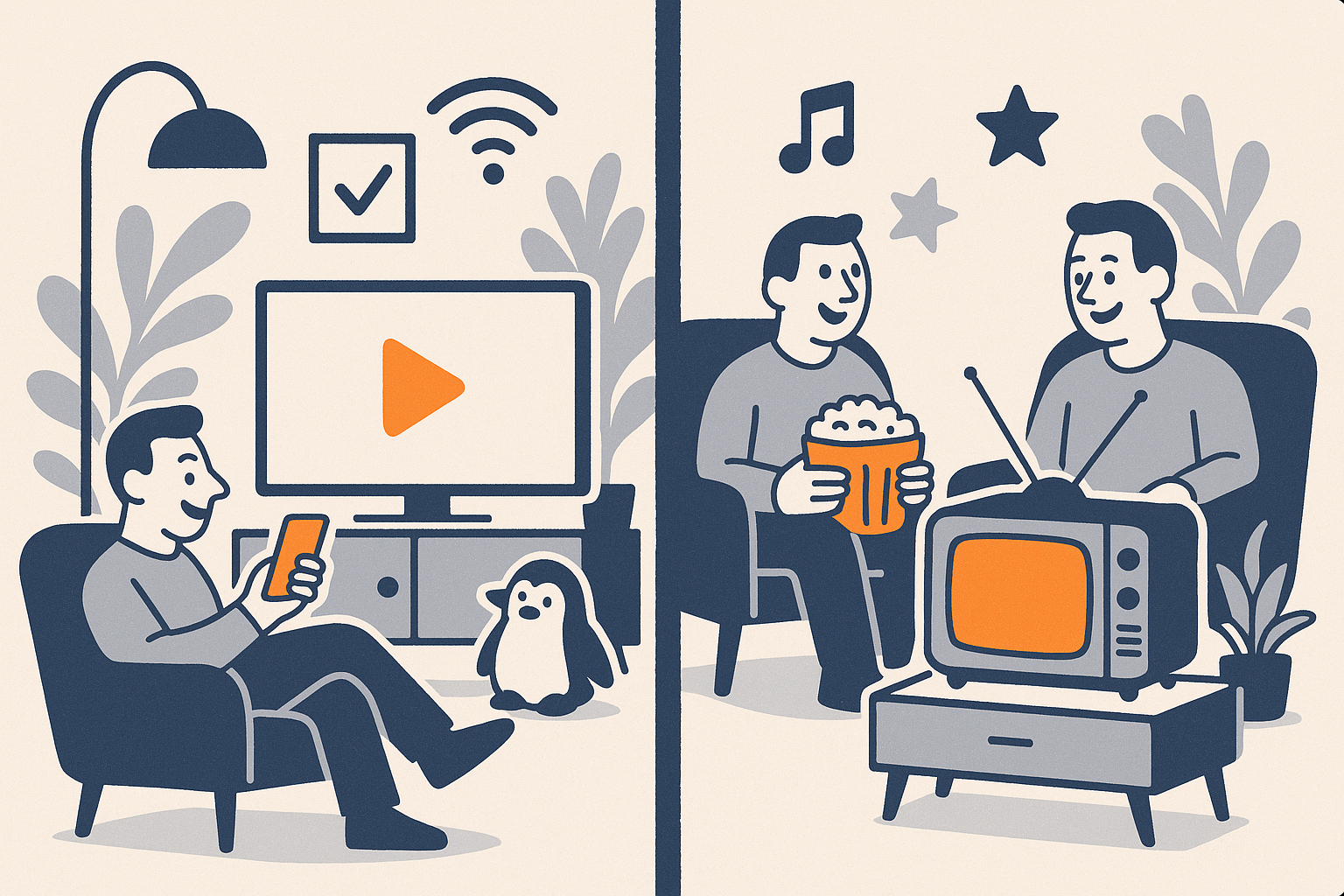
None of this is an argument against new technology. It’s a case for balance. The real sweet spot is often a hybrid: new tech where it makes life easier, old tech where it keeps things simple. Example: a modern phone with a current camera, paired with an older laptop that still writes and edits just fine. A smart speaker for voice timers, plus a basic radio for background sound. A new streaming service for movies, plus a used DVD player for the favorite films you already own.

Mixing old and new gives you the best of both worlds—innovation without dependence, convenience without constant change. It’s also a reminder that technology is supposed to serve your life, not the other way around.

So Why Does Old Tech Still Rule?

Because it has already proven itself. It is predictable, usable, and often repairable. It doesn’t demand a monthly fee. It doesn’t ask for constant attention. It gives you control. In a world where everything is connected and updated and optimized, older tools can feel like a small island of calm.

That calm is worth something. It’s worth money. It’s worth sanity. And it’s worth a little appreciation on a Wednesday afternoon.

Note: No citations available from the approved sources list for this post.

What to Watch Next

  • The rise of repairable electronics and right-to-repair momentum
  • Local storage making a comeback as people tire of subscriptions
  • Resale and refurb markets growing as budgets tighten
  • Purpose-built devices (e-readers, music players) gaining fans again

Thanks for hanging out for Whatever Wednesday. If this sparked a “maybe I don’t need an upgrade” moment, mission accomplished. See you next week—same day, same vibe, and hopefully the same reliable gadgets.