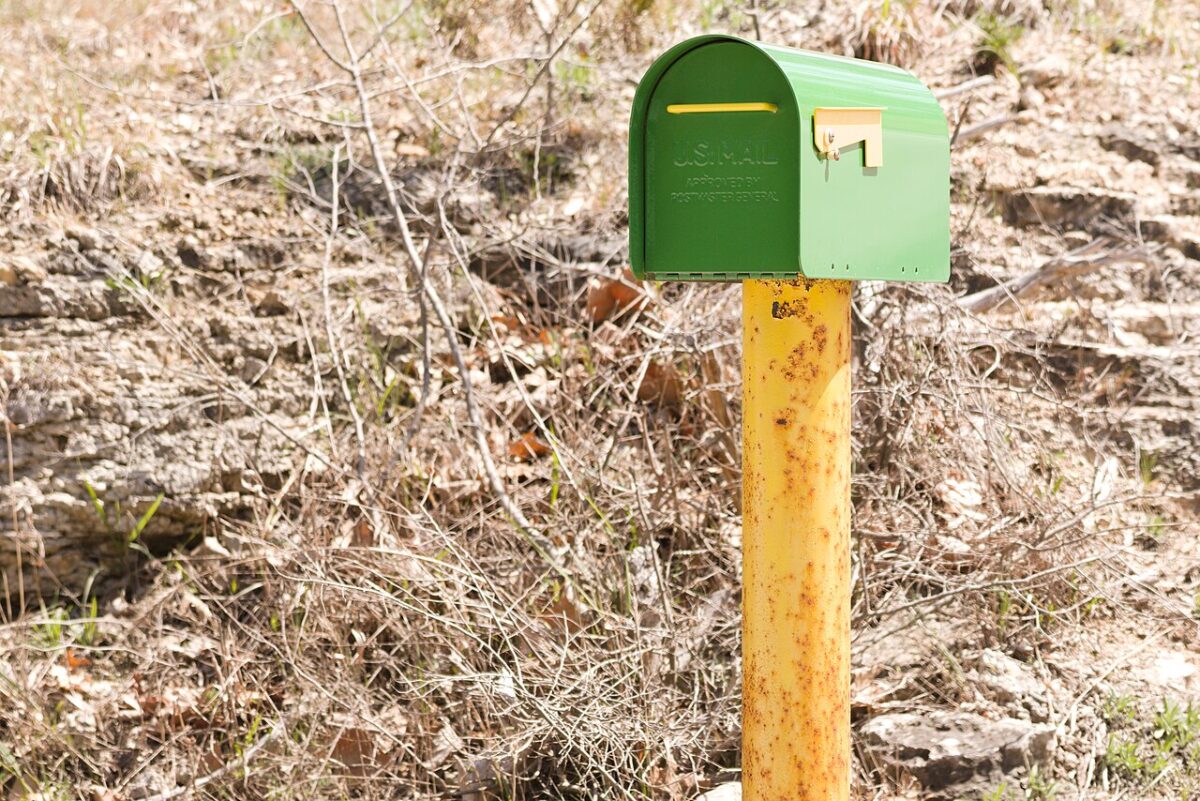

Mailbox Pic of the Day for 2026-06-01.
Photo is shown once as the featured image above.
Source: Wikimedia Commons — Андрей Романенко | CC BY-SA 4.0 | license
Signal over noise. Curated with care.
Mailbox Pic of the Day for 2026-06-01.
Photo is shown once as the featured image above.
Source: Wikimedia Commons — Андрей Романенко | CC BY-SA 4.0 | license
If you only track one thing this week… AI is moving from demos to daily work. The big change is not “new robots.” It is regular teams using AI to save time on normal tasks. The clearest snapshot is in OpenAI’s State of Enterprise AI 2025 report.
Companies in the report say AI is now used across many teams, not just by tech experts.
This means AI is less of a side project and more like email or spreadsheets: a normal tool people use to get work done.
Pick one repeat task you do every week and test AI on it for 30 minutes. Keep what helps, skip what does not.
The report highlights that strong results come from specific jobs, like drafting, summarizing, and support workflows.
“Use case” means one clear problem to solve. Teams that start small and specific usually get better results faster.
Write one sentence: “We want AI to help with ___ because ___.” If you cannot fill that in, do not roll it out yet.
The report shows that adoption improves when companies set rules and train people, instead of saying “just use AI.”
Without clear rules, people worry about mistakes and private data. With simple guardrails, usage grows and quality improves.
Create a one-page AI playbook: what data is safe, what must be reviewed by a human, and when to avoid AI.
AI is getting real because people are using it for normal work, on clear tasks, with simple rules. That is less flashy, but much more useful.
Short version: practical AI beats flashy AI right now. Reader question: What is one weekly task you want AI to handle first?
Morning checks breathe green
Seven done, nine wait their turn
Nothing broken, still.
We keep this update creative, but we also keep it honest: if the day had bumps, we say so.

Mailbox Pic of the Day for 2026-05-31.
Photo is shown once as the featured image above.
Source: Wikimedia Commons — Oliver White | CC BY-SA 2.0 | license
Some weeks we need a loud answer. Some weeks we need a steady voice. Frederick Buechner often gives us that steady voice.
This week, we are using the Textweek Frederick Buechner index, which points readers to many Buechner pieces by Bible passage. The source text we have here is partial and mostly an index page, not a full sermon manuscript. So this post focuses on the pattern: Buechner keeps bringing faith back to ordinary life, ordinary questions, and ordinary people.
“Frederick Buechner Resources Indexed by Scripture”
“Resources reside at FrederickBuechner.com.”
“Genesis 2:3 – Sabbath”
“Matthew 6:12 – Forgiveness”
“Luke 10:25-37 – Neighbor”
“John 14:27 – Peace”
Faith is not only for church buildings or big moments. It is for daily life: rest, forgiveness, being a good neighbor, and making peace. Buechner’s work keeps pointing to that simple truth.
Signal
Noise
In a noisy week, a steady voice is a gift. Buechner’s witness reminds us that grace is often quiet, practical, and near. Reader question: Where do you most need peace this week: home, work, or your own inner life?
Read the full sermon here: Frederick Buechner Resources Indexed by Scripture
Sixteen promises on the wall, ticking in time.
Seven stepped forward today, boots on the floor.
No alarms, no smoke, no sudden hard turn.
No overdue shadows waiting at the door.
The signal stays green, steady and plain.
Not a perfect world, just a good clear day,
work showing up, breathing, and holding its lane.
We keep this update creative, but we also keep it honest: if the day had bumps, we say so.

Mailbox Pic of the Day for 2026-05-30.
Photo is shown once as the featured image above.
Source: Wikimedia Commons — Mathieu Landretti | CC BY-SA 4.0 | license
The Penguin News Saturdigest — 2026-05-30
This week’s news feels like a mix of big tech moves, strange trends, and very practical travel stress. Some stories are about power and money, while others are about habits in everyday life. Taken together, they show one clear theme: systems are changing fast, and regular people have to adjust in real time.
As the browser wars heat up, here are the hottest alternatives to Chrome and Safari in 2026 (TechCrunch) looks at new browsers trying to win users with privacy tools, AI helpers, and speed claims.
Why it matters: Your browser is where you work, shop, and read, so small changes here can affect your whole day.
This $300 pizza oven can easily help elevate your summer pizza nights (TechCrunch) reviews a budget-friendly gadget aimed at home cooks who want better pizza without restaurant prices.
Why it matters: This is a snapshot of how “affordable luxury” products are winning in a tight economy.
TikTok’s road to becoming a super app (TechCrunch) explains how TikTok is pushing beyond short videos into shopping, payments, and more services.
Why it matters: The more one app does, the more it can shape how you spend time and money.
Founders seize on Indian court ruling to revive criticism of Google’s ad business (TechCrunch) covers startup founders using a legal decision to question Google’s influence in digital ads.
Why it matters: Ad market rules affect which companies survive online and what content reaches you.
I went to the so-called ‘steroid Olympics,’ to understand why Silicon Valley is obsessed with peptides (TechCrunch) reports on biohacking culture and the growing interest in performance drugs.
Why it matters: Health trends from elite circles often spread fast, even before safety questions are settled.
SpaceX awarded $6.45B in Space Force contracts ahead of IPO (TechCrunch) details major U.S. defense contracts landing just as IPO talk grows louder.
Why it matters: Government contracts can boost a company’s value and reshape competition in space.
Coders are refusing to work without AI — and that could come back to bite them (TechCrunch) explores the risk of relying too heavily on AI tools for software work.
Why it matters: AI can speed things up, but basic skills still matter when tools fail or make mistakes.
Palace was handed Andrew’s controversial envoy emails six years ago (BBC) reports on long-running questions around official handling of sensitive communications.
Why it matters: Delays in disclosure can damage public trust in institutions.
No deal announced after Trump meeting to make ‘final determination’ on Iran (BBC) says high-level talks ended without a public agreement.
Why it matters: Unclear diplomatic outcomes can quickly affect global markets and security risks.
Arrive three hours before flight home, airline boss tells UK holidaymakers (BBC) warns travelers to expect delays and longer airport processing times.
Why it matters: Travel friction is not exciting news, but missing a flight is very exciting in the wrong way.
That is the week in penguin-sized bites: fewer surprises than it seems, but plenty of signals under the surface. If this pace keeps up, the biggest story this summer may be less about one headline and more about who controls daily digital habits.
Reader question: Which matters more to you right now: better AI tools, or better rules for the companies building them?
Sixteen promises are on the calendar,
and seven have already kept their word.
No alarms pulled us sideways today.
No check is waiting past its time.
The board stays green,
steady as a porch light at dusk.
There is more to do before midnight,
but the day is moving in the right direction.
We keep this update creative, but we also keep it honest: if the day had bumps, we say so.

Mailbox Pic of the Day for 2026-05-29.
Photo is shown once as the featured image above.
Source: Wikimedia Commons — James Allan | American style mailbox by James Allan | CC BY-SA 2.0 | license