
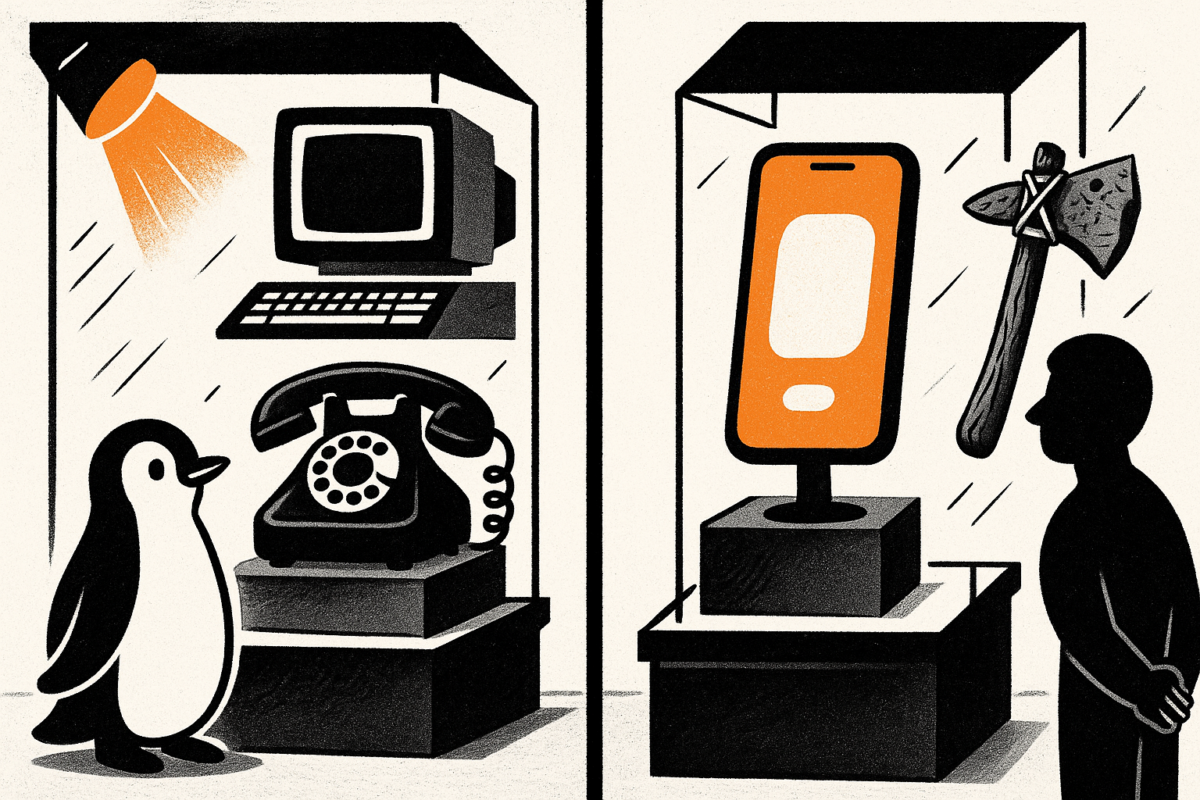
There is a particular sound that modern life has almost erased: the clean, decisive click of a physical button that does exactly one thing. No menu. No login. No software update waiting in ambush. Just action and result. Old tech earns loyalty for that reason. It does not ask us to become unpaid IT staff for our own tools. It asks less, then delivers more. In a culture obsessed with “next,” older devices, formats, and systems keep winning quiet victories because they are stable, understandable, and oddly human-sized.
Old tech is honest about what it can do
New products often arrive wrapped in possibility. Old products arrive wrapped in boundaries. That sounds like a loss until you live with both. A dedicated alarm clock does not pretend to be your social life, your newsfeed, and your shopping mall before breakfast. A paper notebook does not interrupt your sentence with push notifications from three unrelated apps. A wired keyboard does not demand firmware diplomacy to type the letter A.
These limits are not defects. They are a kind of design clarity that many people now experience as relief. When a tool has one clear job, you can build habits around it. And habits, not novelty, usually decide whether something helps you over months and years. We underestimate how much cognitive energy is saved when tools are predictable. Old tech tends to be predictable on purpose.
Reliability is not boring; it is liberating
“It just works” has become a slogan, but with older technology it is often a literal description. A basic FM radio still catches a signal in bad weather. A printed map still functions at 2% battery because it has no battery. A local file on your hard drive is still there when a cloud service changes terms, raises prices, or disappears after an acquisition.
Reliability also has emotional value. You trust things that show up consistently. That trust changes behavior. People bring old cameras on important trips because they know the controls by feel. They keep decades-old cookware because the heat behavior is familiar. They maintain old operating systems in niche labs because workflows are proven. The point is not nostalgia; it is risk management with a personal face.
Modern tools can absolutely be reliable, but many are reliable only within a subscription, an ecosystem, and a stable internet connection. Old tech often keeps its promises offline, unbothered, and without recurring permission slips.
Repairability creates a different relationship
One reason old tech “still rules” is that it can often be opened, inspected, and fixed. Screws instead of glue. Replaceable parts instead of sealed mysteries. Documentation that assumes users might want to understand the object they own. Repairability is practical, but it is also cultural. It teaches that tools are not magical black boxes; they are assemblies of choices.
That matters beyond the workshop. A repair-friendly mindset spills into daily life: people learn to diagnose before replacing, maintain before discarding, and adapt before upgrading. Those habits save money, yes, but more importantly they protect agency. If every failure forces a full replacement, you are renting convenience from the future. If failures are fixable, you are building competence in the present.
There is also joy here. Ask anyone who has revived a cassette deck, rebuilt an old mechanical keyboard, or replaced the belt on a turntable. The satisfaction is not about pretending the past was perfect. It is about participating in how things work.
Friction can be a feature, not a bug
We are trained to treat all friction as bad design. But some friction is protective. Waiting for film to be developed can sharpen attention while shooting. Writing by hand can slow thinking just enough to improve it. Even simple routines like transferring photos manually can create a pause where curation happens naturally, instead of infinite auto-backups producing digital clutter.
Old tech often inserts these small pauses. Not as punishment, but as pacing. And pacing changes experience. A CD album asks you to listen in sequence. A physical book asks you to be somewhere, fully, for a while. A standalone game console from an earlier era asks you to play the game, not optimize your profile.
This is where old tech becomes unexpectedly modern: in an attention economy, tools that reduce compulsive behavior feel avant-garde. The truly “advanced” move may not be adding one more smart layer. It may be choosing an artifact that refuses to gamify your every minute.
Old tech survives because people keep choosing it
Not all older technologies deserve revival, and not every vintage object is practical. But the ones that endure tend to share a pattern: they solve a real problem clearly, they fail gracefully, and they fit into human routines without colonizing them. That combination outlasts trend cycles.
There is a social dimension too. Communities form around durable tools: people trading repair tips, sharing manuals, and passing down knowledge that is hard to monetize but easy to value. When technology becomes legible, culture becomes participatory. You do not just consume features; you inherit practices.
So yes, old tech still rules in specific corners: not because it is old, but because it is coherent. It respects your time, your attention, and your ability to learn. In a world full of “smart” things competing for your focus, that kind of respect feels almost radical.
What to watch next
- The right-to-repair movement and how policy changes may influence device longevity on campuses and in households.
- The return of single-purpose tools in productivity and wellness, from e-ink devices to distraction-free writing hardware.
- How libraries, maker spaces, and community labs are becoming preservation hubs for formats and skills industry has moved past.
- The quiet growth of “local-first” software, where your files and workflows stay usable even when services change.
Keep the new stuff that truly helps. Keep the old stuff that keeps its promises. The sweet spot is not old versus new; it is choosing technology that leaves you more capable than it found you.
Note: Approved-source links were not available from the provided allowlist for this draft, so this piece is published without specific inline citations.