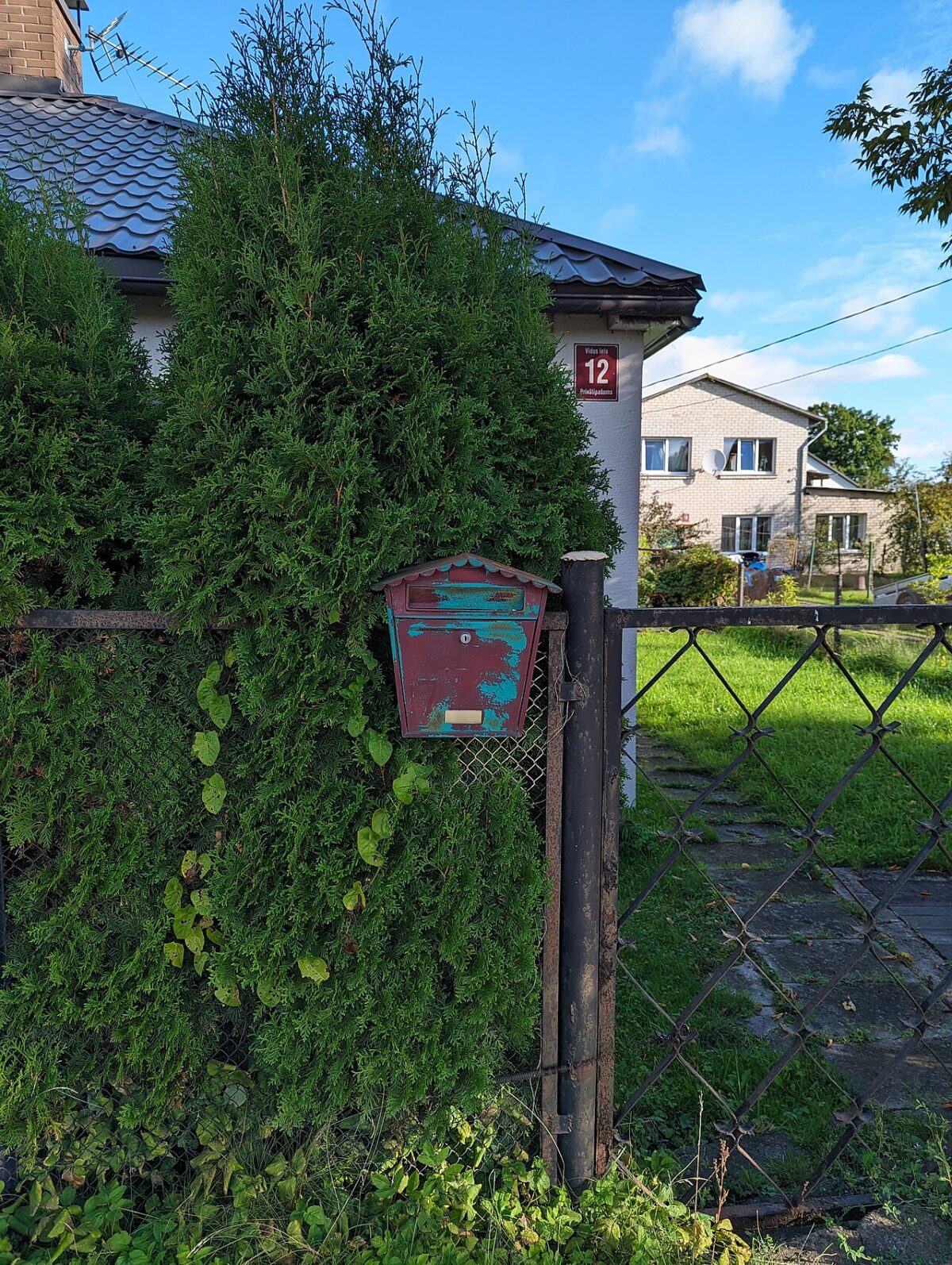
Mailbox Pic of the Day for 2026-07-20.
Photo is shown once as the featured image above.
Source: Wikimedia Commons — Daniel Capilla | CC BY-SA 4.0 | license
Signal over noise. Curated with care.

Mailbox Pic of the Day for 2026-07-20.
Photo is shown once as the featured image above.
Source: Wikimedia Commons — Daniel Capilla | CC BY-SA 4.0 | license
If you only track one thing this week, track this: AI is moving from demo mode to daily work. The big story is not just smarter models. It is how fast companies are learning to actually use them.
A new theme showed up across this week’s news: the next big AI win may go to the companies that help people use AI well, not just the ones that build the biggest model. TechCrunch highlighted that idea clearly. The article points to a simple shift: businesses now care more about getting AI into real jobs, teams, and tools.
This matters because many people already know AI can write, search, and summarize. The harder part is making it useful every day. “Implementation” means putting a tool into real use at work. That includes training people, changing routines, and connecting AI to the software they already use.
If you use AI at work or at home, stop asking only, “Which model is best?” Also ask, “Where does this save time every week?” Start with one repeat task, test AI on it, and keep only what truly helps.
OpenAI introduced an Adoption News channel. That is a strong signal that the company wants to spotlight real-world use, not just product launches. It suggests the story of AI in 2026 is becoming more about who is using it well and what results they are getting.
When a major AI company starts organizing news around adoption, it tells us the market is maturing. “Adoption” means more people and businesses are moving from trying AI once to using it regularly. For everyday readers, that means AI is becoming less of a science project and more of a normal tool.
Watch for examples, not slogans. Pay attention to stories that show time saved, better customer service, or fewer routine tasks. Those examples will tell you more than bold claims about “revolution.”
In OpenAI’s post about the next phase of enterprise AI, the focus is on how businesses are moving deeper into real deployment. “Enterprise” is a simple term for large organizations and companies. The message is clear: AI is becoming part of operations, not just a side experiment.
Big companies often move slowly. When they shift from testing to wider use, it usually means the tools are getting more useful and more trusted. That can affect workers, customers, and smaller businesses too, because the habits built inside large companies often spread outward.
Look for practical signs of change around you. Is your workplace adding AI to support, writing, research, or planning? If yes, ask what problem it solves, how people check the results, and whether it saves real time.
The one shift worth tracking this week is simple: AI is growing up. The biggest story is no longer just who has the flashiest model. It is who can turn AI into something people actually use, trust, and keep using.
The smart move this week is to watch behavior, not buzz. Where are you already seeing AI become part of normal life or work?
Sixteen small promises on the wall,
seven already walked through the day,
and none came back limping.
No alarms singing,
no smoke in the corners,
no late footsteps on the stairs.
Just a green light,
steady as breath,
steady as Sunday,
steady as a hand on the rail saying:
we checked,
the day answered,
and for now,
it holds.
We keep this update creative, but we also keep it honest: if the day had bumps, we say so.
Mailbox Pic of the Day for 2026-07-19.
Photo is shown once as the featured image above.
Source: Wikimedia Commons — Jaakko.kulta | CC BY 4.0 | license
Sunday Sermon: A Mainline Voice for Ordinary Life
Some Christian voices shout. Frederick Buechner usually did something else. He helped people notice grace in regular life.
This week, that matters. Many readers do not need more noise. They need a steady word they can live with on Monday morning.
This week’s sermon is about Frederick Buechner, a Presbyterian minister, writer, and theologian whose work has encouraged ordinary people for many years. The source text we have is partial, and it comes from his official site’s biographical material rather than a full single sermon, so this post draws on that plain fact and on the themes the site names directly.
In that partial source, Buechner is presented as a writer who helped readers “see the grace in their daily lives.” That is a deeply mainline Protestant idea: God is not only found in dramatic moments, but also in common days, honest questions, memory, work, loss, and hope.
“an ordained Presbyterian minister”
“an important source of inspiration and learning”
“its ability to inspire readers to see the grace in their daily lives”
“Hope Through Grace”
“Faith Despite Doubt”
“Searching for Meaning”
The big theme is simple: God meets people in real life. Not just in church language. Not just in perfect belief. Grace can show up in doubt, in sorrow, in memory, in small kindness, and in the slow work of becoming honest before God.
Buechner’s witness points away from performance and toward attention. Pay attention to your life. Tell the truth about it. Look again. There may be more mercy there than you first thought.
Buechner’s voice still helps because it is gentle without being weak. It reminds us that a faithful life is often built in small, truthful steps. Where have you noticed grace in your ordinary life this week?
Read the full sermon here: Frederick Buechner official website
Sixteen small promises
set out for the day.
Seven have already returned,
quiet and on time.
Nothing is asking for repair.
Nothing is waiting past its hour.
The board stays green,
not with bragging,
just with relief.
Some days lean hard against the hinges.
Today opens clean.
We take the good news gently,
mark it down,
and let the afternoon keep breathing.
We keep this update creative, but we also keep it honest: if the day had bumps, we say so.
Mailbox Pic of the Day for 2026-07-18.
Photo is shown once as the featured image above.
Source: Wikimedia Commons — Lorenismapping | CC0 | license
Title: The Penguin News Saturdigest — 2026-07-18
Date: 2026-07-18
This week felt like a tidy little map of modern news: AI money, AI gadgets, AI shortages, robots, politics, crime, and war. Some stories point to real shifts in business and technology. Others are loud in a way that tells us more about attention than progress.
So here is the practical version. Ten stories, one pass, and no need to wear a hard hat unless you plan to visit a startup pitch event.
Neil Rimer thinks the AI money is coming back out. In this TechCrunch piece, investor Neil Rimer argues that some of the money rushing into AI may now start flowing back out. That suggests at least part of the market is moving from excitement to a tougher look at what is actually working.
Why it matters: When investors get more careful, weak AI bets can fade fast, and stronger companies stand out more clearly.
Australian founders have a very short clock. TechCrunch says applications for Stripe x Startup Battlefield close in 48 hours, and the article lays out what founders need to know. This is a straightforward startup opportunity story, but it also shows how global the startup race has become.
Why it matters: Deadlines like this can shape which young companies get funding, attention, and early momentum.
Vertu is selling a very expensive AI helper. In TechCrunch’s test of Vertu’s AI agent, the main question is simple: if it costs $6,880, does it really do enough to justify the price? That makes it less a gadget story and more a reality check.
Why it matters: Fancy AI products keep arriving, but buyers still have to ask the oldest question in business: is this useful, or just shiny?
Databricks keeps getting bigger. TechCrunch reports that Databricks has reached a $188 billion valuation. That is a huge number, and it shows that investors still have strong appetite for major AI infrastructure players, not just brand-new startups.
Why it matters: Big valuations signal where money believes future power will sit, and right now that still looks a lot like data and AI plumbing.
People are already finding ways around recording culture. This TechCrunch story looks at a Zoom workaround meant to signal, “Don’t record me.” It touches a growing workplace tension: meetings are easy to save, search, and reuse, but many people do not want every comment turned into a permanent file.
Why it matters: Office tools are quietly changing trust, privacy, and how freely people speak.
Agility Robotics is moving into tougher territory. TechCrunch says Agility Robotics is planting itself in Tesla’s backyard. The message is not subtle: robotics companies now want to compete in the same physical and symbolic spaces.
Why it matters: Competition often speeds up real-world progress, especially in industries where bold promises need to become actual machines.
AI demand is squeezing phone hardware. TechCrunch reports that an AI-driven memory crunch is jolting India’s smartphone market. When memory becomes tighter or pricier, it can ripple through device costs, supply chains, and what people can afford.
Why it matters: AI does not only live in chatbots; it also affects the price and design of everyday hardware.
New drilling plans are back on the table in the North Sea. According to the BBC, Burnham is set to announce plans for new North Sea oil and gas drilling. This is one of those stories where energy needs, jobs, and climate concerns all crowd into the same room and refuse to leave.
Why it matters: Energy policy choices made now can shape prices, emissions, and political arguments for years.
A grim Epstein-related account is back in view. The BBC story on life inside Jeffrey Epstein’s “cult” centers on allegations of control, threats, and disfiguring surgery. It is a deeply disturbing reminder that abuse often depends on power, fear, and silence.
Why it matters: Stories like this matter because they keep public attention on how coercion works and how victims can be ignored for too long.
War is hitting commerce as well as battle lines. The BBC reports that Russian online retail warehouses were hit by deadly Ukrainian strikes. The story underlines how modern war reaches into logistics, storage, and the systems that keep daily life moving.
Why it matters: When supply networks become targets, the effects spread far beyond the immediate strike zone.
That is the week in penguin-sized bites: a lot of AI, a little machinery, and several reminders that human systems are never as tidy as slide decks make them look. The useful trick is to separate what changes the landscape from what merely makes a splash.
Reader question: which of these stories feels most likely to matter six months from now, and which one will be forgotten by Tuesday?
By morning light, the quiet checks began.
Sixteen were set to keep their patient watch.
Seven have made their rounds and all returned.
No faults were raised, no late alarms remain.
The day moves on in steady, open green.
We take this calm with thanks, not certainty.
For now, the work is holding as it should.
And that is good enough for us today.
We keep this update creative, but we also keep it honest: if the day had bumps, we say so.
Mailbox Pic of the Day for 2026-07-17.
Photo is shown once as the featured image above.
Source: Wikimedia Commons — Андрей Романенко | CC BY-SA 4.0 | license