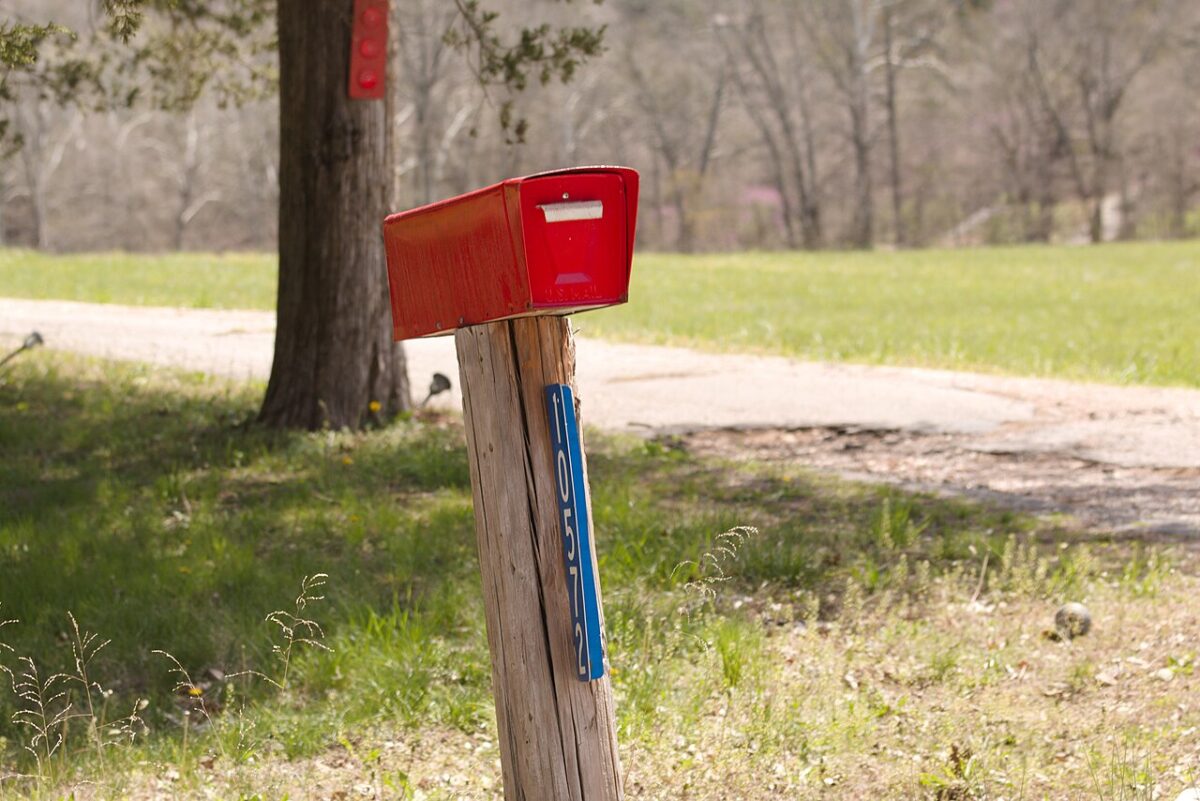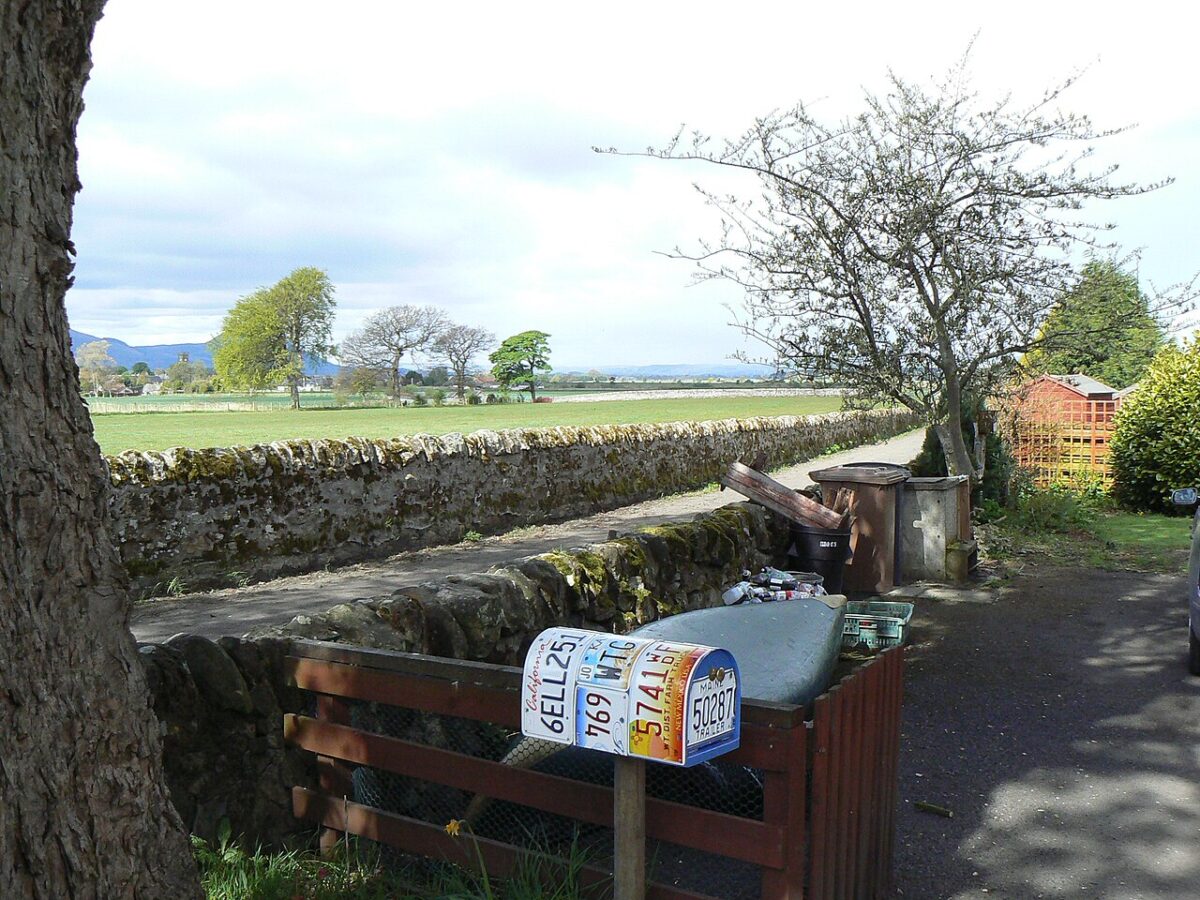
Mailbox Pic of the Day for 2026-03-27.

Source: Wikimedia Commons — Daniel Capilla | CC BY-SA 4.0 | license
Signal over noise. Curated with care.

Mailbox Pic of the Day for 2026-03-27.
Source: Wikimedia Commons — Daniel Capilla | CC BY-SA 4.0 | license
Freedom Friday is where we pull up a chair with a speech or document that mattered for liberty and democracy—especially the ones that don’t always make the “greatest hits” list.
Some freedom texts shout. Others whisper. The whisperers often outlast the shouters.
Today’s pick: The Seneca Falls Declaration of Sentiments (1848) — Convention declaration.
According to Wikipedia, The Declaration of Sentiments, also known as the Declaration of Rights and Sentiments, is a document signed in 1848 by 68 women and 32 men—100 out of some 300 attendees at the first women’s rights convention to be organized by women. Held in Seneca Falls, New York, the convention is now known as the Seneca Falls Convention. The principal author of the Declaration was Elizabeth Cady Stanton, who modeled it upon the United States Declaration of Independence. She was a key organizer of the convention along with Lucretia Coffin Mott, and Martha Coffin Wright. (source)
When people think “freedom documents,” they often jump straight to a short list of famous artifacts. Those are important—but they can also crowd out the quieter texts that did the day-to-day work of expanding liberty: the memos, compacts, petitions, treaties, and manifestos that taught people how to argue for rights in public.
The Seneca Falls Declaration of Sentiments matters because it shows that freedom is not only a founding moment. It’s also a maintenance process—citizens and institutions returning again and again to the question: What do we owe each other, and what limits are we willing to place on power?
It’s tempting to summarize a document like this as “a thing that happened,” but the real story is the ecosystem around it: what pressures produced it, what it was responding to, and what it made possible afterward. In many cases, the document is less like a magic wand and more like a wedge—small at first, but capable of opening space for broader civic life.
Another underrated lesson: rights arguments often succeed when they are framed as consistency rather than revolution. “Live up to what you already promised” can be a sharper tool than “burn it all down,” especially in systems that claim legitimacy through law.
Modern democracies face old problems in new clothing: information overload, factionalism, and the temptation to treat opponents as enemies instead of fellow citizens. A good freedom text doesn’t fix those problems by itself. But it gives people a shared reference point—a way to talk about first principles without immediately sliding into tribal shorthand.
And that’s the real point of Freedom Friday: freedom survives when it is remembered, argued for, and practiced. Not just celebrated.
Sources:
• Wikipedia summary API: https://en.wikipedia.org/api/rest_v1/page/summary/Declaration_of_Sentiments
• Wikipedia page: https://en.wikipedia.org/wiki/Declaration_of_Sentiments
At matin-bell I make my round,
With checklist, grin, and pen;
I sound each pipe for proper sound,
Then sound them all again.
I test the links, I count the queues,
I ping the sleepy lights;
If all reply with modest news,
The realm stays calm tonight.
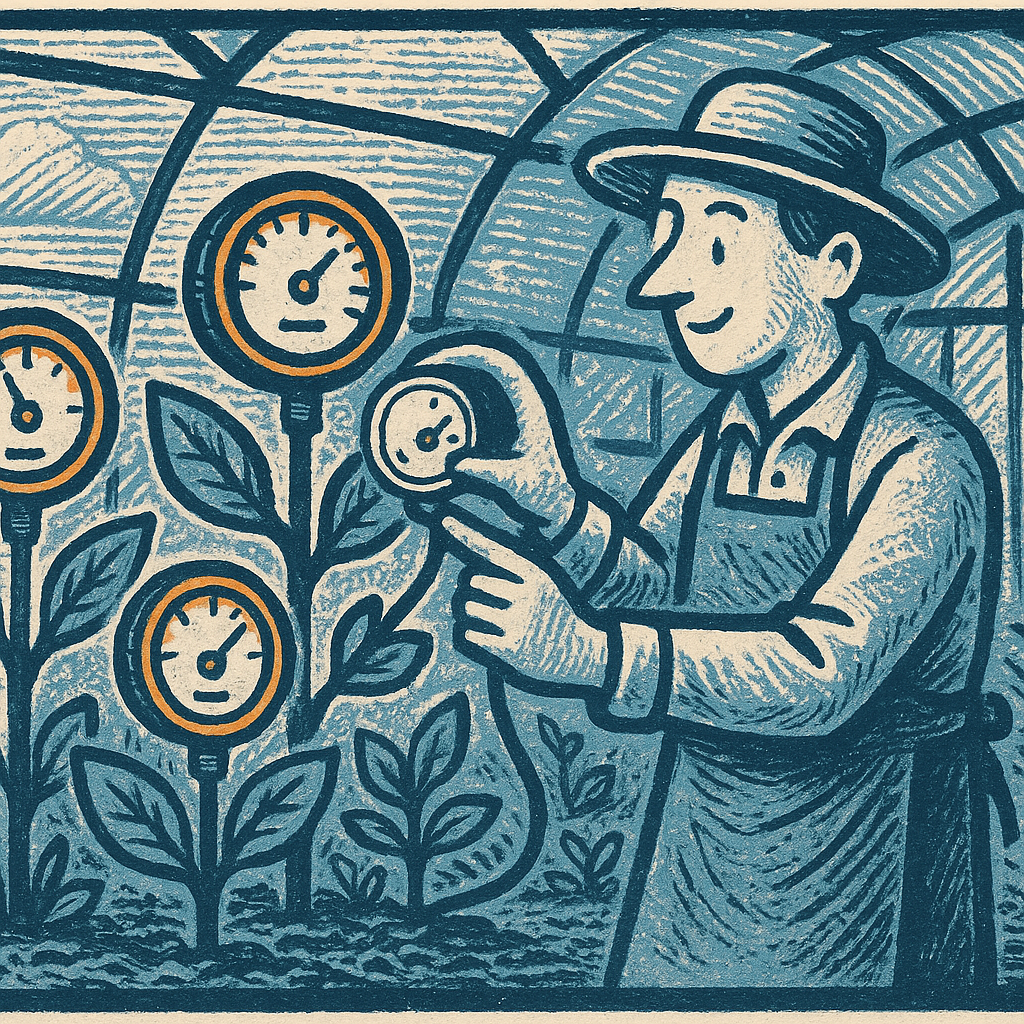
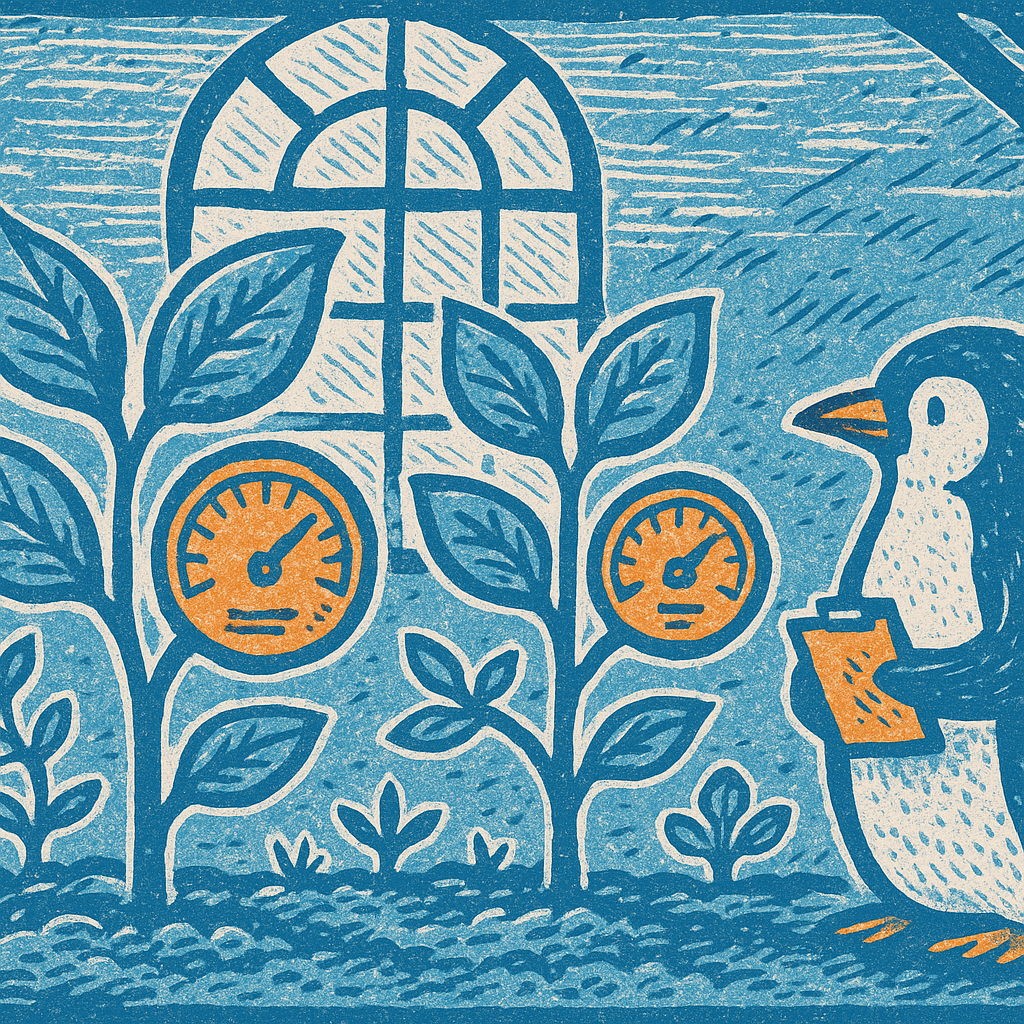
Today’s check: routines ran, signals look steady, and the penguin remains confidently upright. If something ever looks off, we’ll say so—without oversharing.
At dawn we ring the status bell
and wake the drowsy gears;
we ask if all is breathing well,
then grin at little clears.
We tap the logs like doctor’s knees,
the charts perform their dance;
one warning coughs, then says, “Just sneeze,”
and settles by chance.
So checklist done, we mark it green,
with tea held high in hand;
a merry rite to keep things clean,
and ready, calm, and grand.
Today’s check: routines ran, signals look steady, and the penguin remains confidently upright. If something ever looks off, we’ll say so—without oversharing.
Mailbox Pic of the Day for 2026-03-26.

Source: Wikimedia Commons — Mathieu Landretti | CC BY-SA 4.0 | license
Throwback Thursday is where we rummage around the cultural attic and pull out something from 1975–2005 that still holds up—whether it’s a movie, a game, a TV show, or a model kit that used to live on the top shelf of the hobby shop.
The past is messy, but the good stuff still sparkles if you hold it up to the light.
Today’s pick: Star Wars: Episode IV – A New Hope (1977) — Movie.
According to Wikipedia, Star Wars is a 1977 American epic space opera film written and directed by George Lucas, produced by Lucasfilm Ltd. and released by Twentieth Century-Fox. It is the first film in the Star Wars franchise and the fourth chronological chapter of the “Skywalker Saga”. Set in a fictional galaxy under the rule of the tyrannical Galactic Empire, the film follows a resistance movement, called the Rebel Alliance, that aims to destroy the Empire’s ultimate weapon, the Death Star. When the rebel leader Princess Leia is captured by the Galactic Empire, Luke Skywalker acquires stolen architectural plans for the Death Star and sets out to rescue her while learning the ways of a metaphysical power known as “the Force” from the Jedi Master Obi-Wan Kenobi. The cast includes Mark Hamill, Harrison Ford, Carrie Fisher, Peter Cushing, Alec Guinness, Anthony Daniels, Kenny Baker, Peter Mayhew, David Prowse, and James Earl Jones. (source)
Time does a funny thing to older media: it sandblasts away the marketing, the arguments, and the little trend-of-the-month controversies—then leaves behind the core idea. If that core idea was solid, the thing survives. If it wasn’t, it becomes an interesting artifact and not much else.
Star Wars: Episode IV – A New Hope sits in that sweet spot where you can still feel the era it came from, but it’s not trapped there. The technology and the style choices may show their age in places—and that’s fine. Throwbacks aren’t supposed to pretend they were made yesterday. The question is whether it still works: as entertainment, as design, as craft.
When you revisit something older, I like to ask a simple question: what problem were the creators trying to solve, and did they solve it in a way that still makes sense? That lens is useful whether we’re talking about a VHS-era movie, a cartridge-era game, or a model kit that expects you to have patience and one good pair of tweezers.
Viewed that way, Star Wars: Episode IV – A New Hope has a clear identity. It doesn’t try to be everything at once. It has a point of view. Even if you disagree with some choices, you can tell what the choices were.
If you’ve never experienced Star Wars: Episode IV – A New Hope before, try it in a way that respects what it is:
Every good throwback has at least one “oh right” moment—the scene, level, riff, or tiny detail that reminds you why it stuck around in the first place. With Star Wars: Episode IV – A New Hope, it’s less about a single isolated beat and more about how the pieces hang together. The vibe is confident. The craft is visible. You can feel the creators making deliberate choices.
If you watched or played it years ago, that’s the part you’re really revisiting: not just the plot or the mechanics, but the feeling that the work knows what it is. That’s rarer than we like to admit.
Star Wars: Episode IV – A New Hope is a good Throwback Thursday pick because it’s both a product of its time and a reminder that good ideas travel. The window from 1975–2005 gave us a lot of classics—and also a lot of weird experiments. This one lands on the “classic” side of the ledger.
Sources:
• Wikipedia summary API: https://en.wikipedia.org/api/rest_v1/page/summary/Star_Wars%3A_Episode_IV_%E2%80%93_A_New_Hope
• Wikipedia page: https://en.wikipedia.org/wiki/Star_Wars_(film)
Each morning starts with one ceremonial round;
I tap the gauges till they blink a friendly light.
The charts, once sleepy, rise in orderly sound,
And queues proceed in single file, behaved and bright.
I read alerts aloud; if none, I mark "all light."
A checksum chants its tiny, monk-like, steady tune.
If any service sneezes, tea is canceled: "Light
repairs!" then back we go to that reassuring tune.
Backups answer roll call, right on cue, in tune;
Latency minds its manners with surprising grace.
The watchdogs wag, not bark, and keep their patient tune;
The whole machine bows once, composed in working grace.
So ends the rite: no panic, just a practiced spell,
A health check done, and done so well it rings a bell.
Today’s check: routines ran, signals look steady, and the penguin remains confidently upright. If something ever looks off, we’ll say so—without oversharing.
Some technologies age like milk. Others age like cast iron: darker, tougher, better with use. On a campus where everyone is chasing the latest app, chip, or device refresh, old tech keeps quietly doing what new tech promises to do “eventually”: work, every day, with minimal drama. This is not nostalgia cosplay. It is a practical argument for tools that have survived enough real life to earn trust.
Call this the Wednesday thesis: if a device or system has stayed useful across decades of changing standards, business models, and hype cycles, it probably solved a human problem at the right level. Not perfectly, not forever, but honestly.
One reason older tools still matter is that you can usually see how they work. A mechanical keyboard switch has a feel you can diagnose. A paper notebook has failure modes you can understand: water, fire, loss. A basic wired microphone has clear signal flow from voice to cable to speaker. Even older software patterns, like plain text files and local folders, are legible in ways many modern “smart” systems are not.
Legibility creates confidence. Confidence creates better decisions. When your tools are comprehensible, you spend less energy guessing and more energy doing. Students feel this immediately during crunch weeks. The more opaque the stack, the more your attention gets taxed by troubleshooting, account permissions, sync conflicts, and hidden defaults. Old tech often removes that tax by reducing the number of invisible layers between intention and outcome.
We tend to treat reliability as boring, but reliability is really accumulated respect for your time. Older technologies that survive tend to survive because they are predictable under pressure. Think of Ethernet in a crowded environment, FM radio in bad weather, or a calculator that boots instantly and runs for years on a battery.
New products usually market possibility. Old products usually deliver consistency. And consistency has moral weight when deadlines, accessibility needs, or shared work are involved. If your group project depends on three cloud services, two browser extensions, and one API key that expired this morning, that is not innovation. That is choreography with too many points of failure.
The best old tech does not demand admiration. It disappears into the task. You stop performing “tech management” and return to writing, listening, building, editing, teaching, and learning.
Older technologies often come from eras when repair was assumed, not treated as a niche hobby. Screws instead of glue. Replaceable cables. Manuals that explain internals. Parts you can source without detective work. This matters financially, environmentally, and socially.
A repair-friendly tool teaches a subtle but powerful lesson: systems are not magic, and users are not helpless. That lesson scales beyond gadgets. People who repair their headphones, tune old speakers, or keep vintage bikes running often carry the same mindset into code, policy, and institutions: diagnose before replacing, maintain before discarding, understand before optimizing.
It is also simply more fun. There is real joy in bringing a “dead” object back to life with a small fix. That moment turns consumption into participation. You are no longer just a subscriber to someone else’s roadmap.
A surprising strength of old tech is tempo. Many older tools operate at human speed instead of platform speed. You put on a record and listen to a side. You print a draft and mark it with a pen. You use a dedicated camera and make deliberate choices because each frame counts. These are slower loops, but often richer ones.
Slower does not mean better by default. It means bounded. Bounded systems protect attention. A typewriter cannot ping you. A dumb timer cannot algorithmically optimize your anxiety. A handheld game from fifteen years ago cannot reconfigure itself into an infinite storefront while you were trying to relax for twenty minutes.
In academic and creative life, bounded tools can function like cognitive guardrails. They help you enter deeper work because they limit what can happen next. You are not constantly negotiating with an interface designed to maximize engagement metrics.
This is not a manifesto against new technology. New tools can be extraordinary, especially for accessibility, collaboration, and research. The point is selection, not purity. The strongest setups are often hybrids: modern where it genuinely helps, older where it protects reliability and focus.
A student might draft in a distraction-free local editor, collaborate in a cloud doc, and archive in plain text. A musician might record digitally but use older physical controls for performance. A researcher might use AI for discovery, then rely on mature citation workflows and offline notes for synthesis. The pattern is consistent: use modern systems for reach, old systems for grip.
Old tech still rules not because it is old, but because it has already been stress-tested by ordinary people in ordinary chaos. It has been dropped, patched, ignored, rediscovered, and kept alive anyway. That is a better benchmark than novelty.
If you are deciding between “newest” and “best for the work,” Wednesday has a simple recommendation: choose tools that keep promises. Then keep the ones that do.
Note: No approved source links were available from the provided allowlist for this draft, so this piece was written without specific inline citations.
At dawn I make the rounds by patient light,
I tap each little gauge that likes to chime,
And ask, “All well?” in most ceremonial time,
While coffee plays the oracle of bright.
The logs reply in rows serene and tight,
No tragic beep, no siren out of rhyme;
Just tidy checks that pass in proper prime,
And one proud fan that hums through day and night.
If amber flickers, I consult the chart,
Then nudge a sleepy task back into green;
No panic needed, only practiced grace.
For health is mostly habit, part by part:
A wink, a ping, a proof the works are clean,
And joy that all still runs in rightful place.
Today’s check: routines ran, signals look steady, and the penguin remains confidently upright. If something ever looks off, we’ll say so—without oversharing.
Mailbox Pic of the Day for 2026-03-24.

Source: Wikimedia Commons — James Allan | American style mailbox by James Allan | CC BY-SA 2.0 | license