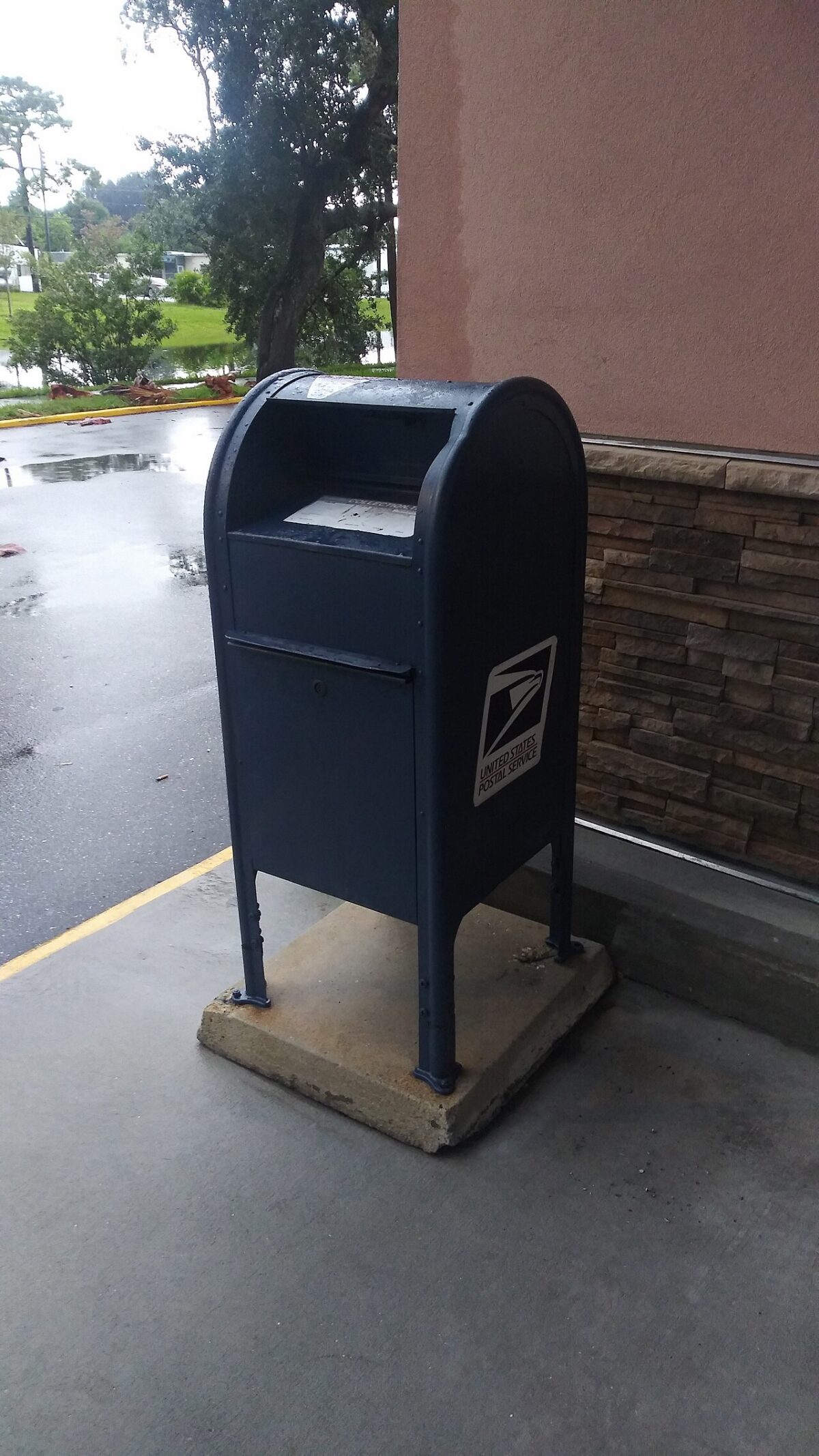

Mailbox Pic of the Day for 2026-04-02.
Source: Wikimedia Commons — Daniel Capilla | CC BY-SA 4.0 | license
Signal over noise. Curated with care.
Mailbox Pic of the Day for 2026-04-02.
Source: Wikimedia Commons — Daniel Capilla | CC BY-SA 4.0 | license
Throwback Thursday is where we rummage around the cultural attic and pull out something from 1975–2005 that still holds up—whether it’s a movie, a game, a TV show, or a model kit that used to live on the top shelf of the hobby shop.
The past is messy, but the good stuff still sparkles if you hold it up to the light.
Today’s pick: The X-Files (1993) — TV show.
According to Wikipedia, The X-Files is an American science fiction drama television series created by Chris Carter. The original series aired from September 10, 1993, to May 19, 2002, on Fox, spanning nine seasons, with 202 episodes. A tenth season of six episodes ran from January to February 2016. Following the ratings success of this revival, The X-Files returned for an eleventh season of ten episodes, which ran from January to March 2018. In addition to the television series, two feature films have been released: the 1998 film The X-Files and the stand-alone film The X-Files: I Want to Believe, released in 2008, six years after the original television run ended. (source)
Time does a funny thing to older media: it sandblasts away the marketing, the arguments, and the little trend-of-the-month controversies—then leaves behind the core idea. If that core idea was solid, the thing survives. If it wasn’t, it becomes an interesting artifact and not much else.
The X-Files sits in that sweet spot where you can still feel the era it came from, but it’s not trapped there. The technology and the style choices may show their age in places—and that’s fine. Throwbacks aren’t supposed to pretend they were made yesterday. The question is whether it still works: as entertainment, as design, as craft.
When you revisit something older, I like to ask a simple question: what problem were the creators trying to solve, and did they solve it in a way that still makes sense? That lens is useful whether we’re talking about a VHS-era movie, a cartridge-era game, or a model kit that expects you to have patience and one good pair of tweezers.
Viewed that way, The X-Files has a clear identity. It doesn’t try to be everything at once. It has a point of view. Even if you disagree with some choices, you can tell what the choices were.
If you’ve never experienced The X-Files before, try it in a way that respects what it is:
Every good throwback has at least one “oh right” moment—the scene, level, riff, or tiny detail that reminds you why it stuck around in the first place. With The X-Files, it’s less about a single isolated beat and more about how the pieces hang together. The vibe is confident. The craft is visible. You can feel the creators making deliberate choices.
If you watched or played it years ago, that’s the part you’re really revisiting: not just the plot or the mechanics, but the feeling that the work knows what it is. That’s rarer than we like to admit.
The X-Files is a good Throwback Thursday pick because it’s both a product of its time and a reminder that good ideas travel. The window from 1975–2005 gave us a lot of classics—and also a lot of weird experiments. This one lands on the “classic” side of the ledger.
Sources:
• Wikipedia summary API: https://en.wikipedia.org/api/rest_v1/page/summary/The_X-Files
• Wikipedia page: https://en.wikipedia.org/wiki/The_X-Files
At dawn we tap the gauges, just to see them grin.
A checklist hums along like kettle-song and chime.
Green lights nod, “all steady,” in a neat and tidy spin.
We test the bells on purpose, right on cue, on time.
A checklist hums along like kettle-song and chime.
We poke a sleepy warning till it clears its throat.
We test the bells on purpose, right on cue, on time.
Then mark each quiet heartbeat in a small triumphant note.
We poke a sleepy warning till it clears its throat.
Backups bow politely; even logs can gloat.
Then mark each quiet heartbeat in a small triumphant note.
If one light blinks too loudly, we hand it tea and time.
Backups bow politely; even logs can gloat.
At dawn we tap the gauges, just to see them grin.
If one light blinks too loudly, we hand it tea and time.
Green lights nod, “all steady,” in a neat and tidy spin.
Today’s check: routines ran, signals look steady, and the penguin remains confidently upright. If something ever looks off, we’ll say so—without oversharing.
Mailbox Pic of the Day for 2026-04-01.
Source: Wikimedia Commons — Ken Fitlike | CC BY-SA 2.0 | license
Somewhere along the way, many of us were told that math lives in textbooks, offices, labs, and very serious conversations. Real life, meanwhile, happens in kitchens, inboxes, grocery aisles, and group chats. But that split is mostly fiction. The everyday world is full of patterns, tradeoffs, and hidden structures, and math is simply the language that helps us notice them.
Editor’s note: This draft was prepared without external citations because no approved source links were provided in the prompt.
If “math” still feels like a distant relative you only see at holidays, try this gentler framing: math is what you do when you compare, estimate, and choose. Which line at the store will move faster? Is a subscription worth it if you only use it twice a month? Should you leave now or risk traffic in fifteen minutes? You are not avoiding math. You are doing it constantly, often well, and usually before your coffee cools.
The first hour of your day is a sequence of mini-forecasts. You estimate how long a shower takes, how likely the train is to be delayed, how much attention that early meeting will require, and whether one cup of coffee is enough to make your face look awake on camera. None of this uses equations on paper, but it is still mathematical reasoning: uncertain inputs, limited time, and decisions under constraints.
What makes this interesting is not precision. Your morning model can be wrong by ten minutes and still be useful. The point is direction, not perfection. If your schedule is always breaking, you are not failing at discipline; you may be using a model that assumes best-case timing. Add realistic buffers, and your day gets easier without heroic effort.
That tiny shift, from “Why am I always late?” to “What assumptions am I using?”, is math at its best: less blame, better structure, more workable outcomes.
People hate waiting, but we especially hate uncertain waiting. Five minutes in a moving line feels shorter than three minutes in a frozen one. That is not irrational; it is information theory meeting human nerves. Motion gives feedback. Silence feels like risk.
This matters because many everyday frustrations are queue problems in disguise. The line that looks shortest is not always fastest. One cart with two complicated returns can outweigh three ordinary shoppers. A coffee shop with preorders may look calm but be overloaded in the mobile queue. Visual simplicity is not operational simplicity.
A practical rule: when choosing between lines, look for variability, not just length. Ten predictable tasks usually beat two unpredictable ones. You do not need formal queueing theory to benefit from this; you just need to ask, “Where is the uncertainty concentrated?” It is a surprisingly empowering question in public spaces and in work life.
Inboxes, for instance, are queues too. If you answer tiny tasks all morning, a few complex items can quietly become emotional debt. If you batch similar work, your “line” moves with less context switching. The math here is humble but useful: reduce variability, reduce stress.
Geometry sounds grand until you realize it is mostly about fit, flow, and angle. Your apartment is full of geometry decisions: where to place a lamp so light reaches the page but not your eyes, how to arrange furniture so movement feels natural, how to store things so retrieval cost stays low.
Even mess has geometry. There is a reason some clutter feels harmless and other clutter feels oppressive. Objects near paths create friction. Items above eye level feel less intrusive than those at ankle level. Repetition can calm a room; random distribution can create visual noise. You may call this taste, and it is, but it is also spatial mathematics at human scale.
Try one experiment: rotate a rug ten degrees or move one chair fifteen inches. Small geometric changes can alter how a room behaves. Suddenly you stop bumping your knee on a table edge. The room feels quieter. You sit down more often. A better layout changes behavior without requiring motivation speeches from your calendar app.
That is a recurring theme in everyday math: structure first, willpower second.
Most people hear “risk analysis” and picture finance screens or engineering checklists. But daily life is full of risk management. You choose whether to bike in light rain, whether to back up files now or “later,” whether to send a difficult message tonight or wait until morning. These are probability choices wearing ordinary clothes.
One useful way to think about it is expected annoyance. Not expected value in a technical sense, just a personal version: how bad is the downside, and how likely is it? Carrying an umbrella on a maybe-rain day is mildly annoying, but arriving soaked before a presentation is very annoying. If a tiny preventive action blocks a large headache, the math usually favors prevention.
This also helps with digital life. Two-factor authentication is a small recurring inconvenience with a meaningful downside reduction. Automatic backups feel boring right up until the day they feel miraculous. Everyday math is rarely dramatic in the moment; it shines when bad days become less catastrophic.
The trick is to avoid binary thinking. Not “safe vs risky,” but “Which risk am I accepting, and is it the one I actually want?” That question turns vague anxiety into workable choice architecture.
There is a quiet trap in adult decision-making: waiting for complete information. In practice, complete information almost never arrives. Prices change, schedules shift, people surprise you, and your own preferences evolve. If you wait for certainty, you can lose momentum and still be wrong.
Rough math is the antidote. Back-of-the-envelope estimates are fast, transparent, and surprisingly robust. If cooking at home saves “roughly” a meaningful amount each week, you do not need a 14-tab spreadsheet to decide whether to learn three reliable recipes. If commute options differ by “roughly” fifteen minutes, that is enough to choose most mornings.
Rough math also protects you from shiny nonsense. When a claim sounds impressive, a simple estimate can test plausibility. How much time, really? How many users, realistically? What baseline are we comparing against? You do not need to be cynical. You just need a habit of scale-checking claims before they rent space in your head.
In that sense, everyday math is not cold or mechanical. It is practical kindness toward your future self. It helps you spend attention where it pays off and ignore noise that merely performs importance.
Here is the unexpectedly warm part: math can make relationships smoother. Shared estimates reduce conflict. If two roommates agree that cleaning takes twenty minutes when done daily but ninety when deferred, the conversation changes. If a team agrees to track how long tasks actually take, deadlines become less accusatory and more realistic.
Even generosity has math. Remembering someone’s “effort curve” matters: a small favor that costs you little may save them a lot. Timing, distance, energy, and attention all have invisible units. Noticing those units can make you more considerate, not less human.
So no, everyday math is not about reducing life to numbers. It is about seeing structure clearly enough to make better choices with finite time, finite patience, and finite fridge space.
If math has ever felt intimidating, try meeting it in ordinary places: in your hallway, your inbox, your grocery cart, your calendar. It is already there, quietly offering leverage. You do not need to become a different person to use it. You only need to notice what you are already doing, then sharpen it a little.
Each morning I test if the gears still sing,
A wink from each light says, “All right, all right.”
I poke every switch for the joy it may bring,
Each morning I test if the gears still sing.
I tap, then I wait for the small chimes to ring,
No heroics today, just a neat row of light.
Each morning I test if the gears still sing,
A wink from each light says, “All right, all right.”
Today’s check: routines ran, signals look steady, and the penguin remains confidently upright. If something ever looks off, we’ll say so—without oversharing.
Mailbox Pic of the Day for 2026-03-31.
Source: Wikimedia Commons — MatthewHoobin | CC BY-SA 4.0 | license
Editorial note: No approved source links were available from the provided allowlist for this piece, so this update is written without specific citations.
If crypto in 2026 feels calmer on the surface but somehow more stressful underneath, you are not imagining it. The loud risks have not disappeared; they have relocated. Last cycle, danger often looked like obvious speculation and dramatic blowups. This cycle, risk is quieter, more operational, and more human: stolen credentials, social engineering, fragile interfaces between apps, and decision fatigue disguised as convenience. In other words, the market did not become risk-free. It became better dressed.
A useful way to read the current crypto landscape is to stop asking, “Is this token good?” and start asking, “How many things must go right for this to stay safe?” The answer increasingly includes bridges, wallets, front ends, APIs, identity checks, cloud configurations, and support channels. That is a lot of moving pieces, and attackers only need one weak hinge.
This is why today’s losses often come from the seams between systems rather than from the core protocol itself. A chain can be technically robust while users still get drained through a spoofed website. A platform can pass audits and still expose customers through account recovery loopholes. A project can be legitimate and still place users in high-risk behavior patterns: rushed approvals, blind signing, and permission sprawl.
Think of modern crypto risk like air travel risk: the plane may be engineered brilliantly, but your journey still depends on weather, ground operations, and human decisions before boarding. The infrastructure has matured, yet the total trip still has points of failure.
The scam economy has become more professional. Fewer obvious “send 1, get 2 back” stunts. More patient narratives. Attackers now build credibility arcs: polished social profiles, staged community interaction, cloned brand voices, and believable urgency tied to product launches, airdrop windows, or support tickets.
One notable shift is emotional targeting by context. Instead of generic greed triggers, many scams now target stress states: fear of missing an account deadline, panic after seeing suspicious wallet activity, or confusion during a migration event. The message is crafted to feel like help, not bait.
Another shift: scammers increasingly use legitimate rails as camouflage. They may direct victims through real platforms, real signing interfaces, and even real transaction explorers, relying on users to miss one dangerous permission request in a sea of familiar visuals. This is not a cartoon villain economy anymore. It is an interface economy, and that makes user attention the scarce asset.
The practical takeaway is simple: modern scams are less about believing impossible promises and more about being nudged into small, plausible mistakes at the worst possible moment.
There has been real progress. Better wallet design, clearer transaction simulation in some tools, stronger custody workflows, and wider use of bug bounties. Teams are generally faster at incident communication than in prior years, and users are more aware of seed-phrase hygiene and hardware wallet basics.
But progress is lumpy. High-value organizations can afford layered defenses; smaller teams often cannot. Sophisticated users split wallets by purpose; newer users still run everything through one hot wallet connected to everything. Security literacy is rising, yet so is product complexity, which can erase those gains in a single rushed click.
There is also a mismatch between what products optimize and what users need. Apps optimize conversion. Security often introduces friction. Guess which side wins most product meetings. Until security defaults become truly standard and hard to bypass, user discipline remains the final firewall, and human firewalls get tired.
So yes, security is better. No, it is not solved. The most honest framing is that defense improved enough to change attacker tactics, not enough to remove attacker opportunity.
Institutional participation has changed the shape of risk in two ways. First, it reduced some retail-facing chaos by adding regulated access points and stricter operational controls in parts of the market. Second, it created new concentration points: custodians, settlement providers, compliance vendors, and large liquidity venues that matter to everyone at once.
When systems concentrate, resilience depends on governance quality and contingency planning, not just code quality. Outages, policy shifts, and compliance bottlenecks can have outsized effects. The danger is no longer only “wild west volatility.” It is also chokepoint risk: what happens when one highly trusted service has a bad day, a legal shock, or a data incident.
For regular participants, this means “safe” and “centralized enough to feel familiar” are not synonyms. Institutional rails can reduce certain risks while introducing dependency risks that look more like traditional finance and cloud infrastructure problems. Different outfit, similar headache.
You do not need to become a security engineer to materially lower your risk. You do need a repeatable routine. The winning mindset is boring on purpose: smaller blast radius, slower approvals, cleaner separation of roles.
Use distinct wallets for distinct jobs. Keep a “daily driver” wallet lean and treat long-term holdings like they are in a different building. Revoke old permissions periodically. Treat direct messages as untrusted by default, especially during product events. Verify URLs from your own bookmarks, not from search ads or chat links. If something feels rushed, pause; urgency is often the payload.
And perhaps most underrated: decide your failure plan before failure. If an account is compromised, what gets rotated first? Who needs to be notified? Which devices are trusted? Pre-commit those steps. In a real incident, your future self will not be calm, and calm is expensive.
Risk management in crypto is no longer mostly about finding the next thing. It is about preventing one bad afternoon from becoming a very expensive semester.
Crypto is still a live experiment, but it is maturing in a very specific way: less spectacle, more systems thinking. Keep your curiosity, keep your skepticism, and keep your setup cleaner than your timeline.
At dawn we ask, “All systems green and bright?”
The dashboards yawn, then wink a cheery “yes.”
We tap the logs, half priestly, half in jest,
And watch the little checkmarks line up right.
A ping, a pause, a graph that climbs polite;
No dragons in the queue, no wild distress.
At dawn we ask, “All systems green and bright?”
The dashboards yawn, then wink a cheery “yes.”
We test, retest, by habit and by rite:
Backups breathe, alerts keep proper address.
If one light blinks, we fix it, more or less.
Then tea is poured; the day resumes its flight.
At dawn we ask, “All systems green and bright?”
Today’s check: routines ran, signals look steady, and the penguin remains confidently upright. If something ever looks off, we’ll say so—without oversharing.