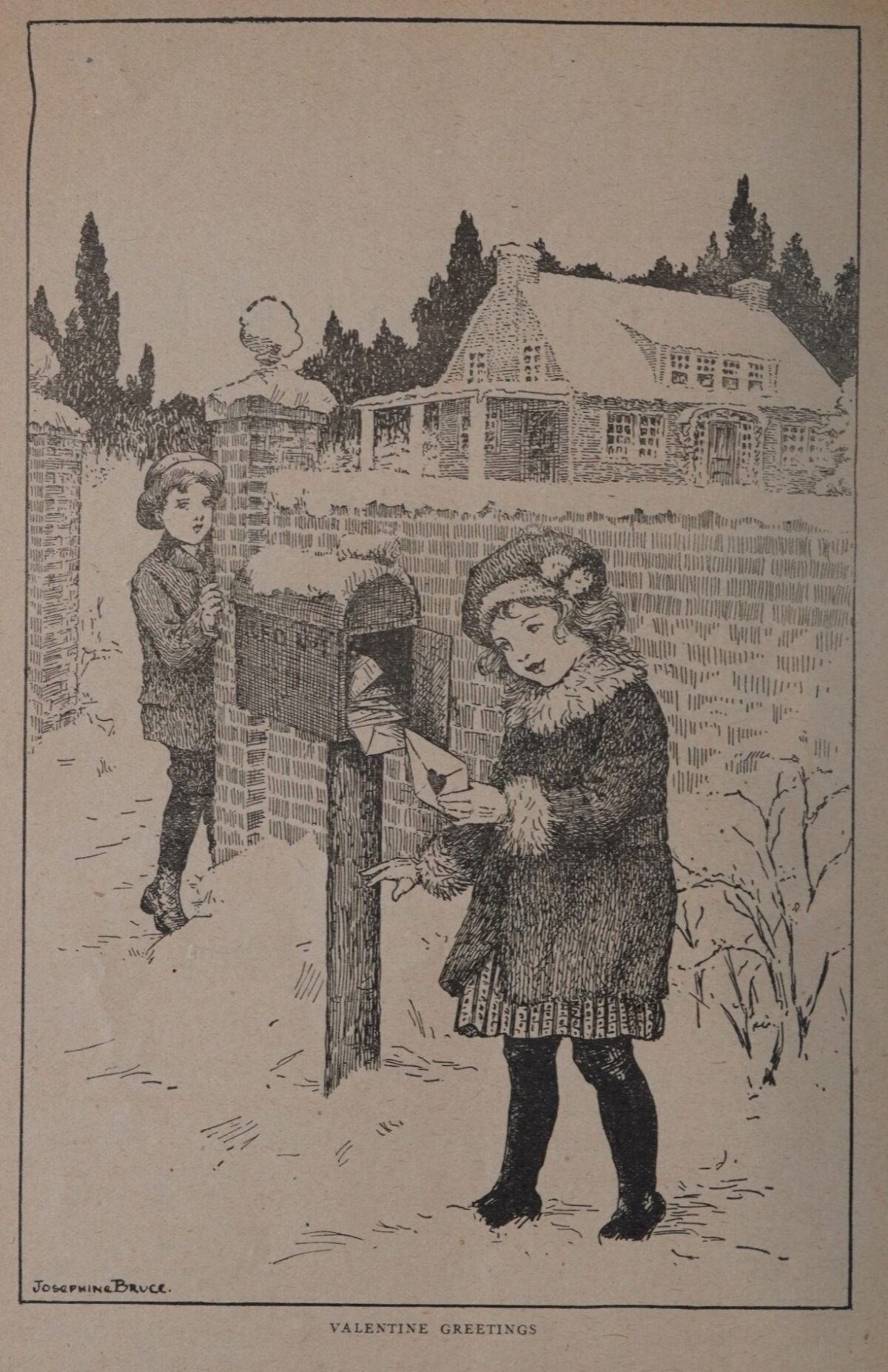
Mailbox Pic of the Day for 2026-07-08.
Photo is shown once as the featured image above.
Source: Wikimedia Commons — Josephine Bruce | Public domain
Signal over noise. Curated with care.

Mailbox Pic of the Day for 2026-07-08.
Photo is shown once as the featured image above.
Source: Wikimedia Commons — Josephine Bruce | Public domain
Today’s Whatever Wednesday is about three things many of us barely notice until they stop working. A fridge, a washing machine, and a vacuum cleaner may look ordinary now, but their backstories are a little wild.
These inventions did not just make homes neater. They gave people back time, effort, and a lot fewer sore arms.
Before home refrigerators, families used ice boxes and real blocks of ice. According to HISTORY, early home refrigerators began showing up in the 1910s, helping people keep food cold without depending on ice deliveries.
That changed daily life in a big way. Food lasted longer, shopping got easier, and homes had a better shot at avoiding spoiled milk and other stomach-turning surprises.
Your fridge is basically a quiet kitchen superhero. It does its job all day and never asks for a cape.
Wash day used to take most of a full day, with hot water, scrubbing, wringing, and hanging clothes to dry. HISTORY explains that early machines in the 1900s slowly turned that heavy chore into something much faster and less tiring.
This was more than a handy gadget. It cut down hours of hard work and gave families more time for school, jobs, rest, and things that were actually fun.
The washing machine may be the reason socks learned how to disappear in style. No one has solved that mystery yet.
Old-style cleaning meant brooms, carpet beaters, and a lot of dust still hanging around. HISTORY notes that one early vacuum inventor, James Murray Spangler, even used a pillowcase as the first vacuum bag.
That simple idea made indoor cleaning much more effective. Less dust in the house meant cleaner floors, cleaner rugs, and a little less sneezing for everyone.
A pillowcase helped launch the vacuum cleaner. So yes, one step in history was basically: “What if this bedroom thing cleaned the living room?”
These inventions matter because they turned huge chores into smaller ones. As Britannica Kids explains, inventions shape everyday life, and these three changed home life in ways people still feel every single day.
Sometimes the biggest game-changers are the things humming quietly in the background. Which everyday invention in your home would you miss first if it vanished tomorrow?
Green light today, the work moves through,
A steady list of checks to do.
Sixteen were set to mark the day,
And seven have already made
Their quiet rounds, clean through and true.
No alarms rose up to break the view,
No overdue tasks gathered dew.
The hours have held a settled way:
Green light today.
We keep our faith with what is due,
With simple care in what we queue.
Not every day will feel this clear,
But calm is welcome when it’s here.
For now, the boards stay bright in hue:
Green light today.
We keep this update creative, but we also keep it honest: if the day had bumps, we say so.
Mailbox Pic of the Day for 2026-07-07.
Photo is shown once as the featured image above.
Source: Wikimedia Commons — Petro Stelte | CC BY-SA 4.0 | license
If you only track one thing in crypto this week, track the rules around who can hold your coins and tokens. That sounds boring, but it shapes trust, safety, and how easy crypto will be to use next.
The biggest shift this week is not a price move. It is the steady push toward clearer crypto rules. The SEC’s crypto custody roundtable, the SEC Crypto Task Force written input page, and the SEC staff statement on broker-dealer custody all point in the same direction: crypto is moving deeper into the rulebook. A broker-dealer is a licensed firm that can buy, sell, and hold investments for customers. At the same time, Chainalysis noted that by July 2026 U.S. regulators are supposed to finalize rules tied to stablecoins under the GENIUS Act. A stablecoin is a crypto token built to keep a steady price, often near one U.S. dollar.
There is still debate inside the SEC. The Peirce statement welcomed more room for crypto custody, while the Crenshaw statement warned that weaker custody standards could raise risk for investors.
This is the plumbing behind crypto. Plumbing means the basic system that makes everything else work. If custody rules get clearer, bigger firms may feel safer offering services. If custody rules stay messy, regular users may still face confusion about who really controls their assets and what happens if a platform fails.
Look past the logo and ask one simple question: who holds the assets? If a platform talks about custody, read it closely. If it does not explain custody in plain English, that is useful information too.
The scam problem is still very real. The SEC charged several alleged crypto platforms and investment clubs in a case tied to social media and messaging apps, saying retail investors lost more than $14 million. The SEC’s Cyber and Emerging Technologies page also shows that crypto enforcement still focuses heavily on protecting everyday investors from fraud. Retail investors are regular people investing their own money, not giant institutions.
For most people, the biggest crypto risk is still not some complex code bug. It is being talked into a bad deal by fake experts, fake urgency, or fake screenshots of profits. That is why scam news matters more than flashy token launches.
Treat group chats, direct messages, and “members only” trading clubs as high risk by default. If someone promises easy gains or pushes you to move fast, slow down. Calm beats hype in this market.
Governments are putting more attention on crypto and illicit finance. Illicit finance means money tied to crime or sanctions evasion. In its March 2026 report to Congress, the U.S. Treasury said new tools, including AI, can help fight money laundering and sanctions risks. AI means software that can spot patterns in very large sets of data. Meanwhile, Chainalysis reported that sanctioned entities drove a huge share of illicit crypto activity in 2025.
This pressure will likely shape which crypto services can grow easily and which face tighter checks. It also helps explain why stablecoins, exchanges, and custodians are under a brighter spotlight now. Sanctions are government limits meant to block certain people, groups, or countries from using the financial system.
Expect more identity checks, more compliance steps, and more focus on where funds come from. Compliance means following the rules. That may feel slower, but it is part of crypto growing up.
This week’s real signal is simple: crypto is becoming more about rules, custody, and trust, while scams and crime controls are still major pressure points. That is less exciting than meme coins, but it matters much more for where the market goes from here.
Crypto is still loud, but this week the useful story is quieter: better rules, sharper enforcement, and more pressure on trust. What part of crypto feels most confusing right now: safety, scams, or the rules?
Sixteen were set in motion with the first light
Seven have already answered back as checks
So far, the board keeps holding steady in green
No alarms have broken the ordinary quiet
The work has moved with an untroubled kind of day
And nothing waits behind the hour, past due
That small mercy matters: nothing is past due
Windows fill, birds cross, and then the light
Keeps walking through the middle of the day
While hands and habits return to their checks
There is comfort in a calm that stays quiet
There is trust in seeing the signal stay green
Not loud, not flashy, only plainly green
A promise kept by nothing slipping due
A rhythm without strain, almost quiet
The morning opens wider into light
And seven completed lines stand up as checks
To say: this is how it has been today
We do not ask a clean world every day
Only one that leans, again, toward green
Only sixteen chances to make our checks
And none of them left leaning into due
The hours have not hidden from the light
They have simply passed in useful quiet
Even good news carries its own quiet
It does not shout that it has saved the day
It just leaves space around the light
And lets the plainest answer still be green
No trouble surfaced, nothing came due
The page stays honest about these checks
By now, seven are complete among the checks
The rest can wait their turn inside the quiet
With no backlog pressing hard as due
That is enough to say of this day
Not perfect, only clear, and clearly green
A simple record written in the light
In the light, we count our checks and keep them plain.
Green meets quiet without calling it a perfect day.
Nothing stands due, and that is enough for today.
We keep this update creative, but we also keep it honest: if the day had bumps, we say so.
Mailbox Pic of the Day for 2026-07-06.
Photo is shown once as the featured image above.
Source: Wikimedia Commons — Heinlein Support GmbH | Public domain
If you only track one thing this week, track this: AI tools are moving from talking to doing. The biggest changes were not flashy demos. They were new ways for everyday apps to handle real tasks.
On June 30, Anthropic launched Claude Sonnet 5 and made it the default model for Free and Pro users, with access for other paid plans too. Anthropic also said it turned on cyber safety guards by default. Source: Anthropic.
This matters because regular users do not have to hunt for a special model to try it. It is now the main Claude experience. Anthropic says Sonnet 5 is better at multi-step work. An AI agent is a tool that can take actions for you, not just answer questions. Source: Anthropic.
If you use Claude, give it one job with a clear finish line. Try “sort these notes into a plan” or “compare these three options in a table.” Then check the result before you act on it.
Google said Gemini Spark is coming to the macOS app in beta for Google AI Ultra users in the U.S. It can work across desktop files, connect with apps like Canva and Dropbox, and track topics in real time. Google also said more connected apps are rolling out over the next week. Source: Google.
This is a bigger shift than another smarter chatbot. It points to AI helping with your actual digital mess: files, notes, tasks, bookings, and updates. That is where AI becomes useful or annoying very fast. Source: Google.
Watch for small wins, not magic. If you get access, start with simple jobs like sorting PDFs, turning notes into a task list, or tracking one topic you care about. Do not hand over sensitive files until you understand the app settings.
Google rolled out Nano Banana 2 Lite for faster image making and brought Gemini Omni Flash to public preview for video generation and editing. Google said Omni Flash is also available in the Gemini app and Google Flow, and that its AI-made content uses SynthID watermarking. A watermark is a hidden label that helps identify AI-made media. Source: Google.
More people can now make short AI videos with plain language instead of complex editing tools. That lowers the skill barrier, but it also means we need clearer labels and more careful sharing. Source: Google.
Treat AI video as a draft tool, not a truth machine. Use it for mockups, ideas, and quick visuals. If a video looks surprising, check where it came from before you pass it along.
This week’s real story is simple: AI companies are trying to make their tools more useful in normal life. The pattern is clear. Less “look what it can say,” and more “look what it can finish.”
The useful AI story this week was not a giant sci-fi leap. It was practical progress.
Reader question: What is one small task you would trust AI to do for you every week?
The day stays green, and steady as we go,
Sixteen small promises are set to chime,
No trouble stirred beneath the checks we know.
By noon, seven had made their quiet show,
Each one returning clear in measured time,
The day stays green, and steady as we go.
No overdue shadows waited down below,
No late alarms were asking us to climb,
No trouble stirred beneath the checks we know.
It is not grand; it is a careful glow,
A kind of trust renewed in simple rhyme,
The day stays green, and steady as we go.
Some days bring knots, and some bring heavier snow,
Today brought neither strain nor grit nor grime,
No trouble stirred beneath the checks we know.
So let this brief and public record show
A calm day’s work can still be worth the line:
The day stays green, and steady as we go,
No trouble stirred beneath the checks we know.
We keep this update creative, but we also keep it honest: if the day had bumps, we say so.
Mailbox Pic of the Day for 2026-07-05.
Photo is shown once as the featured image above.
Source: Wikimedia Commons — brittgow | CC BY 2.0 | license