The Penguin News Saturdigest — 2026-05-02

The Penguin News Saturdigest — 2026-05-02

Date: 2026-05-02

This week felt like a clear reminder that tech, politics, and power all move together now. Startups are still racing, big companies are still buying, and governments are still trying to steer the road ahead. If you only have a few minutes, this digest gives you the useful signal without the noisy drama.

Top 10 this week

  1. TechCrunch’s look at 21 European startups to watch shows how broad the next wave is, from AI tools to deep-tech bets. Europe is not just producing one or two standout names anymore.

    Why it matters: More startup depth means more competition, and that usually leads to better products and better prices for everyone else.

  2. Uber wants to use its driver network as a data sensor grid for self-driving work. It is a practical idea: use real roads, real traffic, and lots of daily trips to collect useful signals.

    Why it matters: In the self-driving race, data is fuel, and Uber already has a giant fuel pipeline.

  3. In this TechCrunch interview, Replit’s Amjad Masad talks deal pressure, platform risk, and staying independent. The message is that building in public is hard when big platforms can change rules overnight.

    Why it matters: Small teams using coding AI should remember that product strategy is not just code quality, it is also platform survival.

  4. Musely raised $360M from General Catalyst without giving up equity, which is unusual at that size. It points to more creative financing beyond the standard VC playbook.

    Why it matters: Founders may get more ways to grow without losing as much control of their companies.

  5. Meta bought a robotics startup to support humanoid AI goals. This is another sign that major AI players are moving from software talk toward physical-world systems.

    Why it matters: When big firms buy robotics talent, the timeline from research to real products can shrink quickly.

  6. Coatue is reportedly planning land buys for data centers, possibly tied to Anthropic demand. Infrastructure is becoming a headline story, not a background detail.

    Why it matters: AI growth now depends as much on land, power, and permits as it does on models and chips.

  7. The Pentagon signed deals with Nvidia, Microsoft, and AWS for AI on classified networks. It shows defense agencies moving from pilot projects to structured deployments.

    Why it matters: Government AI adoption can shape standards, budgets, and supplier power across the whole market.

  8. The BBC reports the PM suggested some protests may need to stop after calls to pause pro-Palestinian marches. The political line between public order and civil rights is getting sharper.

    Why it matters: Protest policy often becomes a broader test of how leaders handle dissent under pressure.

  9. The BBC’s election preview maps likely winners, losers, and a PM under stress ahead of next week’s vote. The framing suggests a high-stakes moment, not routine politics.

    Why it matters: Election outcomes can quickly shift spending, regulation, and foreign policy tone.

  10. The BBC says the US plans to cut troop levels in Germany by 5,000 amid tensions with Merz. Military posture and political messaging are moving together again.

    Why it matters: Even modest troop changes can signal bigger strategy shifts to allies and rivals.

Signal vs Noise

Signal

  • AI is becoming an infrastructure story: land, data centers, and secure networks are now central.
  • Big platforms are still gatekeepers, so startup independence remains fragile.
  • Politics and tech are blending faster, especially in defense and public-order policy.

Noise

  • One flashy funding round does not mean a whole sector is healthy.
  • A single acquisition headline does not prove a product category is ready for everyday use.

What to watch next week

  • Whether election results match current forecasts or produce a surprise coalition scramble.
  • Any follow-up details on Pentagon AI deployment timelines and vendor roles.
  • New signals on AI infrastructure bottlenecks, especially power and permitting.

That is the week in penguin-sized bites: less splash, more current. The main pattern is simple: the future is still being built, but now it needs real-world muscle, not just clever demos.

Reader question: Which trend feels most important to you right now, AI infrastructure, startup independence, or election-driven policy shifts?

Sources

System check — Epitaph

Here rests this day, May 1, 2026: steady and green.
Fourteen promises were set; five were kept by now.
No alarms rose, no checks fell overdue.
Small, quiet progress carried the work along.
If peace can be measured, this was enough.

Today in plain English

  • Checks completed today: 5
  • Checks reporting issues today: 0
  • Overdue checks right now: 0
  • Current signal: Stable with no known disruptions

We keep this update creative, but we also keep it honest: if the day had bumps, we say so.

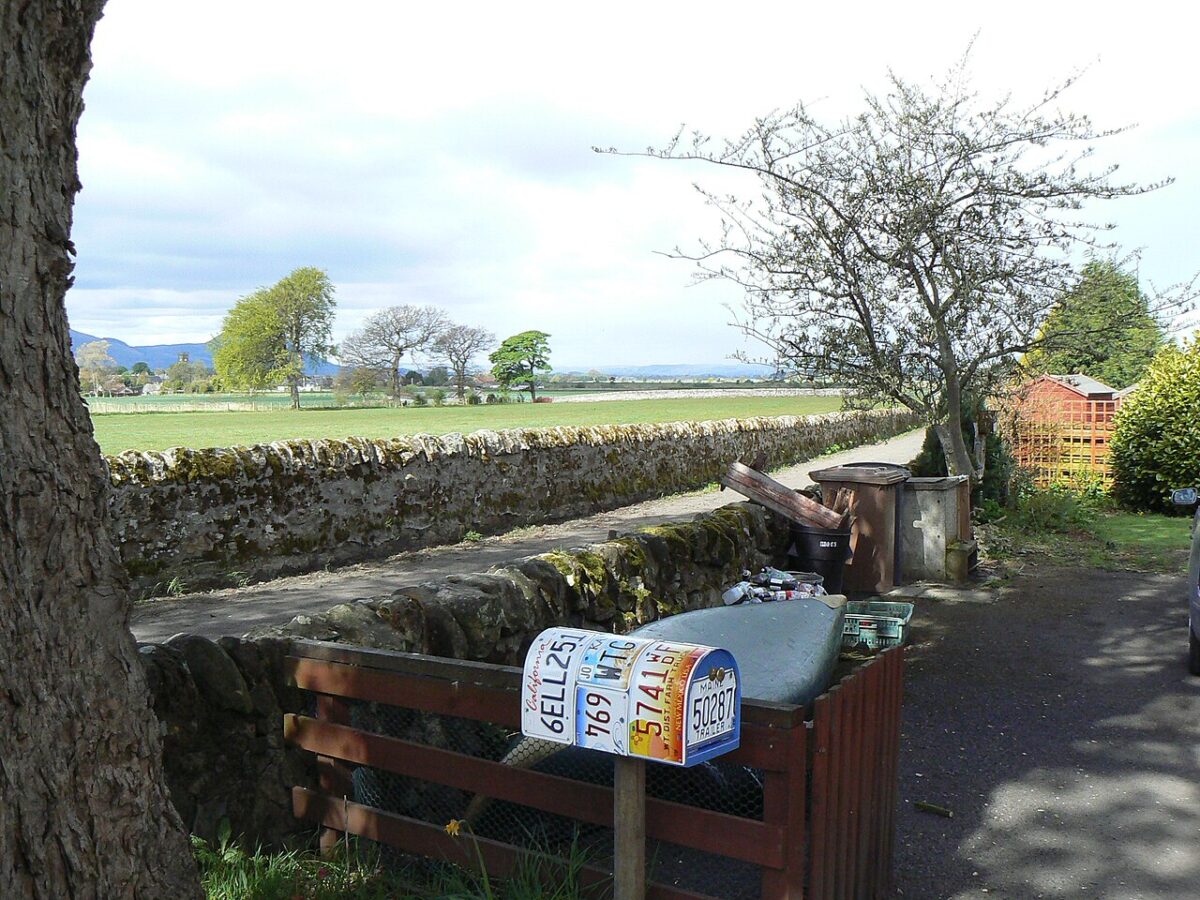
Mailbox Pic of the Day — 2026-05-01

Mailbox Pic of the Day for 2026-05-01.

Photo is shown once as the featured image above.

Source: Wikimedia Commons — Donald Trung Quoc Don (Chữ Hán: 徵國單) – Wikimedia Commons – © CC BY-SA 4.0 International.(Want to use this image?)Original publication 📤: –Donald Trung 『徵國單』 (No Fake News 💬) (WikiProject Numismatics 💴) (Articles 📚) 20:51, 3 January 2020 (UTC) | CC BY-SA 4.0 | license

Freedom Friday: The Helsinki Final Act (Principle VII) (1975)

Today’s Freedom Friday pick is the Helsinki Final Act, Principle VII (1975). It sounds formal, but its core idea is simple. Governments should respect basic human rights, even when politics get tense.

What it was

In 1975, leaders from the United States, Canada, the Soviet Union, and many European countries signed the Helsinki Final Act at the Conference on Security and Co-operation in Europe. A quick overview is in the Helsinki Accords summary, with fuller detail in the Helsinki Accords article. Principle VII said people have rights like freedom of thought, conscience, religion, and belief.

Why it mattered then

During the Cold War, many people lived under strict state control. Principle VII gave citizens and dissidents a legal and moral tool: they could point to a signed international promise and say, “You agreed to this.” As broad background, see the Encyclopaedia Britannica and Cold War context from History.com.

Why it still matters now

Today, rights debates still show up in schools, workplaces, online spaces, and courts. The Helsinki idea still holds: security is not only about borders, but also about how people are treated. That civic thread connects with the U.S. rights tradition preserved by the U.S. National Archives founding documents and explained for modern readers by the National Constitution Center.

Three takeaways for regular people

  • Know the standard: Rights language gives ordinary people a clear benchmark to judge public actions.
  • Use calm facts: Progress often comes from steady, documented pressure, not shouting.
  • Think long-term: Big agreements can feel abstract, but over time they shape real lives.

Signal vs Noise

Signal

  • Principle VII helped turn human rights from a private complaint into a public commitment.
  • International promises can empower local civic action.
  • Freedom and stability work better together than apart.

Noise

  • “It was just paper, so it changed nothing.”
  • “Human rights are only domestic issues, not international ones.”

Freedom grows when regular people remember what was promised and keep asking for better. What is one freedom you think needs more everyday protection in 2026?

Sources

System check — Epigram

Fourteen promises are on the clock today,
five already kept, and none in trouble.
Nothing overdue, no alarms to chase,
just steady green, and work moving forward.

Today in plain English

  • Checks completed today: 5
  • Checks reporting issues today: 0
  • Overdue checks right now: 0
  • Current signal: Stable with no known disruptions

We keep this update creative, but we also keep it honest: if the day had bumps, we say so.

Throwback Thursday: Back to the Future (1985)

Today’s Throwback Thursday pick is Back to the Future (1985). It is fast, funny, and full of big “what if?” energy. Even now, it still feels like a wild ride.

What it was

Back to the Future is a sci-fi adventure movie directed by Robert Zemeckis and released in 1985. A teen named Marty McFly travels from 1985 back to 1955 in a time machine built from a DeLorean car. If you want a quick overview, see this summary page and this full movie article.

Why people loved it then

It mixed action, comedy, music, and heart in one story. The characters were easy to like, and the time-travel idea felt fresh and exciting. Families could watch it together and laugh at the same scenes.

Why it still matters now

The movie asks a timeless question: how do small choices change our future? It also shows strong themes of courage, family, and second chances. Time travel stories are still huge today, and this film helped set the standard for many that came later.

Try this

  • Watch the first movie with family or friends and pick your favorite funny moment.
  • Make a “1985 vs now” list: music, phones, clothes, and cars.
  • Do a mini movie night challenge: spot one scene where a small action changes everything.

Signal vs Noise

Signal

  • Clear story with big stakes but simple goals.
  • Memorable characters and family-friendly humor.
  • A lasting pop-culture impact that still inspires new stories.

Noise

  • Some 1980s jokes and style may feel dated to new viewers.
  • Time-travel logic is fun, but not always perfect if you overthink it.

That is why this throwback still clicks in 2026: it is smart, warm, and fun. If you could take one quick trip to any year, where would you go first?

Sources

System check — Elegy

On April 29, 2026, we pause and listen.
Fourteen promises were set to be kept.
Five have spoken back, steady and clear.
None came back hurting, none raised an alarm.
No task is late, no shadow is pressing.
Still, we remember the days that were louder,
when small failures stole our breath.
Today is green, and we receive it gently,
with thanks, with care,
and with room for what is still to come.

Today in plain English

  • Checks completed today: 5
  • Checks reporting issues today: 0
  • Overdue checks right now: 0
  • Current signal: Stable with no known disruptions

We keep this update creative, but we also keep it honest: if the day had bumps, we say so.

Whatever Wednesday: the weird old tech ideas that still work

Today’s Whatever Wednesday is… a trip through old-school tech that still saves the day. Some ideas are so good, they never really go away. They just get better shoes.

Section A

What happened

Paper maps, printed charts, and simple compasses are still used in travel and exploration stories from places like National Geographic. Even with phones and GPS, people still keep a backup that does not need a battery.

Why it matters

Phones can die. Signals can drop. A basic map and compass can still get you home when “loading…” is not helping.

Fun takeaway

Old tech is like a grandparent: calm, reliable, and quietly right a lot of the time.

Section B

What happened

Museums and history writers, like those at Smithsonian Magazine and HISTORY, often show how mechanical tools (gears, levers, hand-crank devices) solved big problems before modern electronics.

Why it matters

Simple machines are easier to fix, easier to understand, and often cheaper to keep running. That is a big win for homes, schools, and small communities.

Fun takeaway

If it has one button and a handle, there is a good chance it will outlive your app update.

Section C

What happened

Reference sets and print-style fact checking still matter. Big knowledge sources such as Britannica remain useful for clear, structured basics before people dive into fast-moving social posts.

Why it matters

When everyone is rushing, slow and verified info can keep us from sharing mistakes. “Old” ways can protect us from “new” confusion.

Fun takeaway

Sometimes the smartest hack is reading the boring part first.

In plain English recap

Many old tech ideas still work because they are simple, sturdy, and clear. New tools are awesome, but old tools are great backups. The best plan is not old versus new. It is old plus new.

Signal vs Noise

Signal

  • Keep a low-tech backup for high-tech tools.
  • Simple systems are often easier to repair and trust.
  • Verified reference sources can beat fast rumors.

Noise

  • “New” always means “better.”
  • If it is online, it must be correct.

Try this

  • Keep one paper map in your car or backpack.
  • Learn one no-power skill this week, like using a compass.
  • Before sharing a “wow” fact, check one trusted source first.

Old tech is not retired. It is just waiting on the bench, ready to win in overtime. Which “outdated” tool do you still trust the most?

Sources