
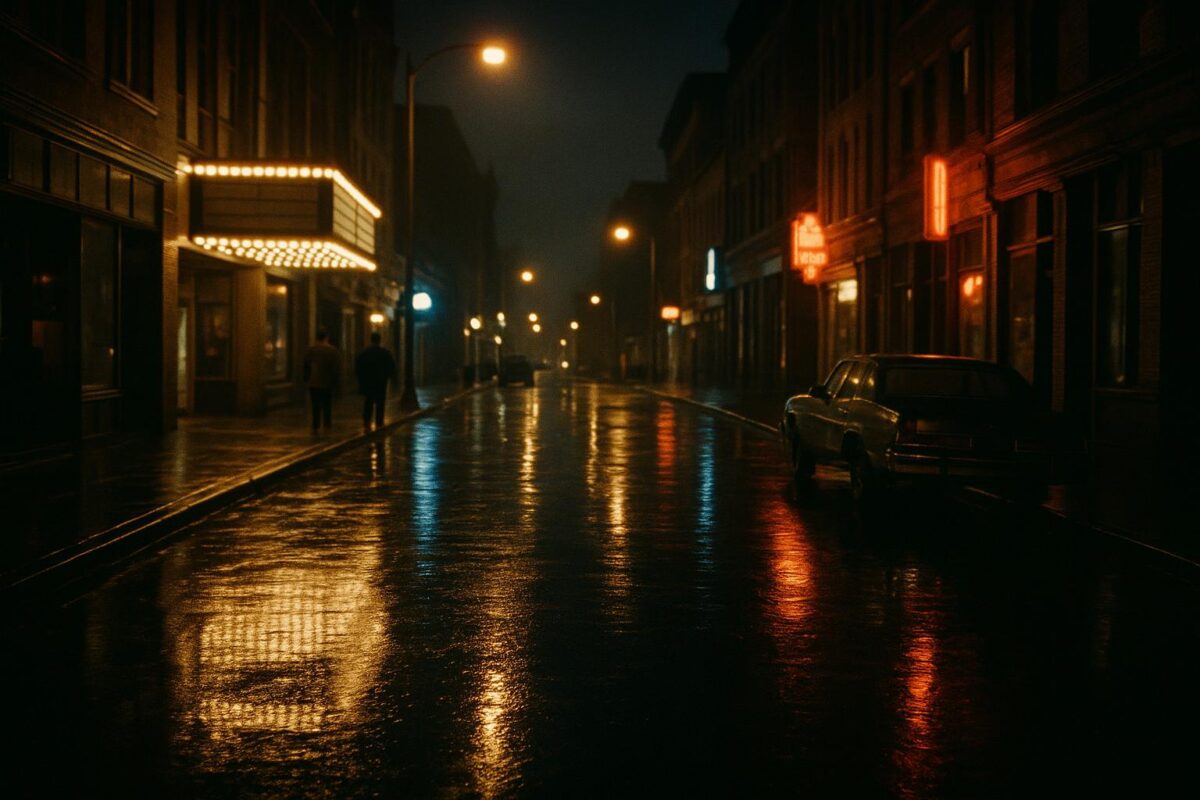
Throwback Thursday: The Blues Brothers (1980) — A musical comedy that treated car chases like percussion
Throwback Thursday is where we rummage around the cultural attic and pull out something from 1975–2005 that still holds up—whether it’s a movie, a game, a TV show, or a model kit that used to live on the top shelf of the hobby shop.
The past is messy, but the good stuff still sparkles if you hold it up to the light.
Today’s pick: The Blues Brothers (1980) — Movie.
According to Wikipedia, The Blues Brothers is a 1980 American musical action comedy film directed by John Landis. It stars John Belushi as “Joliet” Jake Blues and Dan Aykroyd as his brother Elwood, characters developed from the recurring musical sketch “The Blues Brothers” on NBC’s variety series Saturday Night Live. The script is set in and around Chicago, Illinois, where it was filmed, and the screenplay is by Aykroyd and Landis. It features musical numbers by singers James Brown, Cab Calloway, Aretha Franklin, Ray Charles and John Lee Hooker. It features non-musical supporting performances by Carrie Fisher and Henry Gibson. (source)
Why this one is worth a second look
Time does a funny thing to older media: it sandblasts away the marketing, the arguments, and the little trend-of-the-month controversies—then leaves behind the core idea. If that core idea was solid, the thing survives. If it wasn’t, it becomes an interesting artifact and not much else.
The Blues Brothers sits in that sweet spot where you can still feel the era it came from, but it’s not trapped there. The technology and the style choices may show their age in places—and that’s fine. Throwbacks aren’t supposed to pretend they were made yesterday. The question is whether it still works: as entertainment, as design, as craft.
The “what were they trying to do?” test
When you revisit something older, I like to ask a simple question: what problem were the creators trying to solve, and did they solve it in a way that still makes sense? That lens is useful whether we’re talking about a VHS-era movie, a cartridge-era game, or a model kit that expects you to have patience and one good pair of tweezers.
Viewed that way, The Blues Brothers has a clear identity. It doesn’t try to be everything at once. It has a point of view. Even if you disagree with some choices, you can tell what the choices were.
What it looks like through a 2026 lens
- Pacing: Older works often move differently than modern ones—sometimes slower, sometimes shockingly faster. Either way, it’s instructive.
- Assumptions: The audience expectations were different. Some of that is charming, some of it is a reminder of why certain conventions changed.
- Constraints: Technical and budget limits can force clarity. You can see where the work leans into what it can do well instead of pretending it can do everything.
If you’re going to (re)visit it, here’s how
If you’ve never experienced The Blues Brothers before, try it in a way that respects what it is:
- Give it 30–60 minutes without multitasking. Throwbacks don’t compete well with doomscrolling.
- Notice one craft element (music, editing, level design, physical detailing, etc.) and watch for how it repeats and evolves.
- Don’t demand modern convenience. Part of the fun is seeing how different the “default” used to be.
A small moment that captures it
Every good throwback has at least one “oh right” moment—the scene, level, riff, or tiny detail that reminds you why it stuck around in the first place. With The Blues Brothers, it’s less about a single isolated beat and more about how the pieces hang together. The vibe is confident. The craft is visible. You can feel the creators making deliberate choices.
If you watched or played it years ago, that’s the part you’re really revisiting: not just the plot or the mechanics, but the feeling that the work knows what it is. That’s rarer than we like to admit.
The bottom line
The Blues Brothers is a good Throwback Thursday pick because it’s both a product of its time and a reminder that good ideas travel. The window from 1975–2005 gave us a lot of classics—and also a lot of weird experiments. This one lands on the “classic” side of the ledger.
Sources:
• Wikipedia summary API: https://en.wikipedia.org/api/rest_v1/page/summary/The_Blues_Brothers
• Wikipedia page: https://en.wikipedia.org/wiki/The_Blues_Brothers_(film)