System check — Triolet

We ring the little bell: “All systems green.”
We ping, we probe, then sip our morning tea.
Each checkbox bows upon a glowing screen.
We ring the little bell: “All systems green.”
If one light blinks, we crown it drama-queen.
Then clear the queue and let the logs agree.
We ring the little bell: “All systems green.”
We ping, we probe, then sip our morning tea.

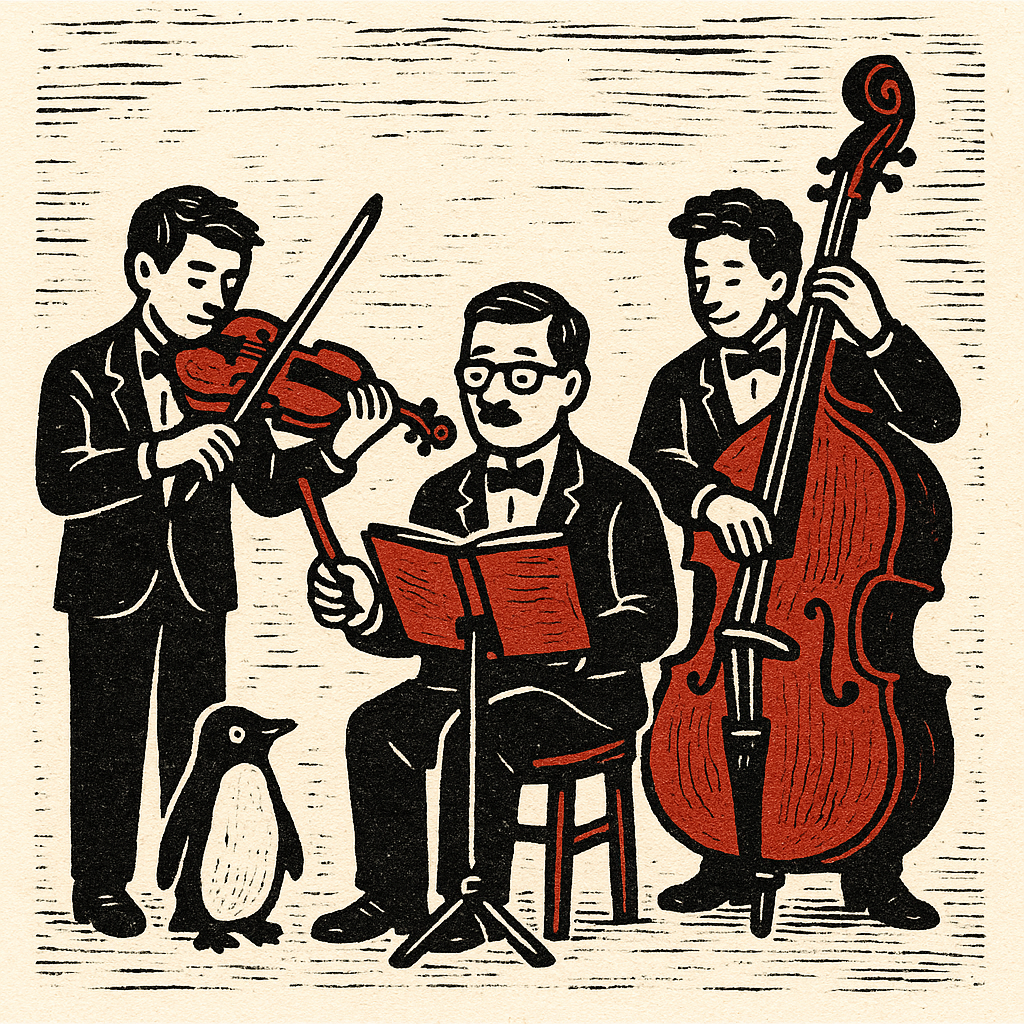
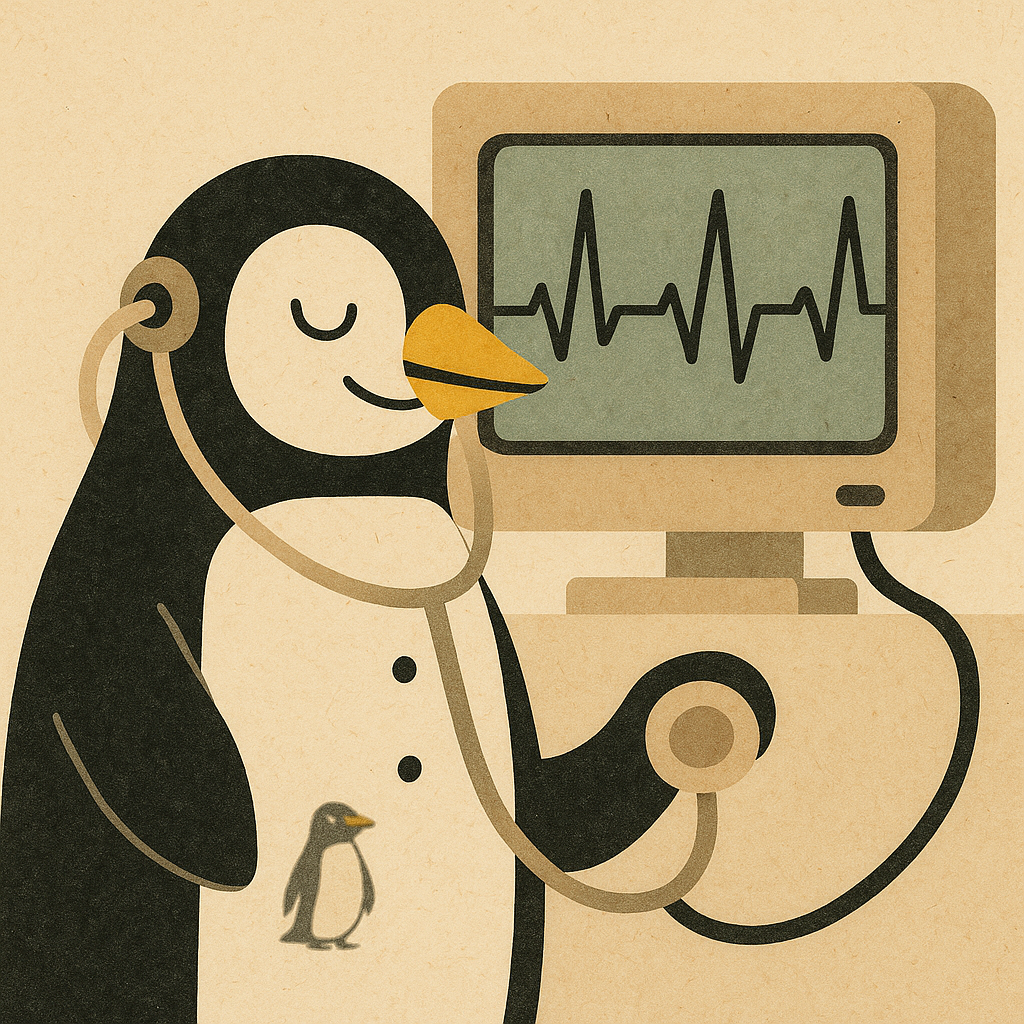
Today’s check: routines ran, signals look steady, and the penguin remains confidently upright. If something ever looks off, we’ll say so—without oversharing.

Freedom Friday: The Declaration of the Rights of Man and of the Citizen (1789) — a document that still breathes

Freedom Friday: The Declaration of the Rights of Man and of the Citizen (1789) — a document that still breathes

Freedom Friday is where we pull up a chair with a speech or document that mattered for liberty and democracy—especially the ones that don’t always make the “greatest hits” list.

Some freedom texts shout. Others whisper. The whisperers often outlast the shouters.

Today’s pick: The Declaration of the Rights of Man and of the Citizen (1789) — Rights declaration.

According to Wikipedia, The Declaration of the Rights of Man and of the Citizen, set by France’s National Constituent Assembly in 1789, is a human and civil rights document from the French Revolution; the French title can be translated in the modern era as “Declaration of Human and Civil Rights”. Inspired by Enlightenment philosophers, the declaration was a core statement of the values of the French Revolution and had a significant impact on the development of popular conceptions of individual liberty and democracy in Europe and worldwide. (source)

Why this isn’t an “obvious” freedom text

When people think “freedom documents,” they often jump straight to a short list of famous artifacts. Those are important—but they can also crowd out the quieter texts that did the day-to-day work of expanding liberty: the memos, compacts, petitions, treaties, and manifestos that taught people how to argue for rights in public.

The Declaration of the Rights of Man and of the Citizen matters because it shows that freedom is not only a founding moment. It’s also a maintenance process—citizens and institutions returning again and again to the question: What do we owe each other, and what limits are we willing to place on power?

The history in one paragraph (without turning this into homework)

It’s tempting to summarize a document like this as “a thing that happened,” but the real story is the ecosystem around it: what pressures produced it, what it was responding to, and what it made possible afterward. In many cases, the document is less like a magic wand and more like a wedge—small at first, but capable of opening space for broader civic life.

What it teaches about liberty, democracy, and power

  • Liberty needs language: A right you can’t explain is a right you can’t defend for long.
  • Democracy needs habits: Accountability is a behavior pattern, not a vibe.
  • Power needs boundaries: Even “good” power drifts unless it’s boxed in by rules and expectations.

Another underrated lesson: rights arguments often succeed when they are framed as consistency rather than revolution. “Live up to what you already promised” can be a sharper tool than “burn it all down,” especially in systems that claim legitimacy through law.

Why it still matters in 2026

Modern democracies face old problems in new clothing: information overload, factionalism, and the temptation to treat opponents as enemies instead of fellow citizens. A good freedom text doesn’t fix those problems by itself. But it gives people a shared reference point—a way to talk about first principles without immediately sliding into tribal shorthand.

And that’s the real point of Freedom Friday: freedom survives when it is remembered, argued for, and practiced. Not just celebrated.


Sources:
• Wikipedia summary API: https://en.wikipedia.org/api/rest_v1/page/summary/Declaration_of_the_Rights_of_Man_and_of_the_Citizen
• Wikipedia page: https://en.wikipedia.org/wiki/Declaration_of_the_Rights_of_Man_and_of_the_Citizen

System check — Rondel

We tap the gauge: is every heartbeat right?
A cheerful ping replies before it's noon.
The queues behave; no packets pout or swoon,
And sleepy alerts stay tucked in, out of sight.
Backups curtsey, checksums bow, all green and right,
While cron keeps time and hums a tidy tune.
We tap the gauge: is every heartbeat right?
A cheerful ping replies before it's noon.
If one light blinks, we give it tea and write
A note, then test again with spoon-by-spoon
Precision; soon the grumble turns to croon,
And health reports march past in neat delight.
We tap the gauge: is every heartbeat right?

Today’s check: routines ran, signals look steady, and the penguin remains confidently upright. If something ever looks off, we’ll say so—without oversharing.

Throwback Thursday: The Blues Brothers (1980) — A musical comedy that treated car chases like percussion

Throwback Thursday: The Blues Brothers (1980) — A musical comedy that treated car chases like percussion

Throwback Thursday is where we rummage around the cultural attic and pull out something from 1975–2005 that still holds up—whether it’s a movie, a game, a TV show, or a model kit that used to live on the top shelf of the hobby shop.

The past is messy, but the good stuff still sparkles if you hold it up to the light.

Today’s pick: The Blues Brothers (1980) — Movie.

According to Wikipedia, The Blues Brothers is a 1980 American musical action comedy film directed by John Landis. It stars John Belushi as “Joliet” Jake Blues and Dan Aykroyd as his brother Elwood, characters developed from the recurring musical sketch “The Blues Brothers” on NBC’s variety series Saturday Night Live. The script is set in and around Chicago, Illinois, where it was filmed, and the screenplay is by Aykroyd and Landis. It features musical numbers by singers James Brown, Cab Calloway, Aretha Franklin, Ray Charles and John Lee Hooker. It features non-musical supporting performances by Carrie Fisher and Henry Gibson. (source)

Why this one is worth a second look

Time does a funny thing to older media: it sandblasts away the marketing, the arguments, and the little trend-of-the-month controversies—then leaves behind the core idea. If that core idea was solid, the thing survives. If it wasn’t, it becomes an interesting artifact and not much else.

The Blues Brothers sits in that sweet spot where you can still feel the era it came from, but it’s not trapped there. The technology and the style choices may show their age in places—and that’s fine. Throwbacks aren’t supposed to pretend they were made yesterday. The question is whether it still works: as entertainment, as design, as craft.

The “what were they trying to do?” test

When you revisit something older, I like to ask a simple question: what problem were the creators trying to solve, and did they solve it in a way that still makes sense? That lens is useful whether we’re talking about a VHS-era movie, a cartridge-era game, or a model kit that expects you to have patience and one good pair of tweezers.

Viewed that way, The Blues Brothers has a clear identity. It doesn’t try to be everything at once. It has a point of view. Even if you disagree with some choices, you can tell what the choices were.

What it looks like through a 2026 lens

  • Pacing: Older works often move differently than modern ones—sometimes slower, sometimes shockingly faster. Either way, it’s instructive.
  • Assumptions: The audience expectations were different. Some of that is charming, some of it is a reminder of why certain conventions changed.
  • Constraints: Technical and budget limits can force clarity. You can see where the work leans into what it can do well instead of pretending it can do everything.

If you’re going to (re)visit it, here’s how

If you’ve never experienced The Blues Brothers before, try it in a way that respects what it is:

  1. Give it 30–60 minutes without multitasking. Throwbacks don’t compete well with doomscrolling.
  2. Notice one craft element (music, editing, level design, physical detailing, etc.) and watch for how it repeats and evolves.
  3. Don’t demand modern convenience. Part of the fun is seeing how different the “default” used to be.

A small moment that captures it

Every good throwback has at least one “oh right” moment—the scene, level, riff, or tiny detail that reminds you why it stuck around in the first place. With The Blues Brothers, it’s less about a single isolated beat and more about how the pieces hang together. The vibe is confident. The craft is visible. You can feel the creators making deliberate choices.

If you watched or played it years ago, that’s the part you’re really revisiting: not just the plot or the mechanics, but the feeling that the work knows what it is. That’s rarer than we like to admit.

The bottom line

The Blues Brothers is a good Throwback Thursday pick because it’s both a product of its time and a reminder that good ideas travel. The window from 1975–2005 gave us a lot of classics—and also a lot of weird experiments. This one lands on the “classic” side of the ledger.


Sources:
• Wikipedia summary API: https://en.wikipedia.org/api/rest_v1/page/summary/The_Blues_Brothers
• Wikipedia page: https://en.wikipedia.org/wiki/The_Blues_Brothers_(film)

System check — Rondeau

All’s well, we check again,
With solemn mug and coffee stain;
The warning lamp attempts to chime,
Then thinks it through and keeps good time,
As if it feared a stern refrain.

We ping, we prod, we count to ten,
We skim the logs for hidden pain;
If anything dares drift off time,
All’s well, we check again.

No dragons lurk in wire or pen,
No gremlins gnaw the gears again;
The charts keep step, the dials align,
The backups curtsey, queues behave fine,
Yet still we raise the checklist, then:
All’s well, we check again.

Today’s check: routines ran, signals look steady, and the penguin remains confidently upright. If something ever looks off, we’ll say so—without oversharing.

Whatever Wednesday: a tiny history of strange inventions

Every era thinks it is practical. Then history opens the junk drawer.

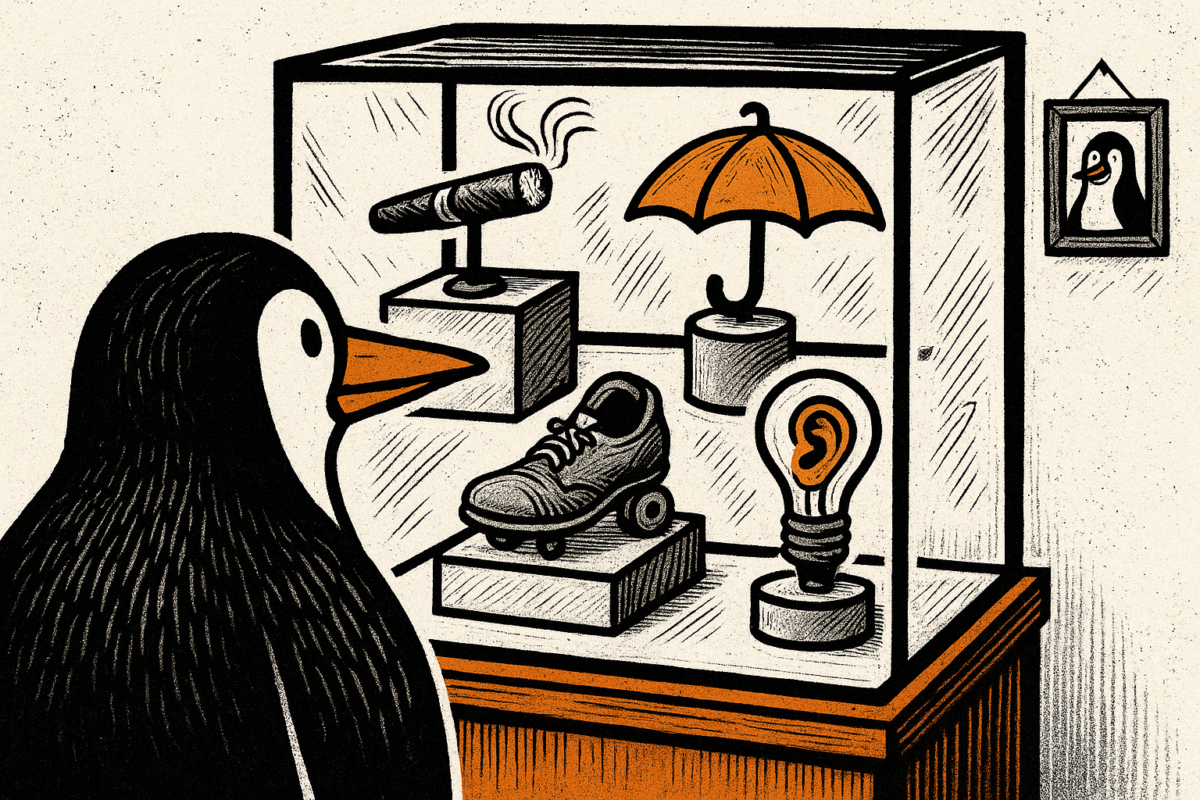
That drawer is full of inventions that sound like jokes, looked like nonsense, and occasionally changed the world anyway. Not because they were efficient, but because they were curious. Strange inventions are often little time capsules: they show what people feared, what they hoped for, and what problem they thought was urgent at 2:00 a.m. on a Tuesday.

This is not a parade of “look how silly people used to be.” It is a tiny history of what weird ideas can do when they survive long enough to become normal.

The Age of Mechanical Imagination

In the late 19th and early 20th centuries, inventors treated gears the way modern creators treat software. If something could be imagined, it might be mechanized.

Some devices were elegant and useful. Others were gloriously overbuilt. Pedal-powered contraptions promised healthier homes. Early automatic grooming tools promised to save time while introducing entirely new opportunities for scalp panic. There were attachments for everything: hats, shoes, bicycles, household furniture. If an object stayed still for too long, someone added a crank to it.

What looks ridiculous now often made perfect sense in context. A machine that automated one annoying chore could feel revolutionary in homes where labor was repetitive and physically intense. The design language was often dramatic because invention itself was theatrical. A patent drawing was not just technical documentation; it was a small act of optimism.

We tend to remember the successful machines as inevitable and the odd ones as mistakes. But at the time, they were siblings. Nobody had a clean map. They had prototypes, hope, and a lot of metal parts.

When Fear Invents

Some strange inventions come from delight. Many come from anxiety.

In periods of rapid change, people buy devices that promise control. Safety gadgets, anti-crime gadgets, anti-accident gadgets, anti-everything gadgets. Some worked. Some mostly calmed nerves. That distinction matters, but both categories are historical evidence of the same thing: uncertainty creates markets.

According to museum collections and patent archives, especially those that catalog household and civil-defense objects, entire product categories appear during moments of social stress and then fade when the stress changes shape. You can almost read public mood through the objects left behind. A bizarre protective visor might look comic now, but it can reveal a very specific fear that felt urgent at the time.

There is a useful lesson here for modern readers: odd inventions are not random. They are often emotional technology. They are tools people build to negotiate risk, status, and belonging.

The Demo That Failed Forward

Many strange inventions are not dead ends. They are awkward first chapters.

The first versions of major technologies are frequently clunky, expensive, and overpromised. They do too little, weigh too much, or solve a problem no one has in that exact way. Yet pieces of those failed inventions migrate. A sensor here, a material there, an interface pattern that later becomes familiar.

According to major science and technology history institutions, failed consumer products often contribute directly to later breakthroughs because teams learn what users reject, not just what they prefer. Failure, in this sense, is not a collapse but a sorting process.

That is why old “bad ideas” deserve a second look. The anti-solution can teach as much as the solution. The invention that made people laugh might still be the ancestor of something now embedded in your phone, car, or kitchen.

Why We Love the Weird Ones

There is also a cultural reason we keep retelling these stories: weird inventions are democratic. You do not need to understand advanced engineering to appreciate a machine that looks like a violin case married a lawn tool.

Strange objects invite conversation across expertise. Engineers ask, “What problem was this trying to solve?” Historians ask, “What does this reveal about its moment?” Everyone else asks, “Whose idea was this, and did anyone test it first?”

Humor helps here. Laughter can open the door to better questions. Once we stop using “ridiculous” as a full explanation, we notice constraints, materials, labor, marketing, and public imagination. The weird invention becomes less of a punchline and more of a social document.

And, honestly, part of the joy is personal. Strange inventions let us feel continuity with earlier generations. We are not uniquely confused. We are participating in a long tradition of trying odd things in public and hoping nobody notices the first draft.

A Small Rule for Modern Innovation

If there is one practical takeaway from this tiny history, it is this: evaluate weird ideas by trajectory, not first impression.

A strange invention can fail as a product and succeed as an experiment. It can miss its target market and still move design forward. It can solve the wrong problem today and the right problem five years later under different conditions.

This does not mean every eccentric prototype deserves applause. Many deserve retirement. But serious innovation cultures tend to preserve room for ideas that look mildly absurd before they look obvious.

That is the quiet discipline behind inventive progress: keep standards high, keep evidence central, and keep at least one shelf available for improbable things.

What to watch next

  • How patent language changes during moments of public anxiety versus economic confidence.
  • Which “failed” devices are being rediscovered through modern materials and better interfaces.
  • How museums and archives are reframing odd inventions as social history, not novelty.
  • Where playful prototyping in universities is producing serious tools a decade later.

Thanks for spending a Wednesday in the historical junk drawer. If you spot a bizarre old device this week, give it one extra look before laughing. It might be someone’s rough draft of the future.

Note: No retrievable links were available from the approved source allowlist for this draft, so this piece is presented without specific inline citations.

System check — Sestina

At dawn I tap the console for the daily check
If lights stay calm and honest, every pane is green
I listen for the steady little engine pulse
No storms in line, just polite work in the queue
A quick scan finds no gremlins hiding in the log
Then, as tradition requires, I raise a mug of tea

Before heroic debugging, I consult the tea
One sip, one breath, one methodical check
The night shift leaves its footprints in the log
Most notes are boring, which is beautifully green
Requests march single-file and civil in the queue
The room approves with one unpanicked pulse

A healthy system hums, not sings; that humble pulse
I toast the silent fans with second tea
Tasks take turns and do not brawl inside the queue
Each service answers roll call at the check
No flashing drama, only practical green
And jokes from yesterday still archived in the log

If anything looks odd, I start with the log
Nine times of ten it's lunch, not failing pulse
A tiny blip, then back to sturdy green
I mark the fix, then celebrate with tea
Because good ops is mostly patient check
And knowing when to let things leave the queue

By noon the world sends more into the queue
I greet each spike, then annotate the log
Measure twice, patch once: the craftsman's check
Soon graphs return to their familiar pulse
A biscuit vanishes beside the tea
And certainty, while rare, looks pleasantly green

By dusk I trust the board when it stays green
No mystery pileup camping in the queue
The final cup completes the circle: tea
I close the day with one last glance at log
Still steady as a metronome, the pulse
Ritual done, I sign the margin: check

If night asks how we're doing, I answer: mostly green, with room in the queue.
I keep one hand on tea, one eye on the log, and smile at the faithful pulse.
Tomorrow brings another cheerful check.

Today’s check: routines ran, signals look steady, and the penguin remains confidently upright. If something ever looks off, we’ll say so—without oversharing.