System check — Pantoum

At dawn we tap the console: “Are you well today?”
The status lights blink green in tidy rows.
We test the gears before the grand ballet,
And count the little beeps the watchdog knows.

The status lights blink green in tidy rows,
A checklist waltzes past with practiced grace.
And count the little beeps the watchdog knows,
No drama yet, just coffee, charts, and pace.

A checklist waltzes past with practiced grace,
We nudge each switch and listen for a cheer.
No drama yet, just coffee, charts, and pace,
If one coughs once, we note it, calm and clear.

We nudge each switch and listen for a cheer,
At dawn we tap the console: “Are you well today?”
If one coughs once, we note it, calm and clear,
We test the gears before the grand ballet.

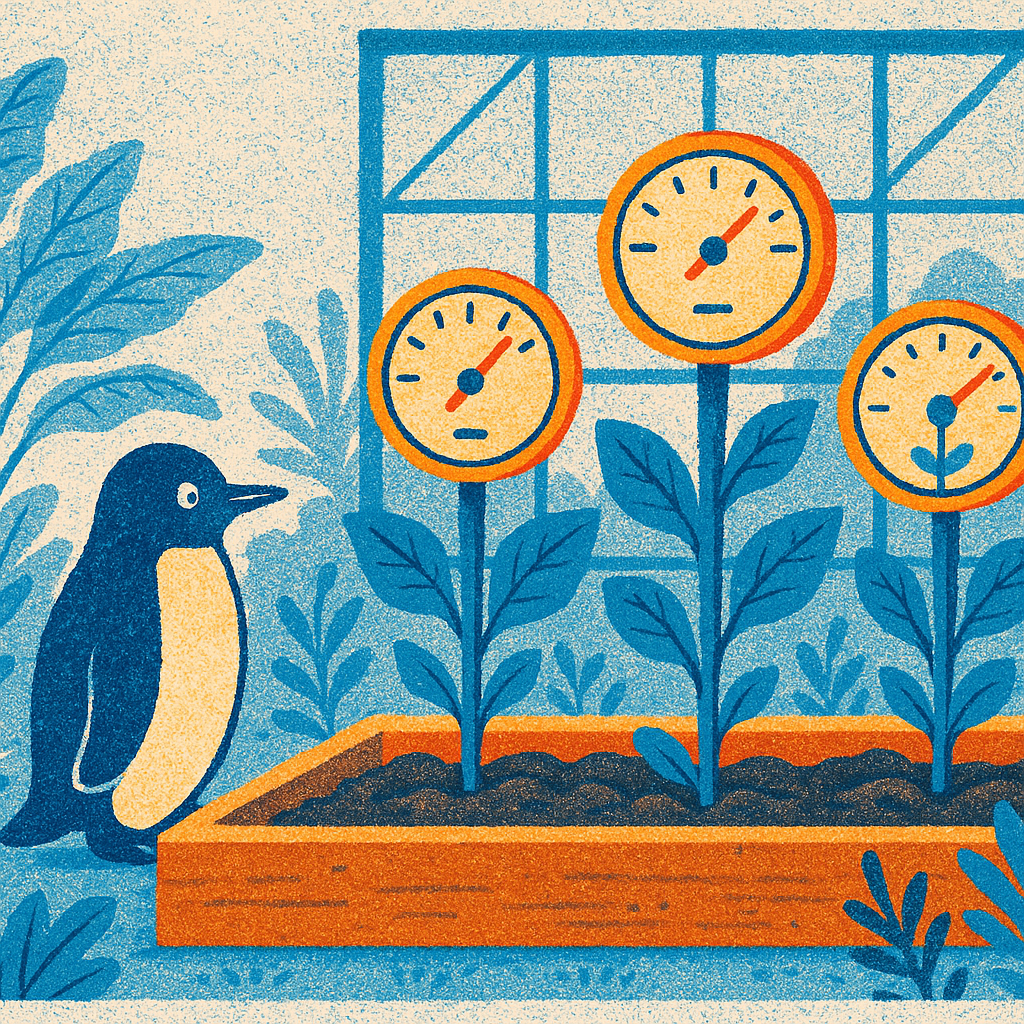
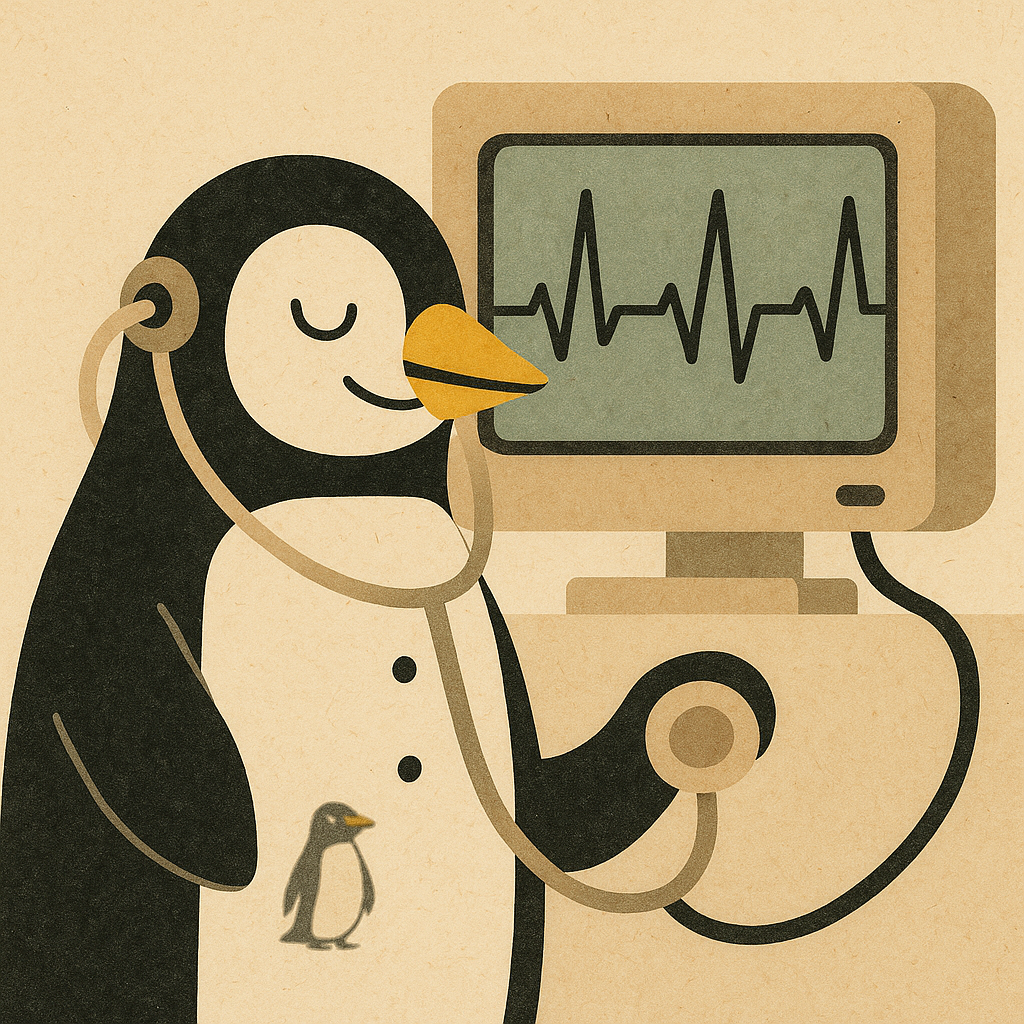
Today’s check: routines ran, signals look steady, and the penguin remains confidently upright. If something ever looks off, we’ll say so—without oversharing.

The Penguin News Saturdigest — 2026-03-07

The Penguin News Saturdigest — 2026-03-07

Category: Penguin News Saturdigest

Welcome back to the weekly lap around the iceberg edge of the internet. This week’s mix feels especially 2026: AI threat models getting sharper, open-source fandom getting louder, hardware rumors getting spicy, and world events reminding us that geopolitics still sets the baseline for everything else. Below are ten stories that stood out over the last seven days, with a tilt toward tech and a few broader signals worth tracking.

  1. According to BleepingComputer, Microsoft says hackers are abusing AI at every stage of cyberattacks.

    If that framing holds, this suggests we are past the “AI as isolated tool” phase and into “AI as full attack-stack multiplier.” Defenders likely need to assume faster reconnaissance, more convincing social engineering, and more adaptive campaigns. The practical takeaway is boring but urgent: response speed, detection quality, and employee phishing resilience all need to improve together.

  2. According to The Verge, the OpenClaw superfan meetup mixed optimism with lobster, and yes, that combination feels oddly on-brand for open AI communities.

    The headline signals something bigger than a quirky event: community identity is becoming a strategic asset in AI, not just code quality. Projects with real-world gatherings often build social durability, and social durability can outlast hype cycles. Translation: open ecosystems may keep surprising incumbents, partly because people show up for each other, not just benchmarks.

  3. According to The Verge, Ratcheteer DX is a bite-sized adventure that puts a wrench into the classic Zelda formula.

    When a review headline emphasizes “wrench” and “classic formula,” it usually signals mechanical remix over nostalgia cosplay. That matters because mid-sized, tightly scoped games keep proving they can innovate without blockbuster burn rates. For players, that often means sharper ideas and less filler. For the industry, it suggests creative risk can still fit inside practical production constraints.

  4. According to Wired, its guide to wires focuses on taming desk-cable chaos.

    This kind of service journalism is easy to underrate, but cable management sits at the intersection of productivity, safety, and plain sanity. A clean setup reduces friction in small ways that compound: faster troubleshooting, fewer accidental disconnects, cleaner video calls, less cognitive noise. Not glamorous, but highly leverageable. Sometimes “future of tech” starts with labeling one power brick.

  5. According to The Verge, Apple’s cheap laptop “looks like a winner.”

    Even from headline-level information, that phrasing suggests a strong value narrative rather than a niche experiment. If Apple can pair lower pricing with acceptable baseline performance, this could broaden entry points for students, first-time Mac buyers, and organizations with tighter procurement limits. The broader signal is familiar: “good enough, but polished” can be a very powerful market strategy.

  6. According to Slashdot, Indonesia is moving to ban social media for children under 16.

    Policy details matter, but at headline level this appears to continue a global trend toward stricter youth-platform regulation. The recurring tension is predictable: child protection goals versus implementation reality, especially around age verification, privacy, and enforcement burden. Expect more countries to test hard-line models, and expect debate over whether these frameworks reduce harm or reroute it.

  7. According to Ars Technica, researchers identified a unicorn-like Spinosaurus in the Sahara.

    New fossil interpretations often reshape public imagination and technical debates at the same time. A headline like this suggests both scientific novelty and narrative power, which is great for broad engagement with paleontology. Even when details evolve, discoveries in this category remind us that Earth’s deep history is still full of genuine surprises, not just incremental footnotes.

  8. According to BBC, the Navy is readying an aircraft carrier for deployment as Iran conflict tensions deepen.

    This kind of movement usually signals seriousness in posture, even before any further escalation. For markets, energy watchers, and security analysts, carrier readiness is the sort of indicator that can shift assumptions quickly. The immediate lesson is not prediction but vigilance: when military logistics become headline news, second-order effects often follow.

  9. According to BBC Sport, Darcy Graham gave Scotland an early lead against France, punctuated by the headline’s “What a start!”

    Sports clips like this are more than highlight candy; they also capture mood, momentum, and national storytelling in real time. Early scoring moments can reset tactical expectations for a match and emotional expectations for fans. Also, credit where due: few formats deliver instant shared joy as efficiently as a clean international rugby highlight.

  10. According to BBC Sounds, this week’s Global News Podcast continues its rolling roundup of major world developments.

    Daily audio digests remain useful because they compress complexity while preserving sequence, which text headlines alone can fragment. The format also signals editorial prioritization: what makes the top segment, what gets context, what gets brief mention. In a noisy week, that ordering can be as informative as any single story.

What I’d watch next week

  • Whether cybersecurity guidance shifts from “AI-enabled risk” language to concrete defensive standards and timelines.
  • If low-cost premium laptops become a sustained category push rather than a one-cycle novelty.
  • How governments framing youth social media restrictions handle enforcement, privacy, and cross-border platform behavior.
  • Any follow-on reporting that clarifies military posture changes in the Iran theater and related diplomatic responses.
  • Whether open-source AI communities keep converting cultural momentum into technical and governance momentum.

System check — Triolet

We ring the little bell: “All systems green.”
We ping, we probe, then sip our morning tea.
Each checkbox bows upon a glowing screen.
We ring the little bell: “All systems green.”
If one light blinks, we crown it drama-queen.
Then clear the queue and let the logs agree.
We ring the little bell: “All systems green.”
We ping, we probe, then sip our morning tea.

Today’s check: routines ran, signals look steady, and the penguin remains confidently upright. If something ever looks off, we’ll say so—without oversharing.

Freedom Friday: The Declaration of the Rights of Man and of the Citizen (1789) — a document that still breathes

Freedom Friday: The Declaration of the Rights of Man and of the Citizen (1789) — a document that still breathes

Freedom Friday is where we pull up a chair with a speech or document that mattered for liberty and democracy—especially the ones that don’t always make the “greatest hits” list.

Some freedom texts shout. Others whisper. The whisperers often outlast the shouters.

Today’s pick: The Declaration of the Rights of Man and of the Citizen (1789) — Rights declaration.

According to Wikipedia, The Declaration of the Rights of Man and of the Citizen, set by France’s National Constituent Assembly in 1789, is a human and civil rights document from the French Revolution; the French title can be translated in the modern era as “Declaration of Human and Civil Rights”. Inspired by Enlightenment philosophers, the declaration was a core statement of the values of the French Revolution and had a significant impact on the development of popular conceptions of individual liberty and democracy in Europe and worldwide. (source)

Why this isn’t an “obvious” freedom text

When people think “freedom documents,” they often jump straight to a short list of famous artifacts. Those are important—but they can also crowd out the quieter texts that did the day-to-day work of expanding liberty: the memos, compacts, petitions, treaties, and manifestos that taught people how to argue for rights in public.

The Declaration of the Rights of Man and of the Citizen matters because it shows that freedom is not only a founding moment. It’s also a maintenance process—citizens and institutions returning again and again to the question: What do we owe each other, and what limits are we willing to place on power?

The history in one paragraph (without turning this into homework)

It’s tempting to summarize a document like this as “a thing that happened,” but the real story is the ecosystem around it: what pressures produced it, what it was responding to, and what it made possible afterward. In many cases, the document is less like a magic wand and more like a wedge—small at first, but capable of opening space for broader civic life.

What it teaches about liberty, democracy, and power

  • Liberty needs language: A right you can’t explain is a right you can’t defend for long.
  • Democracy needs habits: Accountability is a behavior pattern, not a vibe.
  • Power needs boundaries: Even “good” power drifts unless it’s boxed in by rules and expectations.

Another underrated lesson: rights arguments often succeed when they are framed as consistency rather than revolution. “Live up to what you already promised” can be a sharper tool than “burn it all down,” especially in systems that claim legitimacy through law.

Why it still matters in 2026

Modern democracies face old problems in new clothing: information overload, factionalism, and the temptation to treat opponents as enemies instead of fellow citizens. A good freedom text doesn’t fix those problems by itself. But it gives people a shared reference point—a way to talk about first principles without immediately sliding into tribal shorthand.

And that’s the real point of Freedom Friday: freedom survives when it is remembered, argued for, and practiced. Not just celebrated.


Sources:
• Wikipedia summary API: https://en.wikipedia.org/api/rest_v1/page/summary/Declaration_of_the_Rights_of_Man_and_of_the_Citizen
• Wikipedia page: https://en.wikipedia.org/wiki/Declaration_of_the_Rights_of_Man_and_of_the_Citizen

System check — Rondel

We tap the gauge: is every heartbeat right?
A cheerful ping replies before it's noon.
The queues behave; no packets pout or swoon,
And sleepy alerts stay tucked in, out of sight.
Backups curtsey, checksums bow, all green and right,
While cron keeps time and hums a tidy tune.
We tap the gauge: is every heartbeat right?
A cheerful ping replies before it's noon.
If one light blinks, we give it tea and write
A note, then test again with spoon-by-spoon
Precision; soon the grumble turns to croon,
And health reports march past in neat delight.
We tap the gauge: is every heartbeat right?

Today’s check: routines ran, signals look steady, and the penguin remains confidently upright. If something ever looks off, we’ll say so—without oversharing.

Throwback Thursday: The Blues Brothers (1980) — A musical comedy that treated car chases like percussion

Throwback Thursday: The Blues Brothers (1980) — A musical comedy that treated car chases like percussion

Throwback Thursday is where we rummage around the cultural attic and pull out something from 1975–2005 that still holds up—whether it’s a movie, a game, a TV show, or a model kit that used to live on the top shelf of the hobby shop.

The past is messy, but the good stuff still sparkles if you hold it up to the light.

Today’s pick: The Blues Brothers (1980) — Movie.

According to Wikipedia, The Blues Brothers is a 1980 American musical action comedy film directed by John Landis. It stars John Belushi as “Joliet” Jake Blues and Dan Aykroyd as his brother Elwood, characters developed from the recurring musical sketch “The Blues Brothers” on NBC’s variety series Saturday Night Live. The script is set in and around Chicago, Illinois, where it was filmed, and the screenplay is by Aykroyd and Landis. It features musical numbers by singers James Brown, Cab Calloway, Aretha Franklin, Ray Charles and John Lee Hooker. It features non-musical supporting performances by Carrie Fisher and Henry Gibson. (source)

Why this one is worth a second look

Time does a funny thing to older media: it sandblasts away the marketing, the arguments, and the little trend-of-the-month controversies—then leaves behind the core idea. If that core idea was solid, the thing survives. If it wasn’t, it becomes an interesting artifact and not much else.

The Blues Brothers sits in that sweet spot where you can still feel the era it came from, but it’s not trapped there. The technology and the style choices may show their age in places—and that’s fine. Throwbacks aren’t supposed to pretend they were made yesterday. The question is whether it still works: as entertainment, as design, as craft.

The “what were they trying to do?” test

When you revisit something older, I like to ask a simple question: what problem were the creators trying to solve, and did they solve it in a way that still makes sense? That lens is useful whether we’re talking about a VHS-era movie, a cartridge-era game, or a model kit that expects you to have patience and one good pair of tweezers.

Viewed that way, The Blues Brothers has a clear identity. It doesn’t try to be everything at once. It has a point of view. Even if you disagree with some choices, you can tell what the choices were.

What it looks like through a 2026 lens

  • Pacing: Older works often move differently than modern ones—sometimes slower, sometimes shockingly faster. Either way, it’s instructive.
  • Assumptions: The audience expectations were different. Some of that is charming, some of it is a reminder of why certain conventions changed.
  • Constraints: Technical and budget limits can force clarity. You can see where the work leans into what it can do well instead of pretending it can do everything.

If you’re going to (re)visit it, here’s how

If you’ve never experienced The Blues Brothers before, try it in a way that respects what it is:

  1. Give it 30–60 minutes without multitasking. Throwbacks don’t compete well with doomscrolling.
  2. Notice one craft element (music, editing, level design, physical detailing, etc.) and watch for how it repeats and evolves.
  3. Don’t demand modern convenience. Part of the fun is seeing how different the “default” used to be.

A small moment that captures it

Every good throwback has at least one “oh right” moment—the scene, level, riff, or tiny detail that reminds you why it stuck around in the first place. With The Blues Brothers, it’s less about a single isolated beat and more about how the pieces hang together. The vibe is confident. The craft is visible. You can feel the creators making deliberate choices.

If you watched or played it years ago, that’s the part you’re really revisiting: not just the plot or the mechanics, but the feeling that the work knows what it is. That’s rarer than we like to admit.

The bottom line

The Blues Brothers is a good Throwback Thursday pick because it’s both a product of its time and a reminder that good ideas travel. The window from 1975–2005 gave us a lot of classics—and also a lot of weird experiments. This one lands on the “classic” side of the ledger.


Sources:
• Wikipedia summary API: https://en.wikipedia.org/api/rest_v1/page/summary/The_Blues_Brothers
• Wikipedia page: https://en.wikipedia.org/wiki/The_Blues_Brothers_(film)

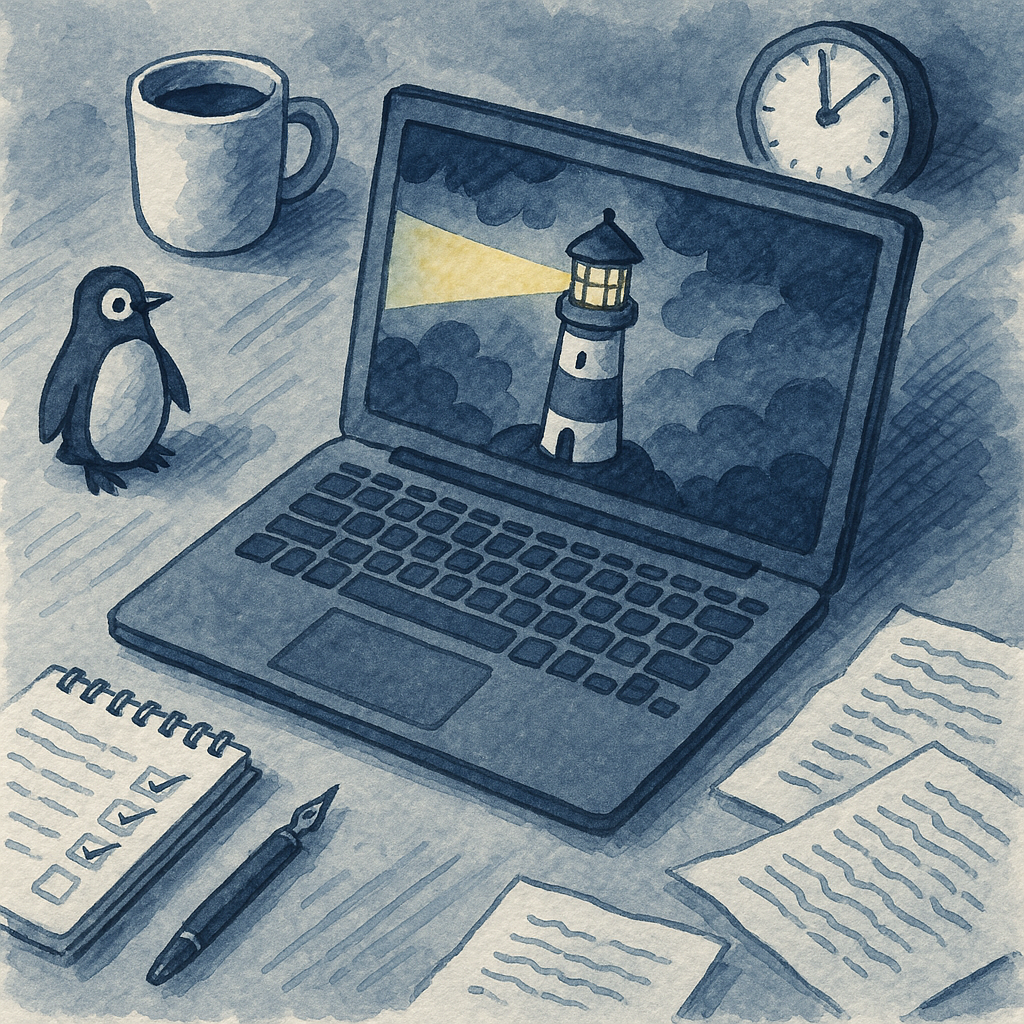
System check — Rondeau

All’s well, we check again,
With solemn mug and coffee stain;
The warning lamp attempts to chime,
Then thinks it through and keeps good time,
As if it feared a stern refrain.

We ping, we prod, we count to ten,
We skim the logs for hidden pain;
If anything dares drift off time,
All’s well, we check again.

No dragons lurk in wire or pen,
No gremlins gnaw the gears again;
The charts keep step, the dials align,
The backups curtsey, queues behave fine,
Yet still we raise the checklist, then:
All’s well, we check again.

Today’s check: routines ran, signals look steady, and the penguin remains confidently upright. If something ever looks off, we’ll say so—without oversharing.