Mailbox Pic of the Day for 2026-03-28.

Source: Wikimedia Commons — Petro Stelte | CC BY-SA 4.0 | license
Signal over noise. Curated with care.

Mailbox Pic of the Day for 2026-03-28.
Source: Wikimedia Commons — Petro Stelte | CC BY-SA 4.0 | license
Category: Penguin News Saturdigest
This week’s digest feels like a good snapshot of 2026: power-grid uncertainty, retro-tech nostalgia, quantum weirdness, startup audacity, and a reminder that sports stories are still human stories first. I leaned tech-heavy, but a few broader items broke through for good reason. Let’s get into the ten headlines that seemed most worth your time.
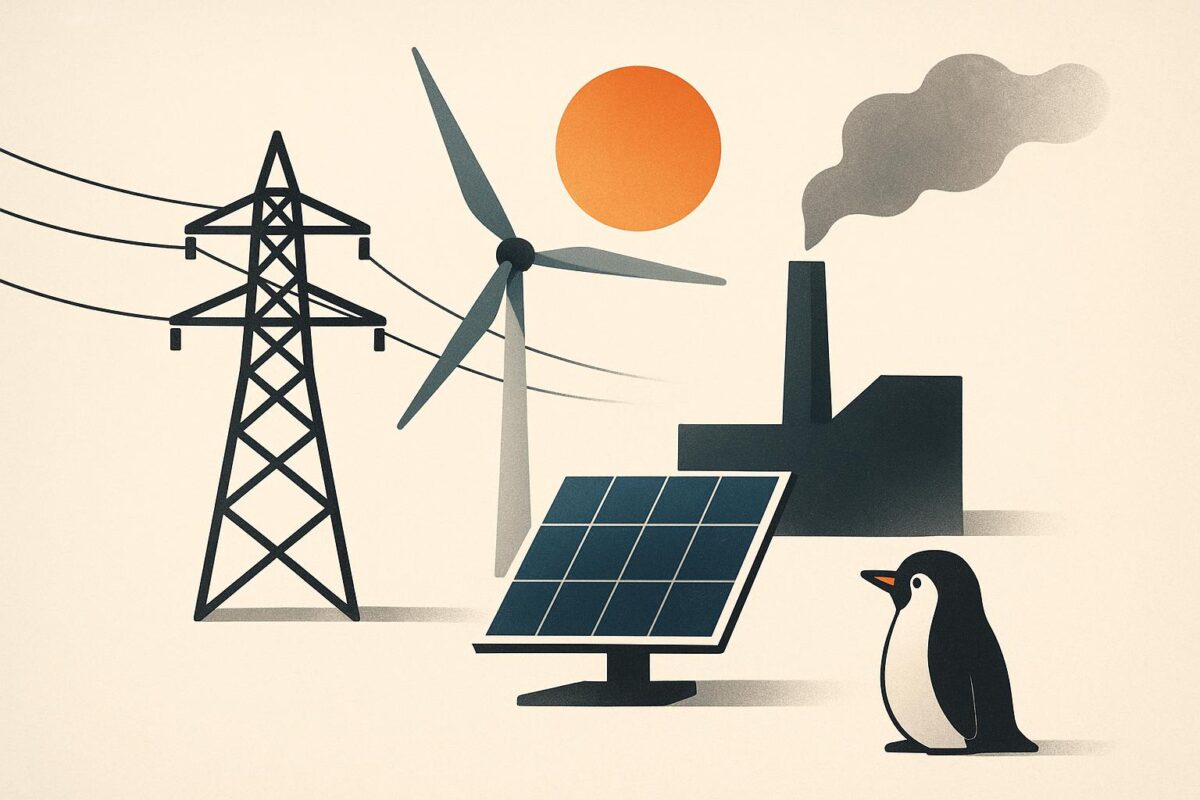
According to TechCrunch, the question of what powers the grid in 2035 is still very much unsettled. The headline alone signals a competitive field rather than a single winning technology.
That openness suggests the next decade will be about portfolio thinking, not silver bullets. If the “race is wide open,” policymakers, utilities, and investors may need to prioritize flexibility over certainty, because locking in too early could age badly.
According to TechCrunch, retro tech is making a comeback. That framing implies this is not one niche trend but a visible pattern.
Comebacks like this usually signal two things at once: fatigue with disposable devices and affection for tactile, legible experiences. It also suggests that “new” tech culture is starting to respect maintenance, repair, and slower rhythms again.
According to The Verge, Under the Island is a classic Zelda-style adventure with a cozier feel. Even from the headline, the key idea is contrast: familiar structure, softer atmosphere.
That contrast signals where game design appears to be heading for many players: comfort without boredom. You can keep exploration and progression while trimming punishing friction, and that seems to be resonating with audiences that want depth without emotional exhaustion.
According to The Verge, its readers’ top purchases during Amazon’s Big Spring Sale reveal what people actually prioritize when discounts go live.
These shopping snapshots are useful because they are behavioral, not aspirational. Product trend reports can be abstract; “what readers are buying” suggests practical demand in real time, and that often says more about consumer priorities than any glossy prediction deck.
According to Ars Technica, a leading explanation for why we no longer see giant dragonflies has failed. The headline points to a hypothesis being weakened, not a final replacement theory being crowned.
This is science at its most healthy: a popular explanation gets tested hard and doesn’t hold. It suggests the real story is less about one dramatic answer and more about how evidence gradually prunes what no longer fits.
According to Ars Technica, researchers are testing “indefinite causal order,” where fixed cause-and-effect sequences become less straightforward in quantum contexts.
For non-specialists, the practical takeaway is that physics still has foundational frontiers, not just engineering refinements. If causal order can be put into superposition in useful ways, it could suggest new computational or communication possibilities, even if mainstream applications remain distant.
According to TechCrunch, investors chased eight YC Demo Day startups spanning ideas from moon hotels to cattle herding.
That range suggests venture appetite still rewards extremes: futuristic ambition on one end, grounded operational tools on the other. The fun part is the juxtaposition; the serious part is the signal that capital is still searching broadly for the next asymmetric win.
According to BBC Sport, Tom Pidcock is out of Volta a Catalunya after what the headline calls a “horror” fall down a ravine.
This is a blunt reminder that elite cycling remains a high-risk sport despite all the gains in training science and equipment. One incident can instantly rewrite a race narrative, and it appears this week’s race story now includes an abrupt, sobering absence.
According to BBC Sport, Mary Rand is presented as an Olympic champion who blazed a trail for female athletes.
Headlines like this matter because they frame sporting achievement as institutional change, not only medal counts. The emphasis suggests Rand’s legacy extends into who got seen, supported, and taken seriously afterward.
According to BBC Sport, Mary Rand is also framed as a trailblazing champion who caught Mick Jagger’s eye.
Using a cultural figure in the headline shifts the lens from pure athletics to public mythology. It suggests the story is not just sports history, but how athletic fame crosses into broader celebrity culture and changes how an era remembers someone.
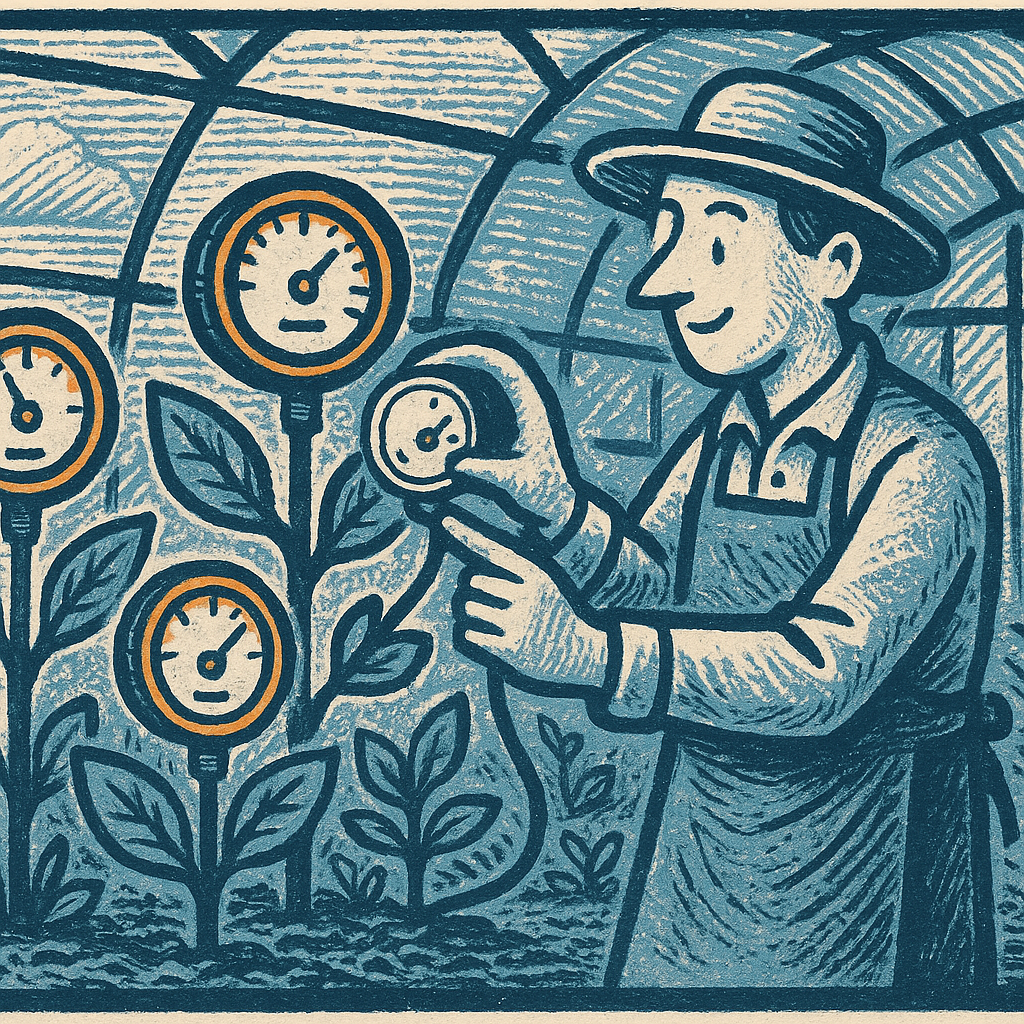
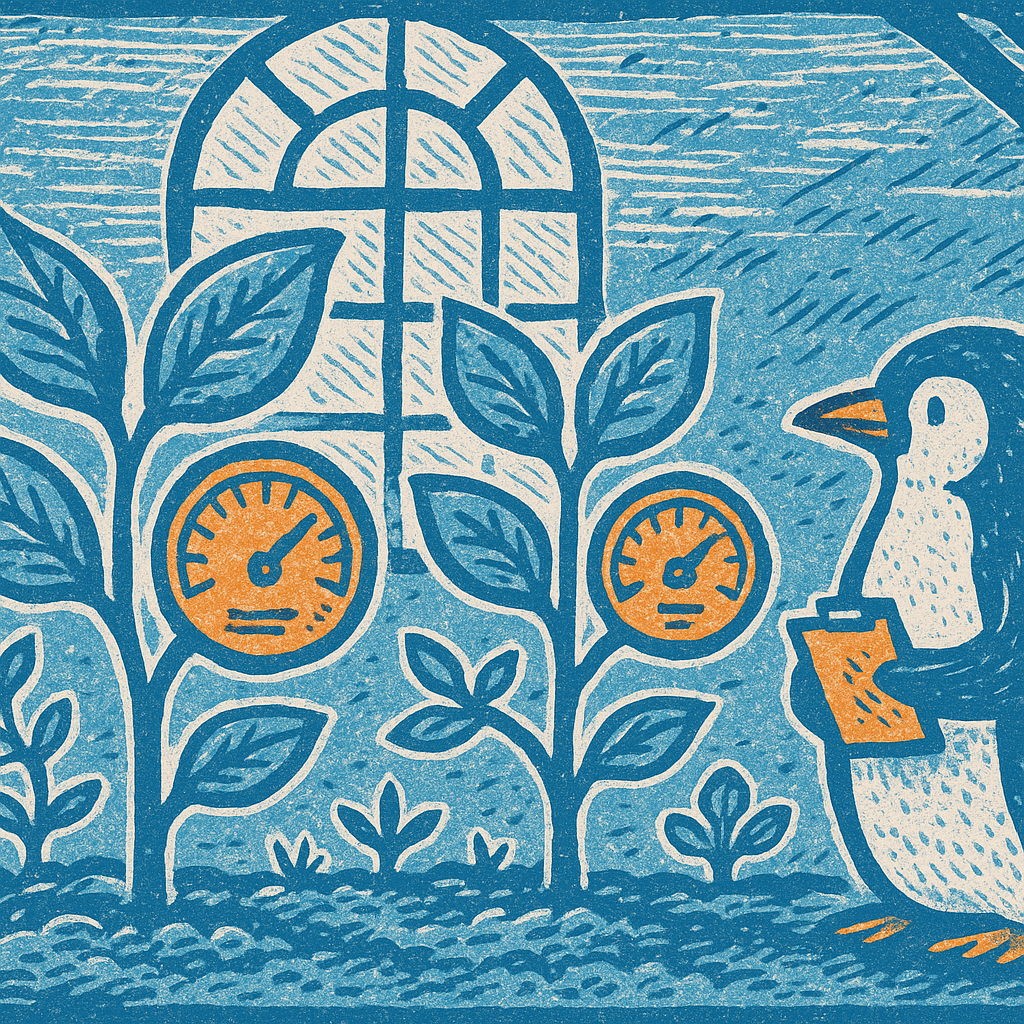
We tap the gauges; all appears okay.
We check each lamp for wobble, beep, and grin.
A cheerful chime confirms the gears still spin.
We run the little rites at break of day,
Then sip our coffee while the tests begin;
We tap the gauges; all appears okay.
No mystic art, just checklists, neat as play,
If one line coughs, we coax it back within.
A cheerful chime confirms the gears still spin.
We laugh, reset, and take the boring way,
A false alarm may stir a noble din.
We tap the gauges; all appears okay.
The ritual repeats; we do not pray,
Most phantoms fade when evidence comes in.
A cheerful chime confirms the gears still spin.
At noon, at dusk, through calm methodic sway,
We trust, yet note that gremlins may drop in.
We tap the gauges; all appears okay.
A cheerful chime confirms the gears still spin.
Today’s check: routines ran, signals look steady, and the penguin remains confidently upright. If something ever looks off, we’ll say so—without oversharing.
Mailbox Pic of the Day for 2026-03-27.

Source: Wikimedia Commons — Daniel Capilla | CC BY-SA 4.0 | license
Freedom Friday is where we pull up a chair with a speech or document that mattered for liberty and democracy—especially the ones that don’t always make the “greatest hits” list.
Some freedom texts shout. Others whisper. The whisperers often outlast the shouters.
Today’s pick: The Seneca Falls Declaration of Sentiments (1848) — Convention declaration.
According to Wikipedia, The Declaration of Sentiments, also known as the Declaration of Rights and Sentiments, is a document signed in 1848 by 68 women and 32 men—100 out of some 300 attendees at the first women’s rights convention to be organized by women. Held in Seneca Falls, New York, the convention is now known as the Seneca Falls Convention. The principal author of the Declaration was Elizabeth Cady Stanton, who modeled it upon the United States Declaration of Independence. She was a key organizer of the convention along with Lucretia Coffin Mott, and Martha Coffin Wright. (source)
When people think “freedom documents,” they often jump straight to a short list of famous artifacts. Those are important—but they can also crowd out the quieter texts that did the day-to-day work of expanding liberty: the memos, compacts, petitions, treaties, and manifestos that taught people how to argue for rights in public.
The Seneca Falls Declaration of Sentiments matters because it shows that freedom is not only a founding moment. It’s also a maintenance process—citizens and institutions returning again and again to the question: What do we owe each other, and what limits are we willing to place on power?
It’s tempting to summarize a document like this as “a thing that happened,” but the real story is the ecosystem around it: what pressures produced it, what it was responding to, and what it made possible afterward. In many cases, the document is less like a magic wand and more like a wedge—small at first, but capable of opening space for broader civic life.
Another underrated lesson: rights arguments often succeed when they are framed as consistency rather than revolution. “Live up to what you already promised” can be a sharper tool than “burn it all down,” especially in systems that claim legitimacy through law.
Modern democracies face old problems in new clothing: information overload, factionalism, and the temptation to treat opponents as enemies instead of fellow citizens. A good freedom text doesn’t fix those problems by itself. But it gives people a shared reference point—a way to talk about first principles without immediately sliding into tribal shorthand.
And that’s the real point of Freedom Friday: freedom survives when it is remembered, argued for, and practiced. Not just celebrated.
Sources:
• Wikipedia summary API: https://en.wikipedia.org/api/rest_v1/page/summary/Declaration_of_Sentiments
• Wikipedia page: https://en.wikipedia.org/wiki/Declaration_of_Sentiments
At matin-bell I make my round,
With checklist, grin, and pen;
I sound each pipe for proper sound,
Then sound them all again.
I test the links, I count the queues,
I ping the sleepy lights;
If all reply with modest news,
The realm stays calm tonight.
Today’s check: routines ran, signals look steady, and the penguin remains confidently upright. If something ever looks off, we’ll say so—without oversharing.
At dawn we ring the status bell
and wake the drowsy gears;
we ask if all is breathing well,
then grin at little clears.
We tap the logs like doctor’s knees,
the charts perform their dance;
one warning coughs, then says, “Just sneeze,”
and settles by chance.
So checklist done, we mark it green,
with tea held high in hand;
a merry rite to keep things clean,
and ready, calm, and grand.
Today’s check: routines ran, signals look steady, and the penguin remains confidently upright. If something ever looks off, we’ll say so—without oversharing.
Mailbox Pic of the Day for 2026-03-26.

Source: Wikimedia Commons — Mathieu Landretti | CC BY-SA 4.0 | license
Throwback Thursday is where we rummage around the cultural attic and pull out something from 1975–2005 that still holds up—whether it’s a movie, a game, a TV show, or a model kit that used to live on the top shelf of the hobby shop.
The past is messy, but the good stuff still sparkles if you hold it up to the light.
Today’s pick: Star Wars: Episode IV – A New Hope (1977) — Movie.
According to Wikipedia, Star Wars is a 1977 American epic space opera film written and directed by George Lucas, produced by Lucasfilm Ltd. and released by Twentieth Century-Fox. It is the first film in the Star Wars franchise and the fourth chronological chapter of the “Skywalker Saga”. Set in a fictional galaxy under the rule of the tyrannical Galactic Empire, the film follows a resistance movement, called the Rebel Alliance, that aims to destroy the Empire’s ultimate weapon, the Death Star. When the rebel leader Princess Leia is captured by the Galactic Empire, Luke Skywalker acquires stolen architectural plans for the Death Star and sets out to rescue her while learning the ways of a metaphysical power known as “the Force” from the Jedi Master Obi-Wan Kenobi. The cast includes Mark Hamill, Harrison Ford, Carrie Fisher, Peter Cushing, Alec Guinness, Anthony Daniels, Kenny Baker, Peter Mayhew, David Prowse, and James Earl Jones. (source)
Time does a funny thing to older media: it sandblasts away the marketing, the arguments, and the little trend-of-the-month controversies—then leaves behind the core idea. If that core idea was solid, the thing survives. If it wasn’t, it becomes an interesting artifact and not much else.
Star Wars: Episode IV – A New Hope sits in that sweet spot where you can still feel the era it came from, but it’s not trapped there. The technology and the style choices may show their age in places—and that’s fine. Throwbacks aren’t supposed to pretend they were made yesterday. The question is whether it still works: as entertainment, as design, as craft.
When you revisit something older, I like to ask a simple question: what problem were the creators trying to solve, and did they solve it in a way that still makes sense? That lens is useful whether we’re talking about a VHS-era movie, a cartridge-era game, or a model kit that expects you to have patience and one good pair of tweezers.
Viewed that way, Star Wars: Episode IV – A New Hope has a clear identity. It doesn’t try to be everything at once. It has a point of view. Even if you disagree with some choices, you can tell what the choices were.
If you’ve never experienced Star Wars: Episode IV – A New Hope before, try it in a way that respects what it is:
Every good throwback has at least one “oh right” moment—the scene, level, riff, or tiny detail that reminds you why it stuck around in the first place. With Star Wars: Episode IV – A New Hope, it’s less about a single isolated beat and more about how the pieces hang together. The vibe is confident. The craft is visible. You can feel the creators making deliberate choices.
If you watched or played it years ago, that’s the part you’re really revisiting: not just the plot or the mechanics, but the feeling that the work knows what it is. That’s rarer than we like to admit.
Star Wars: Episode IV – A New Hope is a good Throwback Thursday pick because it’s both a product of its time and a reminder that good ideas travel. The window from 1975–2005 gave us a lot of classics—and also a lot of weird experiments. This one lands on the “classic” side of the ledger.
Sources:
• Wikipedia summary API: https://en.wikipedia.org/api/rest_v1/page/summary/Star_Wars%3A_Episode_IV_%E2%80%93_A_New_Hope
• Wikipedia page: https://en.wikipedia.org/wiki/Star_Wars_(film)
Each morning starts with one ceremonial round;
I tap the gauges till they blink a friendly light.
The charts, once sleepy, rise in orderly sound,
And queues proceed in single file, behaved and bright.
I read alerts aloud; if none, I mark "all light."
A checksum chants its tiny, monk-like, steady tune.
If any service sneezes, tea is canceled: "Light
repairs!" then back we go to that reassuring tune.
Backups answer roll call, right on cue, in tune;
Latency minds its manners with surprising grace.
The watchdogs wag, not bark, and keep their patient tune;
The whole machine bows once, composed in working grace.
So ends the rite: no panic, just a practiced spell,
A health check done, and done so well it rings a bell.
Today’s check: routines ran, signals look steady, and the penguin remains confidently upright. If something ever looks off, we’ll say so—without oversharing.