

Throwback Thursday: The X-Files (1993) — A paranoia-era mystery box that still knows how to set a mood

Throwback Thursday illustration

Throwback Thursday: The X-Files (1993) — A paranoia-era mystery box that still knows how to set a mood

Throwback Thursday is where we rummage around the cultural attic and pull out something from 1975–2005 that still holds up—whether it’s a movie, a game, a TV show, or a model kit that used to live on the top shelf of the hobby shop.

Today’s pick: The X-Files (1993) — TV show.

According to Wikipedia, The X-Files is an American science fiction drama television series created by Chris Carter. The original series aired from September 10, 1993, to May 19, 2002, on Fox, spanning nine seasons, with 202 episodes. A tenth season of six episodes ran from January to February 2016. Following the ratings success of this revival, The X-Files returned for an eleventh season of ten episodes, which ran from January to March 2018. In addition to the television series, two feature films have been released: the 1998 film The X-Files and the stand-alone film The X-Files: I Want to Believe, released in 2008, six years after the original television run ended. (source)

Why this one is worth a second look

Time does a funny thing to older media: it sandblasts away the marketing, the arguments, and the little trend-of-the-month controversies—then leaves behind the core idea. If that core idea was solid, the thing survives. If it wasn’t, it becomes an interesting artifact and not much else.

The X-Files sits in that sweet spot where you can still feel the era it came from, but it’s not trapped there. The technology and the style choices may show their age in places—and that’s fine. Throwbacks aren’t supposed to pretend they were made yesterday. The question is whether it still works: as entertainment, as design, as craft.

The “what were they trying to do?” test

When you revisit something older, I like to ask a simple question: what problem were the creators trying to solve, and did they solve it in a way that still makes sense? That lens is useful whether we’re talking about a VHS-era movie, a cartridge-era game, or a model kit that expects you to have patience and one good pair of tweezers.

Viewed that way, The X-Files has a clear identity. It doesn’t try to be everything at once. It has a point of view. Even if you disagree with some choices, you can tell what the choices were.

What it looks like through a 2026 lens

  • Pacing: Older works often move differently than modern ones—sometimes slower, sometimes shockingly faster. Either way, it’s instructive.
  • Assumptions: The audience expectations were different. Some of that is charming, some of it is a reminder of why certain conventions changed.
  • Constraints: Technical and budget limits can force clarity. You can see where the work leans into what it can do well instead of pretending it can do everything.

If you’re going to (re)visit it, here’s how

If you’ve never experienced The X-Files before, try it in a way that respects what it is:

  1. Give it 30–60 minutes without multitasking. Throwbacks don’t compete well with doomscrolling.
  2. Notice one craft element (music, editing, level design, physical detailing, etc.) and watch for how it repeats and evolves.
  3. Don’t demand modern convenience. Part of the fun is seeing how different the “default” used to be.

A small moment that captures it

Every good throwback has at least one “oh right” moment—the scene, level, riff, or tiny detail that reminds you why it stuck around in the first place. With The X-Files, it’s less about a single isolated beat and more about how the pieces hang together. The vibe is confident. The craft is visible. You can feel the creators making deliberate choices.

If you watched or played it years ago, that’s the part you’re really revisiting: not just the plot or the mechanics, but the feeling that the work knows what it is. That’s rarer than we like to admit.

The bottom line

The X-Files is a good Throwback Thursday pick because it’s both a product of its time and a reminder that good ideas travel. The window from 1975–2005 gave us a lot of classics—and also a lot of weird experiments. This one lands on the “classic” side of the ledger.


Sources:
• Wikipedia summary API: https://en.wikipedia.org/api/rest_v1/page/summary/The_X-Files
• Wikipedia page: https://en.wikipedia.org/wiki/The_X-Files
System check — Ghazal

System check illustration

I light the lamp of logs and listen for the bell, all is well.
A chirp from every corner proves the heartbeat’s swell, all is well.

I tap the gauges, count the pulses, check each tiny spell, all is well.
A playful scan of status charts, a courteous farewell, all is well.

I brew a cup of pings and sips, a morning’s ritual, all is well.
The monitor hums back a rhyme, a gentle “yes” to tell, all is well.

I sweep the queues and tidy notes, then pat each idle shell, all is well.
No warnings lurk, no gremlins skulk; the systems laugh as well, all is well.

So let the day proceed in peace; I ring the test’s small bell, all is well.
The checks complete, the circuits wink, the calm report is, “All is well.”

Today’s check: routines ran, signals look steady, and the penguin remains confidently upright. If something ever looks off, we’ll say so—without oversharing.

Whatever Wednesday: why old tech still rules

Illustration for Whatever Wednesday: why old tech still rules

Happy Whatever Wednesday. Today’s topic is a cheerful contrarian: old tech. While the internet keeps handing us shiny new devices, the older stuff keeps doing the work—quietly, reliably, and often with fewer headaches. This isn’t a nostalgia trip. It’s a practical look at why “older” still rules in a world that keeps changing.

Old Tech Wins at the Boring Stuff (Which Is the Stuff That Matters)

When we talk about technology, we often start with the impressive features. But most of life runs on unglamorous tasks: typing, printing, calling, listening, and saving files. Old tech is good at boring things because it was designed to do those things well, not to do everything at once.

Take the humble landline. It still works during power outages. Or the cheap USB stick that simply stores files without asking for a subscription. Or the plain old digital alarm clock that wakes you up without a software update. These are small wins, but they add up to a lifestyle where the tools aren’t constantly asking for attention.

Old tech also tends to be “single purpose.” That’s a gift, not a limitation. A dedicated camera keeps you focused on the photo. A standalone e-reader keeps you reading instead of doomscrolling. That kind of focus is rare—and valuable—today.

Reliability Is a Feature, Not a Vibe

New devices are exciting, but they often arrive with new problems. Bugs, incomplete features, short-lived accessories, and the occasional “this device is no longer supported.” Old tech is past the chaotic early stage. It’s been tested by time and by a million frustrated users who found the weak spots.

Think about the laptop you bought five or six years ago. If it still runs, it has proven itself. It may not be fast, but it doesn’t surprise you. You know where the settings are. You know which cables it needs. You have muscle memory. That’s real value—especially if you want tech to fade into the background and let you do actual life.

Reliability also shows up in repairability. Older devices tend to be less sealed, less proprietary, and more willing to accept a new battery or a fresh hard drive. That matters for budgets, for sustainability, and for peace of mind.

Old Tech Encourages Ownership Over Renting

One of the quiet shifts in modern tech is the move from ownership to access. We don’t buy music; we stream it. We don’t buy software; we subscribe. We don’t even buy some devices in full; we pay monthly. Old tech is a reminder of a different model: you bought it, you owned it, and it kept working until it didn’t.

This shift isn’t all bad, but it changes our relationship with tools. Older tech often works without accounts, without tracking, and without an ecosystem. That means fewer passwords, fewer data trails, and fewer “please update your billing info” pop-ups. If you’ve ever had a device stop working because a server went down, you know how fragile the access model can be.

When you own a thing, it feels less like a lease and more like a tool. That’s a small psychological win—and a real practical one.

Old Tech Is a Quiet Rebellion Against the Upgrade Cycle

There’s a built-in pressure to upgrade. It’s not just marketing; it’s the idea that your phone, laptop, or software is “obsolete” on a countdown clock. But if your tech still meets your needs, then the upgrade cycle becomes optional, not mandatory.

Keeping older tech for longer is a gentle act of resistance. It says, “I decide when this stops being useful.” It also saves money, reduces e-waste, and gives you a clearer sense of what you actually value in a device. If you’re not upgrading every year, you get to notice the difference between “nice to have” and “need to have.”

It also flips the default setting from “always shopping” to “already good.” That’s a low-key life improvement.

The Best Setup Is Often a Mix of Old and New

None of this is an argument against new technology. It’s a case for balance. The real sweet spot is often a hybrid: new tech where it makes life easier, old tech where it keeps things simple. Example: a modern phone with a current camera, paired with an older laptop that still writes and edits just fine. A smart speaker for voice timers, plus a basic radio for background sound. A new streaming service for movies, plus a used DVD player for the favorite films you already own.

Mixing old and new gives you the best of both worlds—innovation without dependence, convenience without constant change. It’s also a reminder that technology is supposed to serve your life, not the other way around.

So Why Does Old Tech Still Rule?

Because it has already proven itself. It is predictable, usable, and often repairable. It doesn’t demand a monthly fee. It doesn’t ask for constant attention. It gives you control. In a world where everything is connected and updated and optimized, older tools can feel like a small island of calm.

That calm is worth something. It’s worth money. It’s worth sanity. And it’s worth a little appreciation on a Wednesday afternoon.

Note: No citations available from the approved sources list for this post.

What to Watch Next

  • The rise of repairable electronics and right-to-repair momentum
  • Local storage making a comeback as people tire of subscriptions
  • Resale and refurb markets growing as budgets tighten
  • Purpose-built devices (e-readers, music players) gaining fans again

Thanks for hanging out for Whatever Wednesday. If this sparked a “maybe I don’t need an upgrade” moment, mission accomplished. See you next week—same day, same vibe, and hopefully the same reliable gadgets.

System check — Pantoum

System check illustration

I tap the calm checklist; the status lamps agree.
A chirp says, “all is well,” in modest, measured tone.
I bow to humble beeps that keep the gears in glee.
The ritual feels silly, yet it keeps the wheels well‑known.

A chirp says, “all is well,” in modest, measured tone.
I count the sleeping alarms and note the steady pulse.
The ritual feels silly, yet it keeps the wheels well‑known.
No dragons in the buffer, no mischievous impulse.

I count the sleeping alarms and note the steady pulse.
I knock on every panel like a dutiful page.
No dragons in the buffer, no mischievous impulse.
The report is brief: “No fire, no flood, no rage.”

I knock on every panel like a dutiful page.
A chirp says, “all is well,” in modest, measured tone.
The report is brief: “No fire, no flood, no rage.”
I tap the calm checklist; the status lamps agree.

Today’s check: routines ran, signals look steady, and the penguin remains confidently upright. If something ever looks off, we’ll say so—without oversharing.

Crypto update: security, scams, and where the risk moved

Illustration for Crypto update: security, scams, and where the risk moved

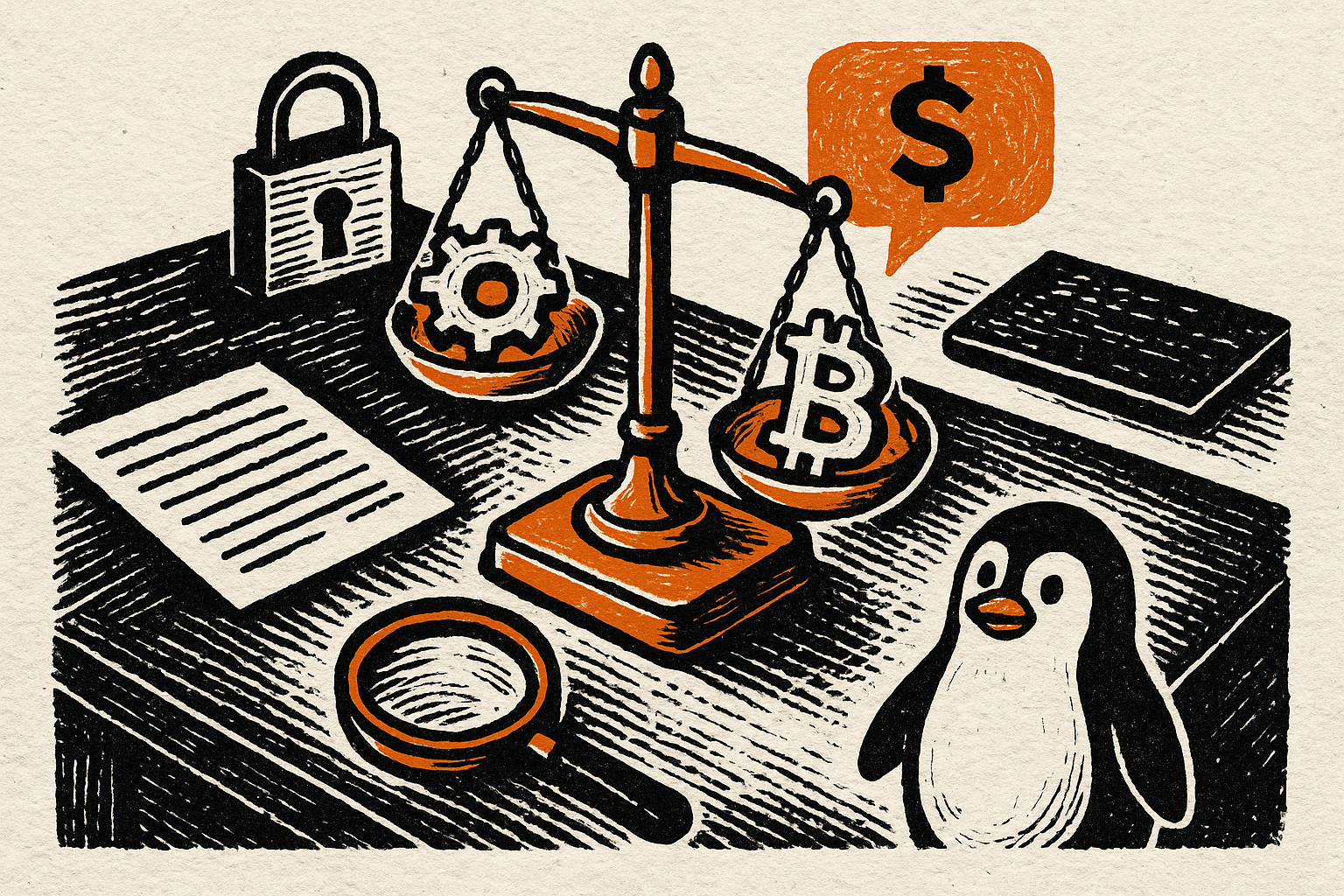
Crypto security news lately feels like a game of whack‑a‑mole where the moles learned project management. The big theme: the risk hasn’t vanished; it’s just moved—from smart contracts alone to the softer, human parts of the stack, plus supply chains and the everyday infrastructure that keeps crypto services running. That shift matters because it changes who gets targeted, where defenses need to live, and how “just don’t click the link” isn’t enough anymore. According to SecurityWeek, 2025’s large theft totals and tactics point to human‑centric compromises as much as technical ones. ([securityweek.com](https://www.securityweek.com/north-korean-hackers-have-stolen-2-billion-in-cryptocurrency-in-2025/))

The scoreboard got ugly, even in a “down” year

Let’s start with the numbers, because they set the mood. According to SecurityWeek, reported crypto losses for 2024 were about $1.49 billion year‑to‑date, with hacking incidents driving most of the damage and DeFi taking the brunt. ([securityweek.com](https://www.securityweek.com/hackers-stole-1-49-billion-in-cryptocurrency-to-date-in-2024/?utm_source=openai)) That set the stage for 2025, where the headline thefts were far larger. According to SecurityWeek, the Bybit exchange reported about $1.5 billion stolen in a single attack, with hundreds of thousands of ETH and stETH moved out. ([securityweek.com](https://www.securityweek.com/bybit-hack-drains-1-5-billion-from-cryptocurrency-exchange/?utm_source=openai)) Big numbers don’t automatically mean “sky is falling,” but they do mean the stakes for operational security, incident response, and user hygiene are far higher than a few years ago.

Risk moved to people and processes

In 2025, attackers didn’t just push on code; they pushed on the humans holding the keys. According to SecurityWeek, forensics on the Bybit incident described a multi‑pronged social‑engineering operation that used stolen cloud session tokens, MFA bypasses, and a rigged JavaScript file to reach cold‑wallet systems. ([securityweek.com](https://www.securityweek.com/how-social-engineering-sparked-a-billion-dollar-supply-chain-cryptocurrency-heist/)) That’s not a “smart contract bug” story; it’s a workflow‑abuse story. And the same playbook shows up in smaller campaigns. According to SecurityWeek, North Korean operators have used Zoom’s remote‑control feature to trick crypto professionals into granting access and installing malware, turning normal collaboration software into a foothold. ([securityweek.com](https://www.securityweek.com/north-korean-cryptocurrency-thieves-caught-hijacking-zoom-remote-control-feature/)) The takeaway: attackers are increasingly betting that well‑meaning humans will approve a prompt or trust a call.

Supply chain is the quiet highway

Supply‑chain attacks are the stealthy cousin of social engineering: instead of tricking a single person, you compromise something they all rely on. According to SecurityWeek, the Bybit heist analysis highlights a rigged JavaScript file as part of the compromise path, an example of how a single trusted component can become a Trojan horse. ([securityweek.com](https://www.securityweek.com/how-social-engineering-sparked-a-billion-dollar-supply-chain-cryptocurrency-heist/)) And the risk isn’t theoretical. According to KrebsOnSecurity, attackers briefly compromised at least 18 widely used JavaScript packages on NPM after phishing a maintainer, with malicious code designed to intercept crypto activity in the browser. ([krebsonsecurity.com](https://krebsonsecurity.com/2025/09/18-popular-code-packages-hacked-rigged-to-steal-crypto/comment-page-1/?utm_source=openai)) For everyday users, that means “my wallet app is fine” doesn’t fully cover the stack if the underlying dependencies are poisoned.

Smart‑contract risk still bites—just with a different flavor

None of this means smart‑contract issues went away. They’re still a big reason DeFi remains high‑risk. According to SecurityWeek, the Balancer protocol reported a heist around $128 million tied to a rounding‑function exploit in batch swaps, and the team moved into recovery mode while pausing affected pools. ([securityweek.com](https://www.securityweek.com/defi-protocol-balancer-starts-recovering-funds-stolen-in-128-million-heist/?utm_source=openai)) Meanwhile, the 2024 losses data shows that DeFi incidents still dominated the tally, even when broader market activity slowed. According to SecurityWeek, a large share of 2024’s incidents and losses came from decentralized services rather than centralized platforms. ([securityweek.com](https://www.securityweek.com/hackers-stole-1-49-billion-in-cryptocurrency-to-date-in-2024/?utm_source=openai)) So yes—code still matters, but it’s now competing for attention with the messier human and operational layers.

The low‑end stuff is noisy but costly

Not every incident is a blockbuster heist. There’s a long tail of “low‑end” abuse that quietly burns resources. According to SecurityWeek, cryptojackers have mined Monero by exploiting exposed DevOps infrastructure like Consul dashboards, Docker APIs, and code‑hosting services, turning misconfigurations into someone else’s mining rig. ([securityweek.com](https://www.securityweek.com/cryptojackers-caught-mining-monero-via-exposed-devops-infrastructure/)) And according to SecurityWeek, a critical vulnerability in XWiki has been exploited in the wild to run cryptocurrency mining, showing how standard enterprise software can become collateral damage when patching lags. ([securityweek.com](https://www.securityweek.com/xwiki-vulnerability-exploited-in-cryptocurrency-mining-operation/)) These aren’t headline‑grabbing thefts, but they’re persistent, opportunistic, and expensive over time.

Geopolitics moved onto the balance sheet

Crypto risk also has a geopolitical layer now. According to SecurityWeek, North Korean actors are estimated to have stolen more than $2 billion in cryptocurrency in 2025, with laundering tactics that grow more complex as defenses improve. ([securityweek.com](https://www.securityweek.com/north-korean-hackers-have-stolen-2-billion-in-cryptocurrency-in-2025/)) And not every high‑value event is about profit. According to SecurityWeek, the Predatory Sparrow group claimed to have burned more than $90 million worth of assets at Iran’s Nobitex exchange, making the “attack” itself the message. ([securityweek.com](https://www.securityweek.com/predatory-sparrow-burns-90-million-on-iranian-crypto-exchange-in-cyber-shadow-war/)) That mix of financially motivated and politically motivated operations makes risk harder to model, because not all attackers are optimizing for cash‑out.

What to watch next

  • According to SecurityWeek, human‑centric compromises and social engineering are increasingly central in major incidents, so watch for new controls around approvals, signing flows, and session management. ([securityweek.com](https://www.securityweek.com/how-social-engineering-sparked-a-billion-dollar-supply-chain-cryptocurrency-heist/))
  • According to KrebsOnSecurity, package‑repository compromises can ripple quickly, so expect more emphasis on software provenance and dependency monitoring. ([krebsonsecurity.com](https://krebsonsecurity.com/2025/09/18-popular-code-packages-hacked-rigged-to-steal-crypto/comment-page-1/?utm_source=openai))
  • According to SecurityWeek, DeFi still accounts for a significant portion of loss events, so audits and runtime monitoring will remain critical for protocols and users. ([securityweek.com](https://www.securityweek.com/hackers-stole-1-49-billion-in-cryptocurrency-to-date-in-2024/?utm_source=openai))
  • According to SecurityWeek, opportunistic cryptojacking persists through exposed infrastructure, so basic hardening and patch cadence remain a quiet but valuable defense. ([securityweek.com](https://www.securityweek.com/cryptojackers-caught-mining-monero-via-exposed-devops-infrastructure/))
  • According to SecurityWeek, nation‑state activity continues to shape the threat landscape, so expect regulation and compliance to keep expanding in response. ([securityweek.com](https://www.securityweek.com/north-korean-hackers-have-stolen-2-billion-in-cryptocurrency-in-2025/))

Bottom line: the risk in crypto didn’t disappear; it migrated into places that feel more like regular IT and less like exotic blockchain magic. That’s good news in one sense—most of the defenses already exist—but it also means the same old security disciplines (identity, access control, patching, supply‑chain hygiene) now decide whether a crypto business has a bad day or a catastrophic one. No hype, no doom—just a reminder that boring security basics are still the superheroes of this story.

System check — Triolet

System check illustration

I tap the check to see the lights glow green,
A ritual of pings, polite and mild.
The gauges wink; they hum the “all‑is‑seen,”
I tap the check to see the lights glow green.
I scan the logs for grumbles in between;
A warning once—now quiet, reconciled.
I tap the check to see the lights glow green,
A ritual of pings, polite and mild.

Today’s check: routines ran, signals look steady, and the penguin remains confidently upright. If something ever looks off, we’ll say so—without oversharing.

AI update: what actually changed this week

Illustration for AI update: what actually changed this week

It’s Monday, February 9, 2026, which means it’s time for your weekly “AI, but make it readable” roundup. This week wasn’t about one earth‑shaking model release. It was about the plumbing: the tools that manage agents, the infrastructure that powers them, and the web that’s trying to keep up. If AI were a city, we’re mostly talking about zoning, transit, and building inspectors—still interesting, just fewer fireworks.

Agents: from solo act to org chart

The headline trend is that “agent” has moved from a buzzword to a job title with a management layer. According to TechCrunch, OpenAI introduced a new enterprise platform called Frontier that lets companies build, manage, and govern AI agents, including those built outside OpenAI’s stack. It’s positioned like workforce management for digital coworkers—onboarding, permissions, and oversight included. ([techcrunch.com](https://techcrunch.com/2026/02/05/openai-launches-a-way-for-enterprises-to-build-and-manage-ai-agents/))

On the same day, TechCrunch reported that Anthropic released Opus 4.6 and added “agent teams,” so multi‑agent coordination is now a first‑class feature. The practical message: vendors are investing in orchestration, not just raw model capability, which is often the harder part of real‑world deployment. ([techcrunch.com](https://techcrunch.com/2026/02/05/anthropic-releases-opus-4-6-with-new-agent-teams/))

Meanwhile, MIT News highlighted a research tool called EnCompass that helps agents search through possible execution paths by backtracking and parallel attempts. Instead of hand‑coding lots of contingency logic, developers can annotate where an agent should branch, and EnCompass handles the search. The vibe here is “less heroics, more reliable workflows.” ([news.mit.edu](https://news.mit.edu/2026/helping-ai-agents-search-to-get-best-results-from-llms-0205?utm_source=openai))

Adoption numbers keep climbing (quietly)

While the toolchains got more sophisticated, user numbers kept doing their slow, steady climb. According to TechCrunch, Google said the Gemini app has passed 750 million monthly active users, as reported in its Q4 2025 earnings. That number doesn’t tell us how much people love the product, but it does tell us AI is now a default habit for a huge population. ([techcrunch.com](https://techcrunch.com/2026/02/04/googles-gemini-app-has-surpassed-750m-monthly-active-users/))

It’s a good reminder that usage milestones often happen outside the lab. In 2026, “AI progress” isn’t only about who has the best model; it’s also about who gets a product into daily routines. The big adoption metrics are now as much a story as benchmark scores, and they influence where companies spend their next dollar.

Data centers meet the local zoning board

The AI boom still runs on big boxes of compute, and those boxes need electricity and space. According to TechCrunch, New York lawmakers proposed a three‑year pause on new data center permits, highlighting concerns about energy costs and community impact. The story frames it as a policy response to the scale of AI infrastructure build‑out. ([techcrunch.com](https://techcrunch.com/2026/02/07/new-york-lawmakers-propose-a-three-year-pause-on-new-data-centers/))

WIRED covered the same proposal and noted that multiple states—red and blue—are considering similar pauses. The details differ by state, but the emerging pattern is that data center policy is shifting from “local zoning issue” to “statewide political issue.” ([wired.com](https://www.wired.com/story/new-york-is-the-latest-state-to-consider-a-data-center-pause/))

At the same time, OpenAI announced a partnership with SoftBank’s SB Energy tied to data center development, including a large lease and investments in energy infrastructure. That’s a reminder that the infrastructure push is accelerating even as public scrutiny grows. The industry is pushing forward; statehouses are pushing back. Expect more awkward town halls with very large PowerPoint decks. ([openai.com](https://openai.com/index/stargate-sb-energy-partnership/?utm_source=openai))

The web is getting crowded with bots

One of the week’s more “this feels new” updates came from WIRED’s report on AI bots becoming a significant source of web traffic. The article points to new data suggesting AI agents are increasingly crawling and retrieving information, which is prompting publishers and platforms to harden defenses and rethink how content is accessed. ([wired.com](https://www.wired.com/story/ai-bots-are-now-a-signifigant-source-of-web-traffic/))

Why it matters: if AI agents are going to browse the web on our behalf, the web will start treating them like a new class of visitors—with rules, tolls, and likely some bouncers at the door. That has implications for everything from content licensing to how news gets surfaced and paid for. It’s not doom, but it is a shift in the balance of power between publishers, platforms, and the bots that read everything at 3 a.m.

So what actually changed this week?

Short version: The “agent” story matured, adoption grew, infrastructure politics got louder, and the web’s bot problem became everyone’s problem. That’s a lot of “boring” developments—but these are the kinds of changes that quietly shape what AI can do in the real world. When the plumbing improves, the product landscape changes with it. And when the power bill shows up, the politics follows.

What to watch next

  • Whether enterprise agent platforms start to standardize around shared management features, or splinter into vendor‑specific ecosystems.
  • How state‑level data center proposals evolve—especially if more states move from talk to actual moratoriums.
  • Whether publishers adopt clearer, more consistent rules for AI bot access—or start charging for it in a way that sticks.
  • How consumer AI usage metrics shift now that the novelty phase is fading and “habit” becomes the key word.

That’s the week: fewer fireworks, more foundation work. Which, if you’re building anything that needs to last, is exactly the kind of week you want. See you next time—bring snacks, the bots might have eaten the internet again.

System check — Rondel

System check illustration

I tap the checks; the gauges sing A.
A gentle ping: “All signs are good.” B
The lights all blink, as lights just should. B
I sip, and log the quiet spring. A
No dragons in the cooling hood; A
Just tidy charts and running wood. B
I tap the checks; the gauges sing A.
A gentle ping: “All signs are good.” B
If warnings peep, I clear the queue. A
If logs feel long, I trim them down. B
If dust is bold, I chase it out. B
The ritual keeps the work in tune. A
I tap the checks; the gauges sing A.

Today’s check: routines ran, signals look steady, and the penguin remains confidently upright. If something ever looks off, we’ll say so—without oversharing.

System check — Rondeau

System check illustration

We test the pulse; we knock and say, “All right?”
A modest rite to bless the wires and light.
A ping, a wink, a tidy checklist tune,
A gentle scan beneath the waking moon—
We test the pulse; we knock and say.

We peek at gauges: “Green? Then onward, bright.”
If amber hums, we nudge it into flight.
No dragons here, just logs that croon,
A noon‑day rune—
We test the pulse; we knock and say.

We count the beats; they all return in time,
A little laugh, a purposeful old rhyme.
If something sighs, we fix it soon
With patient spoon—
We test the pulse; we knock and say.

Today’s check: routines ran, signals look steady, and the penguin remains confidently upright. If something ever looks off, we’ll say so—without oversharing.