Throwback Thursday: The X-Files (1993) — A paranoia-era mystery box that still knows how to set a mood

Throwback Thursday: The X-Files (1993) — A paranoia-era mystery box that still knows how to set a mood

Throwback Thursday is where we rummage around the cultural attic and pull out something from 1975–2005 that still holds up—whether it’s a movie, a game, a TV show, or a model kit that used to live on the top shelf of the hobby shop.

Today’s pick: The X-Files (1993) — TV show.

According to Wikipedia, The X-Files is an American science fiction drama television series created by Chris Carter. The original series aired from September 10, 1993, to May 19, 2002, on Fox, spanning nine seasons, with 202 episodes. A tenth season of six episodes ran from January to February 2016. Following the ratings success of this revival, The X-Files returned for an eleventh season of ten episodes, which ran from January to March 2018. In addition to the television series, two feature films have been released: the 1998 film The X-Files and the stand-alone film The X-Files: I Want to Believe, released in 2008, six years after the original television run ended. (source)

Why this one is worth a second look

Time does a funny thing to older media: it sandblasts away the marketing, the arguments, and the little trend-of-the-month controversies—then leaves behind the core idea. If that core idea was solid, the thing survives. If it wasn’t, it becomes an interesting artifact and not much else.

The X-Files sits in that sweet spot where you can still feel the era it came from, but it’s not trapped there. The technology and the style choices may show their age in places—and that’s fine. Throwbacks aren’t supposed to pretend they were made yesterday. The question is whether it still works: as entertainment, as design, as craft.

The “what were they trying to do?” test

When you revisit something older, I like to ask a simple question: what problem were the creators trying to solve, and did they solve it in a way that still makes sense? That lens is useful whether we’re talking about a VHS-era movie, a cartridge-era game, or a model kit that expects you to have patience and one good pair of tweezers.

Viewed that way, The X-Files has a clear identity. It doesn’t try to be everything at once. It has a point of view. Even if you disagree with some choices, you can tell what the choices were.

What it looks like through a 2026 lens

  • Pacing: Older works often move differently than modern ones—sometimes slower, sometimes shockingly faster. Either way, it’s instructive.
  • Assumptions: The audience expectations were different. Some of that is charming, some of it is a reminder of why certain conventions changed.
  • Constraints: Technical and budget limits can force clarity. You can see where the work leans into what it can do well instead of pretending it can do everything.

If you’re going to (re)visit it, here’s how

If you’ve never experienced The X-Files before, try it in a way that respects what it is:

  1. Give it 30–60 minutes without multitasking. Throwbacks don’t compete well with doomscrolling.
  2. Notice one craft element (music, editing, level design, physical detailing, etc.) and watch for how it repeats and evolves.
  3. Don’t demand modern convenience. Part of the fun is seeing how different the “default” used to be.

A small moment that captures it

Every good throwback has at least one “oh right” moment—the scene, level, riff, or tiny detail that reminds you why it stuck around in the first place. With The X-Files, it’s less about a single isolated beat and more about how the pieces hang together. The vibe is confident. The craft is visible. You can feel the creators making deliberate choices.

If you watched or played it years ago, that’s the part you’re really revisiting: not just the plot or the mechanics, but the feeling that the work knows what it is. That’s rarer than we like to admit.

The bottom line

The X-Files is a good Throwback Thursday pick because it’s both a product of its time and a reminder that good ideas travel. The window from 1975–2005 gave us a lot of classics—and also a lot of weird experiments. This one lands on the “classic” side of the ledger.


Sources:
• Wikipedia summary API: https://en.wikipedia.org/api/rest_v1/page/summary/The_X-Files
• Wikipedia page: https://en.wikipedia.org/wiki/The_X-Files

Throwback Thursday: The X-Files (1993) — A paranoia-era mystery box that still knows how to set a mood

Throwback Thursday illustration

Throwback Thursday: The X-Files (1993) — A paranoia-era mystery box that still knows how to set a mood

Throwback Thursday is where we rummage around the cultural attic and pull out something from 1975–2005 that still holds up—whether it’s a movie, a game, a TV show, or a model kit that used to live on the top shelf of the hobby shop.

Today’s pick: The X-Files (1993) — TV show.

According to Wikipedia, The X-Files is an American science fiction drama television series created by Chris Carter. The original series aired from September 10, 1993, to May 19, 2002, on Fox, spanning nine seasons, with 202 episodes. A tenth season of six episodes ran from January to February 2016. Following the ratings success of this revival, The X-Files returned for an eleventh season of ten episodes, which ran from January to March 2018. In addition to the television series, two feature films have been released: the 1998 film The X-Files and the stand-alone film The X-Files: I Want to Believe, released in 2008, six years after the original television run ended. (source)

Why this one is worth a second look

Time does a funny thing to older media: it sandblasts away the marketing, the arguments, and the little trend-of-the-month controversies—then leaves behind the core idea. If that core idea was solid, the thing survives. If it wasn’t, it becomes an interesting artifact and not much else.

The X-Files sits in that sweet spot where you can still feel the era it came from, but it’s not trapped there. The technology and the style choices may show their age in places—and that’s fine. Throwbacks aren’t supposed to pretend they were made yesterday. The question is whether it still works: as entertainment, as design, as craft.

The “what were they trying to do?” test

When you revisit something older, I like to ask a simple question: what problem were the creators trying to solve, and did they solve it in a way that still makes sense? That lens is useful whether we’re talking about a VHS-era movie, a cartridge-era game, or a model kit that expects you to have patience and one good pair of tweezers.

Viewed that way, The X-Files has a clear identity. It doesn’t try to be everything at once. It has a point of view. Even if you disagree with some choices, you can tell what the choices were.

What it looks like through a 2026 lens

  • Pacing: Older works often move differently than modern ones—sometimes slower, sometimes shockingly faster. Either way, it’s instructive.
  • Assumptions: The audience expectations were different. Some of that is charming, some of it is a reminder of why certain conventions changed.
  • Constraints: Technical and budget limits can force clarity. You can see where the work leans into what it can do well instead of pretending it can do everything.

If you’re going to (re)visit it, here’s how

If you’ve never experienced The X-Files before, try it in a way that respects what it is:

  1. Give it 30–60 minutes without multitasking. Throwbacks don’t compete well with doomscrolling.
  2. Notice one craft element (music, editing, level design, physical detailing, etc.) and watch for how it repeats and evolves.
  3. Don’t demand modern convenience. Part of the fun is seeing how different the “default” used to be.

A small moment that captures it

Every good throwback has at least one “oh right” moment—the scene, level, riff, or tiny detail that reminds you why it stuck around in the first place. With The X-Files, it’s less about a single isolated beat and more about how the pieces hang together. The vibe is confident. The craft is visible. You can feel the creators making deliberate choices.

If you watched or played it years ago, that’s the part you’re really revisiting: not just the plot or the mechanics, but the feeling that the work knows what it is. That’s rarer than we like to admit.

The bottom line

The X-Files is a good Throwback Thursday pick because it’s both a product of its time and a reminder that good ideas travel. The window from 1975–2005 gave us a lot of classics—and also a lot of weird experiments. This one lands on the “classic” side of the ledger.


Sources:
• Wikipedia summary API: https://en.wikipedia.org/api/rest_v1/page/summary/The_X-Files
• Wikipedia page: https://en.wikipedia.org/wiki/The_X-Files

Throwback Thursday: Star Wars: Episode IV – A New Hope (1977) — The space adventure template that never really stopped echoing

Throwback Thursday: Star Wars: Episode IV – A New Hope (1977) — The space adventure template that never really stopped echoing

Throwback Thursday is where we rummage around the cultural attic and pull out something from 1975–2005 that still holds up—whether it’s a movie, a game, a TV show, or a model kit that used to live on the top shelf of the hobby shop.

Today’s pick: Star Wars: Episode IV – A New Hope (1977) — Movie.

According to Wikipedia, Star Wars is a 1977 American epic space opera film written and directed by George Lucas, produced by Lucasfilm Ltd. and released by Twentieth Century-Fox. It is the first film in the Star Wars franchise and the fourth chronological chapter of the “Skywalker Saga”. Set in a fictional galaxy under the rule of the tyrannical Galactic Empire, the film follows a resistance movement, called the Rebel Alliance, that aims to destroy the Empire’s ultimate weapon, the Death Star. When the rebel leader Princess Leia is captured by the Galactic Empire, Luke Skywalker acquires stolen architectural plans for the Death Star and sets out to rescue her while learning the ways of a metaphysical power known as “the Force” from the Jedi Master Obi-Wan Kenobi. The cast includes Mark Hamill, Harrison Ford, Carrie Fisher, Peter Cushing, Alec Guinness, Anthony Daniels, Kenny Baker, Peter Mayhew, David Prowse, and James Earl Jones. (source)

Why this one is worth a second look

Time does a funny thing to older media: it sandblasts away the marketing, the arguments, and the little trend-of-the-month controversies—then leaves behind the core idea. If that core idea was solid, the thing survives. If it wasn’t, it becomes an interesting artifact and not much else.

Star Wars: Episode IV – A New Hope sits in that sweet spot where you can still feel the era it came from, but it’s not trapped there. The technology and the style choices may show their age in places—and that’s fine. Throwbacks aren’t supposed to pretend they were made yesterday. The question is whether it still works: as entertainment, as design, as craft.

The “what were they trying to do?” test

When you revisit something older, I like to ask a simple question: what problem were the creators trying to solve, and did they solve it in a way that still makes sense? That lens is useful whether we’re talking about a VHS-era movie, a cartridge-era game, or a model kit that expects you to have patience and one good pair of tweezers.

Viewed that way, Star Wars: Episode IV – A New Hope has a clear identity. It doesn’t try to be everything at once. It has a point of view. Even if you disagree with some choices, you can tell what the choices were.

What it looks like through a 2026 lens

  • Pacing: Older works often move differently than modern ones—sometimes slower, sometimes shockingly faster. Either way, it’s instructive.
  • Assumptions: The audience expectations were different. Some of that is charming, some of it is a reminder of why certain conventions changed.
  • Constraints: Technical and budget limits can force clarity. You can see where the work leans into what it can do well instead of pretending it can do everything.

If you’re going to (re)visit it, here’s how

If you’ve never experienced Star Wars: Episode IV – A New Hope before, try it in a way that respects what it is:

  1. Give it 30–60 minutes without multitasking. Throwbacks don’t compete well with doomscrolling.
  2. Notice one craft element (music, editing, level design, physical detailing, etc.) and watch for how it repeats and evolves.
  3. Don’t demand modern convenience. Part of the fun is seeing how different the “default” used to be.

The bottom line

Star Wars: Episode IV – A New Hope is a good Throwback Thursday pick because it’s both a product of its time and a reminder that good ideas travel. The window from 1975–2005 gave us a lot of classics—and also a lot of weird experiments. This one lands on the “classic” side of the ledger.


Sources:
• Wikipedia summary API: https://en.wikipedia.org/api/rest_v1/page/summary/Star_Wars%3A_Episode_IV_%E2%80%93_A_New_Hope
• Wikipedia page: https://en.wikipedia.org/wiki/Star_Wars_(film)


Throwback Thursday: DOOM (1993) — The Game That Turned PCs Into a Neighborhood Arcade

Throwback Thursday: DOOM (1993) — The Game That Turned PCs Into a Neighborhood Arcade

Some “classic” entertainment ages like milk. Some ages like a well-kept pinball machine: still loud, still oddly therapeutic, and still capable of starting arguments about what counts as “real skill.”

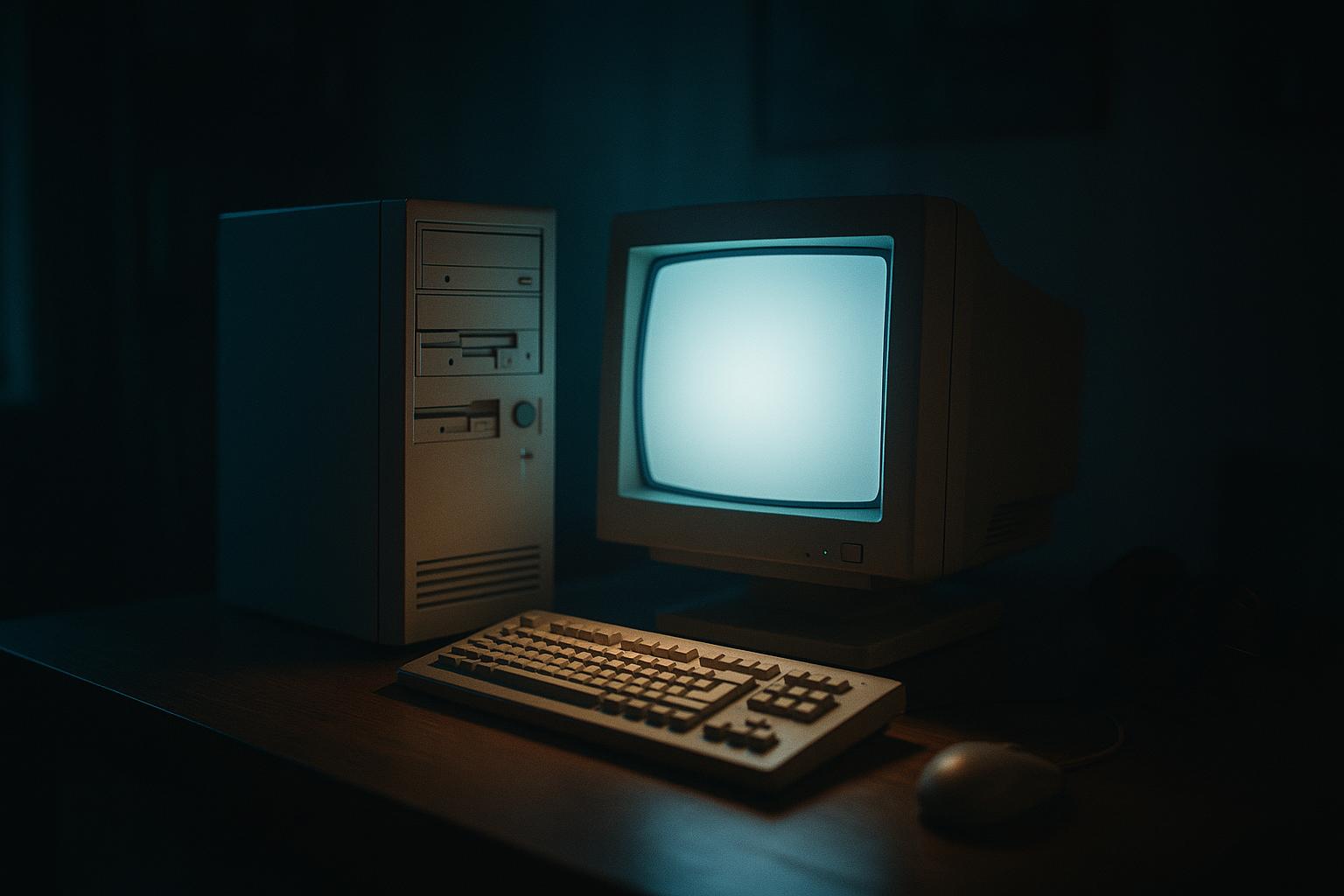
If you were anywhere near a beige desktop computer in the mid-1990s, there’s a decent chance you have a memory that begins like this: “I wasn’t supposed to be installing anything…” and ends with a friend whispering, “Okay, now hit Ctrl…”

Today’s Throwback Thursday pick is DOOM (1993), the first-person shooter from id Software that didn’t just become popular—it helped define what PC gaming looked like, how it spread, and how people played together long before “online community” was a phrase you’d hear outside of a college brochure.

According to Encyclopaedia Britannica, DOOM was released in December 1993 and “changed the direction of almost every aspect” of PC games, from graphics and networking technology to styles of play and even public scrutiny of game content. That’s a big claim—and the weird thing is: it’s hard to argue with it. (Britannica: Doom | History, Development & Impact)

What DOOM Actually Felt Like (If You Weren’t There)

Modern shooters are built for wide open spaces, cinematic lighting, and a user interface that gently holds your hand like a polite tour guide. DOOM is something else. It’s fast. It’s claustrophobic. It’s full of corners that feel personally offended by your presence.

The genius is that DOOM didn’t need to be realistic to feel immersive. It needed to be consistent. The rules of movement, the rhythm of combat, the sound cues—everything trains you to make rapid decisions. You learn quickly that “hesitation” is just another word for “respawn.”

And even now, decades later, there’s a reason people still talk about its “flow.” You move, you listen, you react. When it’s working, it’s almost musical—if your music tastes include industrial synth and the occasional demon scream.

The Shareware Rocket Booster

One of the reasons DOOM spread like wildfire wasn’t just that it was good; it was that it was easy to get (for the era).

According to Wikipedia, id released DOOM in an episodic format, with an initial episode distributed under the shareware model—meaning a substantial portion could be played and shared widely, while the rest was purchased separately. In a pre-app-store world, that mattered. A lot. (Wikipedia: Doom (1993 video game))

It’s hard to overstate how different this felt from the old “buy the box at the store” pipeline. Shareware turned a game into a kind of social object. You didn’t just play it; you passed it along. That created its own grassroots hype engine—powered by floppy disks, dial-up modems, and the conviction that your parents did not need to know what “WAD” stands for.

Why It Mattered: Technology, Design, and the Social Side

Three big reasons DOOM became a landmark:

  1. It made the PC feel like a performance machine.
    PCs weren’t “game consoles,” at least not culturally. DOOM helped change that perception by showing what a home computer could do when the software was built with obsessive focus.

  2. It normalized multiplayer as a default expectation.
    Even if your “network” was two computers and a prayer, the idea that you could play with someone else in real time was electrifying. This wasn’t the solitary high score chase—this was “I know it was you, because you’re sitting right there laughing.”

  3. It kickstarted a culture of creation.
    DOOM became one of the early mainstream examples of players making new levels and experiences and sharing them. That modding energy—people building on top of a game world—ended up shaping how we think about games as platforms, not just products.

And here’s the subtle part: DOOM didn’t just change what people played. It changed what people expected. Speed. Responsiveness. Replayability. A game that was fun in the moment and fun to talk about afterward.

Throwback Lessons for 2026 (Yes, Really)

I’m going to make a case that DOOM is more relevant now than it looks on the surface—especially if you care about technology trends beyond gaming.

1) “Distribution” is a feature

Shareware wasn’t just a business model; it was a product decision. It turned discovery into a network effect. Today we talk about “virality” like it’s a TikTok-only thing, but the underlying lesson is older: make it easy for people to try the thing, and make it easy for them to share it.

2) Constraints can create clarity

DOOM didn’t have infinite memory, photorealistic lighting, or a 12-layer progression system. What it had was a clear identity: movement, combat, pacing, and level design that made those things shine. The modern world has plenty of feature-bloat. DOOM is a reminder that a strong core loop beats a dozen half-baked add-ons.

3) Communities don’t form because you “build community”

They form because people have something they want to do together. DOOM gave people reasons to gather: share files, trade tips, run deathmatches, build levels, argue about which weapon was “cheap,” and then do it all again next week.

How to Revisit It Without Needing a Time Machine

If you’re curious, the best way to “get” DOOM today isn’t to squint at a dusty DOS prompt. It’s to approach it like a museum piece you’re allowed to touch:

  • Play a classic episode and pay attention to pacing: how often you get resources, how levels reveal information, how fights are “staged.”
  • Watch how quickly you learn the rules even if you don’t know the story. (The story is… present. It’s there. Let’s move on.)
  • Notice the sound design: it’s doing more work than you think.

And if you bounce off it? That’s fine. Not every throwback needs to become a lifestyle. But I do think it’s worth spending 30 minutes with DOOM just to understand why it sits on so many “most influential” lists.

The Bottom Line

DOOM wasn’t just a hit game—it was a template that influenced how software spreads, how games feel, and how people play together. Its technical impact is well documented, and its cultural impact is hard to miss when you look at what came after.

In 2026, we’re surrounded by entertainment that’s algorithmically recommended, always online, and optimized to keep you scrolling. There’s something refreshingly honest about a 1993 game that says: “Here is a maze. Here are the rules. Good luck.”

According to Britannica, DOOM changed the direction of PC gaming in multiple dimensions. That’s the kind of legacy you don’t get from a fleeting trend—you get it from building something that people can’t stop copying, remixing, and measuring themselves against.


Sources:
• Encyclopaedia Britannica — https://www.britannica.com/topic/Doom
• Wikipedia — https://en.wikipedia.org/wiki/Doom_(1993_video_game)