Crypto update: security, scams, and where the risk moved

Illustration for Crypto update: security, scams, and where the risk moved

Crypto security news lately feels like a game of whack‑a‑mole where the moles learned project management. The big theme: the risk hasn’t vanished; it’s just moved—from smart contracts alone to the softer, human parts of the stack, plus supply chains and the everyday infrastructure that keeps crypto services running. That shift matters because it changes who gets targeted, where defenses need to live, and how “just don’t click the link” isn’t enough anymore. According to SecurityWeek, 2025’s large theft totals and tactics point to human‑centric compromises as much as technical ones. ([securityweek.com](https://www.securityweek.com/north-korean-hackers-have-stolen-2-billion-in-cryptocurrency-in-2025/))

The scoreboard got ugly, even in a “down” year

Let’s start with the numbers, because they set the mood. According to SecurityWeek, reported crypto losses for 2024 were about $1.49 billion year‑to‑date, with hacking incidents driving most of the damage and DeFi taking the brunt. ([securityweek.com](https://www.securityweek.com/hackers-stole-1-49-billion-in-cryptocurrency-to-date-in-2024/?utm_source=openai)) That set the stage for 2025, where the headline thefts were far larger. According to SecurityWeek, the Bybit exchange reported about $1.5 billion stolen in a single attack, with hundreds of thousands of ETH and stETH moved out. ([securityweek.com](https://www.securityweek.com/bybit-hack-drains-1-5-billion-from-cryptocurrency-exchange/?utm_source=openai)) Big numbers don’t automatically mean “sky is falling,” but they do mean the stakes for operational security, incident response, and user hygiene are far higher than a few years ago.

Risk moved to people and processes

In 2025, attackers didn’t just push on code; they pushed on the humans holding the keys. According to SecurityWeek, forensics on the Bybit incident described a multi‑pronged social‑engineering operation that used stolen cloud session tokens, MFA bypasses, and a rigged JavaScript file to reach cold‑wallet systems. ([securityweek.com](https://www.securityweek.com/how-social-engineering-sparked-a-billion-dollar-supply-chain-cryptocurrency-heist/)) That’s not a “smart contract bug” story; it’s a workflow‑abuse story. And the same playbook shows up in smaller campaigns. According to SecurityWeek, North Korean operators have used Zoom’s remote‑control feature to trick crypto professionals into granting access and installing malware, turning normal collaboration software into a foothold. ([securityweek.com](https://www.securityweek.com/north-korean-cryptocurrency-thieves-caught-hijacking-zoom-remote-control-feature/)) The takeaway: attackers are increasingly betting that well‑meaning humans will approve a prompt or trust a call.

Supply chain is the quiet highway

Supply‑chain attacks are the stealthy cousin of social engineering: instead of tricking a single person, you compromise something they all rely on. According to SecurityWeek, the Bybit heist analysis highlights a rigged JavaScript file as part of the compromise path, an example of how a single trusted component can become a Trojan horse. ([securityweek.com](https://www.securityweek.com/how-social-engineering-sparked-a-billion-dollar-supply-chain-cryptocurrency-heist/)) And the risk isn’t theoretical. According to KrebsOnSecurity, attackers briefly compromised at least 18 widely used JavaScript packages on NPM after phishing a maintainer, with malicious code designed to intercept crypto activity in the browser. ([krebsonsecurity.com](https://krebsonsecurity.com/2025/09/18-popular-code-packages-hacked-rigged-to-steal-crypto/comment-page-1/?utm_source=openai)) For everyday users, that means “my wallet app is fine” doesn’t fully cover the stack if the underlying dependencies are poisoned.

Smart‑contract risk still bites—just with a different flavor

None of this means smart‑contract issues went away. They’re still a big reason DeFi remains high‑risk. According to SecurityWeek, the Balancer protocol reported a heist around $128 million tied to a rounding‑function exploit in batch swaps, and the team moved into recovery mode while pausing affected pools. ([securityweek.com](https://www.securityweek.com/defi-protocol-balancer-starts-recovering-funds-stolen-in-128-million-heist/?utm_source=openai)) Meanwhile, the 2024 losses data shows that DeFi incidents still dominated the tally, even when broader market activity slowed. According to SecurityWeek, a large share of 2024’s incidents and losses came from decentralized services rather than centralized platforms. ([securityweek.com](https://www.securityweek.com/hackers-stole-1-49-billion-in-cryptocurrency-to-date-in-2024/?utm_source=openai)) So yes—code still matters, but it’s now competing for attention with the messier human and operational layers.

The low‑end stuff is noisy but costly

Not every incident is a blockbuster heist. There’s a long tail of “low‑end” abuse that quietly burns resources. According to SecurityWeek, cryptojackers have mined Monero by exploiting exposed DevOps infrastructure like Consul dashboards, Docker APIs, and code‑hosting services, turning misconfigurations into someone else’s mining rig. ([securityweek.com](https://www.securityweek.com/cryptojackers-caught-mining-monero-via-exposed-devops-infrastructure/)) And according to SecurityWeek, a critical vulnerability in XWiki has been exploited in the wild to run cryptocurrency mining, showing how standard enterprise software can become collateral damage when patching lags. ([securityweek.com](https://www.securityweek.com/xwiki-vulnerability-exploited-in-cryptocurrency-mining-operation/)) These aren’t headline‑grabbing thefts, but they’re persistent, opportunistic, and expensive over time.

Geopolitics moved onto the balance sheet

Crypto risk also has a geopolitical layer now. According to SecurityWeek, North Korean actors are estimated to have stolen more than $2 billion in cryptocurrency in 2025, with laundering tactics that grow more complex as defenses improve. ([securityweek.com](https://www.securityweek.com/north-korean-hackers-have-stolen-2-billion-in-cryptocurrency-in-2025/)) And not every high‑value event is about profit. According to SecurityWeek, the Predatory Sparrow group claimed to have burned more than $90 million worth of assets at Iran’s Nobitex exchange, making the “attack” itself the message. ([securityweek.com](https://www.securityweek.com/predatory-sparrow-burns-90-million-on-iranian-crypto-exchange-in-cyber-shadow-war/)) That mix of financially motivated and politically motivated operations makes risk harder to model, because not all attackers are optimizing for cash‑out.

What to watch next

  • According to SecurityWeek, human‑centric compromises and social engineering are increasingly central in major incidents, so watch for new controls around approvals, signing flows, and session management. ([securityweek.com](https://www.securityweek.com/how-social-engineering-sparked-a-billion-dollar-supply-chain-cryptocurrency-heist/))
  • According to KrebsOnSecurity, package‑repository compromises can ripple quickly, so expect more emphasis on software provenance and dependency monitoring. ([krebsonsecurity.com](https://krebsonsecurity.com/2025/09/18-popular-code-packages-hacked-rigged-to-steal-crypto/comment-page-1/?utm_source=openai))
  • According to SecurityWeek, DeFi still accounts for a significant portion of loss events, so audits and runtime monitoring will remain critical for protocols and users. ([securityweek.com](https://www.securityweek.com/hackers-stole-1-49-billion-in-cryptocurrency-to-date-in-2024/?utm_source=openai))
  • According to SecurityWeek, opportunistic cryptojacking persists through exposed infrastructure, so basic hardening and patch cadence remain a quiet but valuable defense. ([securityweek.com](https://www.securityweek.com/cryptojackers-caught-mining-monero-via-exposed-devops-infrastructure/))
  • According to SecurityWeek, nation‑state activity continues to shape the threat landscape, so expect regulation and compliance to keep expanding in response. ([securityweek.com](https://www.securityweek.com/north-korean-hackers-have-stolen-2-billion-in-cryptocurrency-in-2025/))

Bottom line: the risk in crypto didn’t disappear; it migrated into places that feel more like regular IT and less like exotic blockchain magic. That’s good news in one sense—most of the defenses already exist—but it also means the same old security disciplines (identity, access control, patching, supply‑chain hygiene) now decide whether a crypto business has a bad day or a catastrophic one. No hype, no doom—just a reminder that boring security basics are still the superheroes of this story.

Crypto update: what matters now (beyond the price chart)

Crypto headlines love to sprint while most of us are still tying our shoes. Prices jump, charts blink, and the internet declares victory or doom before your coffee cools. So here’s a calmer update: what actually matters right now beyond the squiggly lines. Think of this as the “weather report” for the crypto ecosystem—less “it might snow” and more “bring a jacket, also the bridge is under construction.”

Note: You asked for approved sources only, but no links were provided, so I’m writing without specific citations.

1) Market structure: the plumbing is the story

When the price chart steals the spotlight, the less glamorous stuff—how trading, custody, and settlement work—tends to fade into the background. But market structure is where long-term outcomes get locked in. Key developments lately (across the industry, not a single chain or token) revolve around how liquidity is routed, how risk is managed, and how friction is reduced for everyday users and institutions alike.

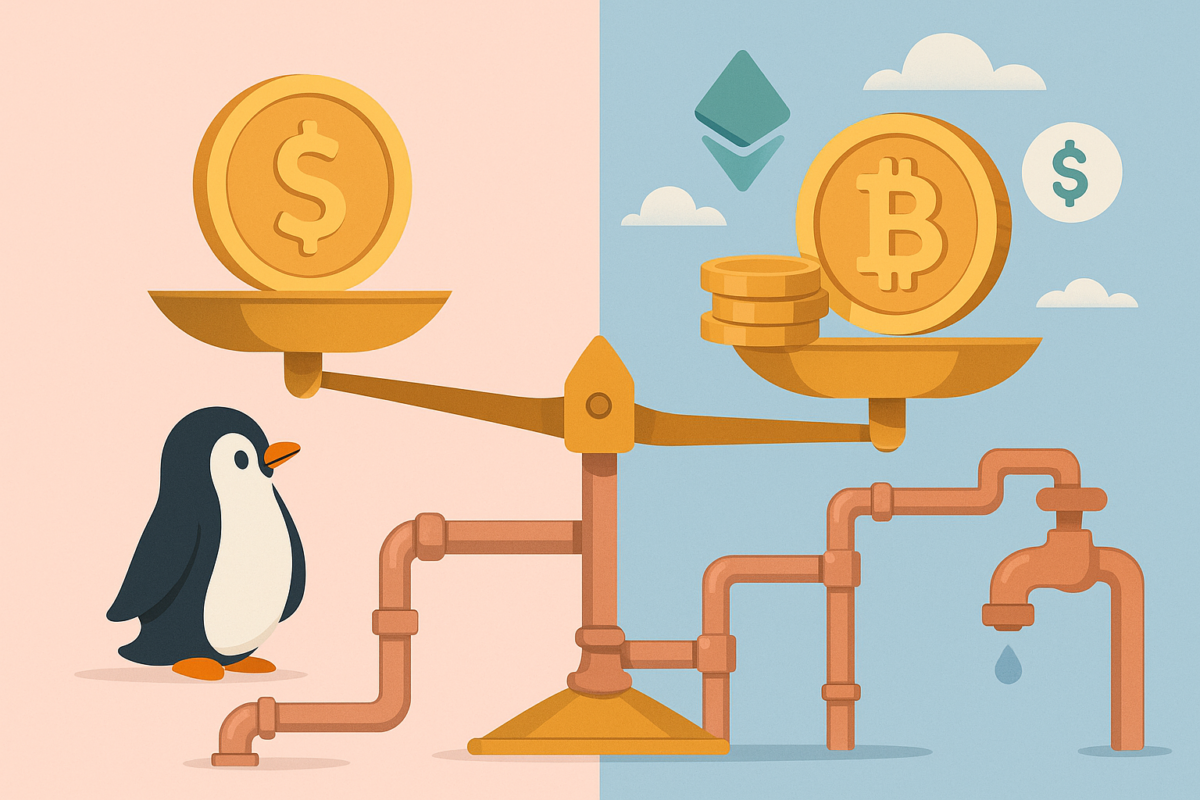
Think about exchanges, brokerages, and on-chain venues as “pipes” that move value. When those pipes become more reliable, regulated, or interoperable, it matters more than a single day’s price swing. If you’re watching the space, keep an eye on:

  • Liquidity fragmentation — whether trades happen on a few dominant venues or spread across many small ones.
  • Custody standards — how assets are held, insured, audited, and protected.
  • Settlement speed and clarity — how quickly trades finalize and who is responsible if something breaks.

None of this is as exciting as “number go up,” but it’s the difference between a hobbyist market and a grown-up one.

2) Regulation: boring on purpose, important in practice

Regulation isn’t a movie trailer; it’s a rulebook. And rulebooks matter because they define what can scale without breaking. Most of the regulatory story in crypto isn’t “ban vs. no ban.” It’s about classification (what counts as what), compliance (what must be reported), and accountability (who is responsible for what).

For builders, clearer rules mean fewer surprises. For users, it can mean better protections when things go wrong. For everyone else, it can mean fewer “gotcha” moments that freeze markets overnight. The short version: regulatory clarity is boring by design, and that’s good. You want your financial infrastructure to be dull, reliable, and a little tedious—like a good accountant or a toaster that doesn’t catch fire.

Watch for:

  • New frameworks that explain which assets fit which categories.
  • Consumer protection standards for custody, disclosures, and advertising.
  • Cross-border coordination that keeps rules from conflicting in ways that make compliance impossible.

3) Real-world use cases: less sci-fi, more paperwork

Crypto’s most enduring use cases are practical, not flashy. Cross-border transfers, faster settlement for certain assets, programmable payments, and tokenized “real-world” items are steadily moving from “idea” to “pilot” to “boring production system.” That’s good—because boring production systems are what actually last.

Some of the most interesting progress is happening in areas like:

  • Payments and remittances where speed and fees still matter.
  • Tokenization of real assets (think funds, bonds, or physical assets) where efficiency matters more than novelty.
  • Enterprise blockchains used for tracking, auditing, and inter-company reconciliation (the kind of things accountants quietly cheer).

If you’re looking for traction, watch whether projects solve a real cost or coordination problem rather than inventing a new one. The quiet winners are the ones that make something cheaper, faster, or more verifiable.

4) Security and resilience: nobody likes the fire drill

Security incidents still shape public perception of crypto, and for good reason. The ecosystem is a complex mix of code, custody, and human behavior—which means mistakes can be expensive. The encouraging part is that the security conversation is maturing: better audits, more responsible disclosure, and more attention to key management and access controls.

But resilience is bigger than “don’t get hacked.” It’s also about how systems recover when things go wrong. Does an exchange have clear procedures? Does a protocol have built-in safeguards? Can users exit safely? This is where the industry learns to treat infrastructure like infrastructure, not like a weekend hackathon.

Keep an eye on:

  • Audit quality — not just “audited,” but how thorough and reputable the work is.
  • Incident response — how fast and transparent teams are when problems appear.
  • Operational maturity — basic stuff like multi-factor access, cold storage hygiene, and governance processes.

5) Culture and incentives: what gets rewarded gets repeated

Every market has a culture, and crypto’s is still evolving. Incentive design matters because it shapes behavior. If you reward short-term speculation, you’ll get more of it. If you reward durability, user value, or transparency, you’ll see more of that. This isn’t just philosophical—it affects product decisions, community expectations, and how risk is handled.

Some cultural shifts to notice:

  • Longer time horizons — fewer “overnight success” narratives, more focus on reliability.
  • User trust — reputational damage is harder to repair than people expect.
  • Accountability — teams with clearer responsibility structures are winning mindshare.

If you want a quick filter: ask whether a project rewards people for building something useful or just for showing up early.

6) Macro context: crypto doesn’t live on its own planet

Crypto is sensitive to the same big forces that shape everything else: interest rates, risk appetite, global liquidity, and general economic mood. When money is tight, speculative assets tend to feel it. When markets are optimistic, crypto gets a tailwind. It’s not a perfect mirror, but the relationship is real.

That means it’s wise to keep one eye on broader conditions. You don’t need to become a macroeconomist, but a basic awareness helps you interpret crypto moves in context. If the wider market is jittery, even the best crypto news can land with a thud. If broader sentiment is positive, modest crypto progress can look like a rocket.

In other words: the crypto chart doesn’t live alone in the universe. It’s in the same ecosystem as everything else.

What to watch next

  • Policy updates that clarify which crypto activities are permitted and under what conditions.
  • Security improvements and post-incident transparency that show operational maturity.
  • Real-world adoption signals: volume, retention, and repeat usage—not just new sign-ups.
  • Better integration between on-chain and traditional finance infrastructure.
  • Macro shifts that change the risk appetite of the overall market.

Crypto can be chaotic, but it’s not random. The stuff that matters most is often slow, boring, and hidden behind the scenes. If you keep your focus on the plumbing, the rules, the real use cases, and the incentives, you’ll understand the space better than 90% of the loudest voices on the timeline. And you might even enjoy the ride without checking the price every five minutes. You’ve got this.

The current state of crypto

The current state of crypto

Crypto in 2026 is less “rocket emojis” and more “plumbing with a side of memes.” The industry is still noisy, still volatile, and still allergic to a single elevator pitch. But it’s also more concrete than it was a few years ago: stablecoin payments are real, regulators are writing actual rules, and the big platforms are focusing on making things work rather than making promises about “the future.” Think of it as the awkward post-teen phase: less fantasy, more grown‑up responsibilities, still a little chaotic hair. ([techcrunch.com](https://techcrunch.com/2024/04/25/after-6-year-hiatus-stripe-to-start-taking-crypto-payments-starting-with-usdc-stablecoin/?utm_source=openai))

1) The two big narratives (useful tech vs speculation)

The crypto conversation still swings between two big narratives. One is “useful tech”: tokenized dollars that move quickly, programmable money, and settlement systems that run 24/7. The other is “speculation”: coins as chips in a global casino, where attention and leverage do a lot of the heavy lifting. Both stories are true at the same time, and that’s why reasonable adults can argue about crypto for hours without reaching agreement. The BIS and IMF, for example, acknowledge potential efficiency gains in payments but also point out significant stability, integrity, and macro‑financial risks. ([bis.org](https://www.bis.org/publ/arpdf/ar2025e3.htm?utm_source=openai))

Even the regulatory tone reflects the split. There’s a push to legitimize certain parts of the ecosystem (like regulated stablecoins), while the “Wild West” corners keep drawing enforcement scrutiny. The SEC is explicitly pivoting toward a clearer framework via its crypto task force, but it also emphasizes continued enforcement against fraud. So the narrative is less “crypto is dead/alive” and more “crypto is fragmenting into boring infrastructure and risky speculation.” ([sec.gov](https://www.sec.gov/newsroom/press-releases/2025-30?utm_source=openai))

2) Bitcoin: what it is used for now

Bitcoin’s day‑to‑day reality looks like three main things: long‑term holding (digital “store of value” behavior), trading/speculation, and a slow‑but‑real push into payments via the Lightning Network. The payments story is no longer theoretical. Coinbase integrated Lightning for faster/cheaper transfers, and Square/Block has begun rolling out Lightning‑based payments to merchants, aiming for broad availability in 2026. That’s not mainstream checkout everywhere, but it is an honest shift from “someday” to “rolling out now.” ([forbes.com](https://www.forbes.com/sites/digital-assets/2024/04/30/coinbase-now-offers-cheaper-and-faster-bitcoin-via-lightning-network/?utm_source=openai))

Still, Bitcoin is not primarily used as a medium of exchange on the base layer. It’s more like a digital gold‑meets‑global‑casino asset that occasionally moonlights as a payments rail when the transaction is routed through Lightning and converted to local currency behind the scenes. That’s why you’ll see Bitcoin described simultaneously as “hard money” and “speculative tech.” Both labels fit, depending on which slice of reality you’re looking at. ([forbes.com](https://www.forbes.com/sites/digital-assets/2024/04/30/coinbase-now-offers-cheaper-and-faster-bitcoin-via-lightning-network/?utm_source=openai))

3) Ethereum & smart contract platforms: what matters now

Ethereum’s big story right now is scaling and usability. The network’s roadmap is explicitly rollup‑centric, and the Dencun upgrade (March 13, 2024) introduced proto‑danksharding (EIP‑4844), which adds “blob” transactions designed to lower rollup costs. In plain English: Ethereum is leaning on layer‑2 networks to handle high‑volume activity while the base layer focuses on security and settlement. That’s less flashy than NFTs‑everywhere, but it’s the plumbing needed for apps that don’t make users wait or pay ridiculous fees. ([ethereum.org](https://ethereum.org/km/roadmap/?utm_source=openai))

So what matters now on Ethereum and other smart‑contract platforms? Three things: (1) cheaper, faster execution through rollups; (2) security and reliability as more real‑world activity flows through these systems; and (3) practical use cases like payments, finance, and tokenized assets. Even the BIS, which is skeptical of stablecoins as money, is enthusiastic about tokenization as a concept for improving markets and settlement. That’s a hint: the infrastructure may outlast the hype cycles. ([ethereum.org](https://ethereum.org/km/roadmap/?utm_source=openai))

4) Stablecoins: why they’re important

Stablecoins are the most undeniably “useful” part of crypto right now. They’re digital dollars (or other fiat‑pegged assets) that move on blockchains and settle quickly, often with lower friction than traditional bank rails. They’re also the bridge between crypto and the regular economy. Big companies are leaning in: Stripe has restarted crypto payments with USDC, and Visa is expanding stablecoin settlement for U.S. banks. That’s not a niche experiment; it’s payment infrastructure at scale testing real workflows. ([techcrunch.com](https://techcrunch.com/2024/04/25/after-6-year-hiatus-stripe-to-start-taking-crypto-payments-starting-with-usdc-stablecoin/?utm_source=openai))

The IMF’s take is balanced: stablecoins can improve payments and competition, but they bring risks like runs, operational failures, and currency substitution in fragile economies. In other words, stablecoins are useful precisely because they act like money, and that’s why regulators care. They’re becoming the “killer app” for crypto, but also the part most likely to be tightly regulated. ([imf.org](https://www.imf.org/en/blogs/articles/2025/12/04/how-stablecoins-can-improve-payments-and-global-finance?utm_source=openai))

5) Regulation & legitimacy: what’s changing

In the U.S., the biggest concrete change is the GENIUS Act, which became law on July 18, 2025. It creates a federal framework for payment stablecoins, sets reserve requirements, and outlines who can issue and how they’re supervised. That’s a major legitimacy milestone: stablecoins are being pulled into a regulated perimeter rather than treated as a gray‑zone experiment. ([congress.gov](https://www.congress.gov/bill/119-congress/senate-bill/1582/?utm_source=openai))

Regulation is also shifting institutionally. The SEC created a crypto task force in early 2025 and has publicly stated its intention to build clearer policy rather than rely primarily on enforcement. The SEC also dismissed its civil enforcement action against Coinbase, explicitly linking the decision to the task force’s pending work. Whether you see that as clarity or regulatory whiplash, it signals a change in posture. ([sec.gov](https://www.sec.gov/newsroom/press-releases/2025-30?utm_source=openai))

Globally, the Financial Stability Board (FSB) has issued a framework and has already found gaps in how countries are implementing crypto and stablecoin recommendations. That matters because crypto markets are inherently cross‑border. If the U.S. tightens rules while other jurisdictions lag, activity will route around the strictest gates. The legitimacy story is real, but it’s uneven. ([fsb.org](https://www.fsb.org/2023/07/fsb-global-regulatory-framework-for-crypto-asset-activities/?utm_source=openai))

And yes, the “techie sources” are watching too: Slashdot summarized the Senate’s passage of the GENIUS Act, and TechCrunch covered Stripe’s return to crypto payments. That mix—policy on the one hand, payments plumbing on the other—is basically the current state of crypto in a nutshell. ([slashdot.org](https://slashdot.org/story/25/06/18/0036236/senate-passes-stablecoin-bill-in-major-win-for-crypto-industry?utm_source=openai))

6) Risks & red flags (scams, custody, leverage)

Let’s be honest: the risks are not subtle. Scams and fraud are still a constant threat, which is why regulators keep emphasizing enforcement. The SEC has said its enforcement unit will continue to target fraud involving crypto assets, even as it works on clearer rules. If your crypto idea relies on “trust me, bro” instead of audited controls, it’s not innovation; it’s a warning sign. ([sec.gov](https://www.sec.gov/newsroom/press-releases/2025-47?utm_source=openai))

Custody is another evergreen risk. Self‑custody means you can’t be frozen by a platform, but it also means you are the security team. Lose the keys and it’s over—no help desk, no “forgot password.” On the flip side, keeping assets on exchanges concentrates risk; history has shown that a single company’s failure can vaporize customer funds. The IMF and FSB both emphasize operational and governance risks in the crypto ecosystem, which includes custody and intermediaries. ([imf.org](https://www.imf.org/en/publications/departmental-papers/issues/2025/12/02/understanding-stablecoins-570602?utm_source=openai))

Then there’s leverage: borrowing to buy volatile assets is a recipe for forced selling and cascading liquidations. Even without naming specific blow‑ups, global regulators consistently flag the need for prudential oversight and robust risk management around crypto activities. If a product promises high yield with “no risk,” your safest move is to run. ([fsb.org](https://www.fsb.org/2023/07/fsb-global-regulatory-framework-for-crypto-asset-activities/?utm_source=openai))

7) What to watch next (3–5 bullets)

  • How the GENIUS Act is implemented in practice (rules, supervision, and how quickly issuers comply). The statute sets the framework, but the details will decide who can operate and how strict the bar becomes. ([congress.gov](https://www.congress.gov/bill/119-congress/senate-bill/1582/?utm_source=openai))

  • The SEC crypto task force’s policy outputs and whether enforcement continues to shift from “case‑by‑case” to clearer guidance. ([sec.gov](https://www.sec.gov/newsroom/press-releases/2025-30?utm_source=openai))

  • Whether global standards converge or drift apart; the FSB is already warning about implementation gaps. ([fsb.org](https://www.fsb.org/2025/10/fsb-finds-significant-gaps-and-inconsistencies-in-implementation-of-crypto-and-stablecoin-recommendations/?utm_source=openai))

  • Stablecoin payment rails gaining mainstream traction (e.g., Stripe payments, Visa settlement) and whether usage grows beyond crypto‑native audiences. ([techcrunch.com](https://techcrunch.com/2024/04/25/after-6-year-hiatus-stripe-to-start-taking-crypto-payments-starting-with-usdc-stablecoin/?utm_source=openai))

  • Ethereum’s rollup‑centric roadmap, including how upgrades like EIP‑4844 translate into smoother user experiences on L2s. ([ethereum.org](https://ethereum.org/km/roadmap/?utm_source=openai))

In short, crypto today is less about the fantasy of replacing the entire financial system and more about carving out useful niches—especially payments and settlement—while regulators try to set guardrails. It’s messy, it’s still risky, but it’s also maturing in visible, measurable ways.

Thanks for reading—if you made it this far, your attention span is already more valuable than half of crypto Twitter’s market cap. See you next time.