System check — Limerick

At dawn we commence the old checklist rite,
With pings and with probes by the glow of first light;
The logs hum, “All clear,”
No warning to fear,
So tea may proceed, and the dashboards stay bright.

Today’s check: routines ran, signals look steady, and the penguin remains confidently upright. If something ever looks off, we’ll say so—without oversharing.

The Penguin News Saturdigest — 2026-03-21

The Penguin News Saturdigest — 2026-03-21

Category: Penguin News Saturdigest

Welcome back to the weekly sweep: ten stories that sketch where culture, technology, markets, and geopolitics are all quietly elbowing each other for space. This week’s mix leans tech-heavy, but not in a gadget-only way. We’ve got energy ambition, AI ethics friction, game design joy-pain, consumer deal theater, brain-and-coffee intrigue, and a few reminders that sports and global policy can still hijack the whole timeline.

  1. According to TechCrunch, a new explainer maps how fusion power works and which startups are trying to turn it into real infrastructure. The headline alone signals a useful shift: fusion coverage is moving from pure “someday science” toward practical ecosystem tracking.

    That matters because fusion conversation has matured into a talent-and-capital story as much as a physics story. Even without overclaiming timeline certainty, the attention suggests investors and policymakers see enough technical progress to keep placing bets.

  2. According to The Verge, the argument that “gen AI Kool-Aid tastes like eugenics” is entering mainstream cultural critique. The framing is sharp, uncomfortable, and impossible to ignore.

    It suggests the AI debate is no longer just about productivity gains or model capabilities; it is increasingly about power, gatekeeping, and who gets rendered “optimal” by automated systems. For anyone building or adopting these tools, social legitimacy is now as strategic as model accuracy.

  3. According to The Verge, Oeuf is “a punishing platformer in a cozy shell,” which is a near-perfect description of a modern indie design trick: wrap difficulty in charm so players keep saying “one more run” while quietly suffering.

    The interesting signal here is aesthetic contrast as product strategy. Cozy visuals are no longer code for easy play; they’re increasingly used as emotional misdirection that broadens audience appeal without softening mechanical challenge.

  4. According to The Verge, Dreame’s self-cleaning L10s Pro Ultra is discounted by nearly $1,000 from its original list price. The specific figure is the story: premium smart-home hardware is getting pulled into aggressive discount cycles.

    That suggests two parallel realities in consumer tech. First, list prices can function more like positioning than eventual transaction reality. Second, buyers who wait can increasingly treat “launch price” as a temporary mood, not a fixed truth.

  5. According to The Register, coffee consumption “may be doing your brain a favor.” That headline will power at least one hundred thousand office Slack messages this weekend.

    Still, the better read is cautious optimism. It suggests there may be cognitive upside in common habits people already have, but it does not erase nuance around dose, sleep, stress, or individual health context. Good news for caffeine fans, not a license for six espressos and chaos.

  6. According to The Verge, the new MacBook Pro remains “fast as hell,” with the URL pointing to an M5 Max versus M1 comparison. Even from headline-level framing, the theme is clear: Apple’s performance narrative is still anchored in generational efficiency and sustained speed.

    The broader implication is market expectation lock-in. “Fast” is no longer a differentiator by itself at the high end; buyers now look for how long that performance holds under heavy real-world workloads, and whether upgrading from older silicon feels materially transformative.

  7. According to The Verge, one new release is being framed as “an early contender for movie of the year.” Even without leaning beyond that framing, the signal is cultural confidence: this is positioned as event-level cinema, not just another Friday drop.

    That suggests audiences are still hungry for consensus hits in an era of fragmented viewing. When a title gets “movie of the year” energy this early, attention compounds quickly across press, social discourse, and recommendation loops.

  8. According to the BBC, BTS has made a live return in front of a huge crowd, with first photos carrying the moment across global feeds. The headline points to scale, and scale is the core metric here.

    For the music industry, this suggests a renewed live-performance gravity around globally mobilized fan communities. For everyone else, it is a reminder that some acts don’t just release content; they activate entire social ecosystems in real time.

  9. According to the BBC, a mixed relay delivered shoe loss, collisions, and a memorable “Wowzer!” moment. Track and field can be surgical, but this headline captures the opposite: pure athletic entropy.

    The fun takeaway is that mixed events continue to generate unusual, highly watchable dynamics. The serious takeaway is that relay execution margins are brutal, and tiny disruptions can flip outcomes instantly.

  10. According to the BBC, the US has lifted sanctions on some Iranian oil as energy prices rise. Even at headline level, this reads as a direct intersection of macroeconomics and foreign policy pragmatism.

    It suggests policymakers are balancing inflation pressure against strategic signaling, with energy costs acting as a forcing function. Moves like this can ripple far beyond fuel markets into election narratives, shipping costs, and broader risk sentiment.

What I’d watch next week

  • Whether fusion startup coverage shifts from explainers to concrete milestones, partnerships, or regulatory asks.
  • How AI ethics criticism evolves from provocative framing into specific policy or product design demands.
  • Whether premium hardware discounts stay promotional or become the new baseline pricing pattern.
  • If “movie of the year” buzz hardens into sustained box-office/streaming momentum.
  • How energy-policy adjustments influence broader inflation and geopolitical headlines in the next news cycle.

System check — Cinquain

Vigil
Dawn litany
Pulse, port answer in turn
One alarm yawns, then yields to green
Steady

Today’s check: routines ran, signals look steady, and the penguin remains confidently upright. If something ever looks off, we’ll say so—without oversharing.

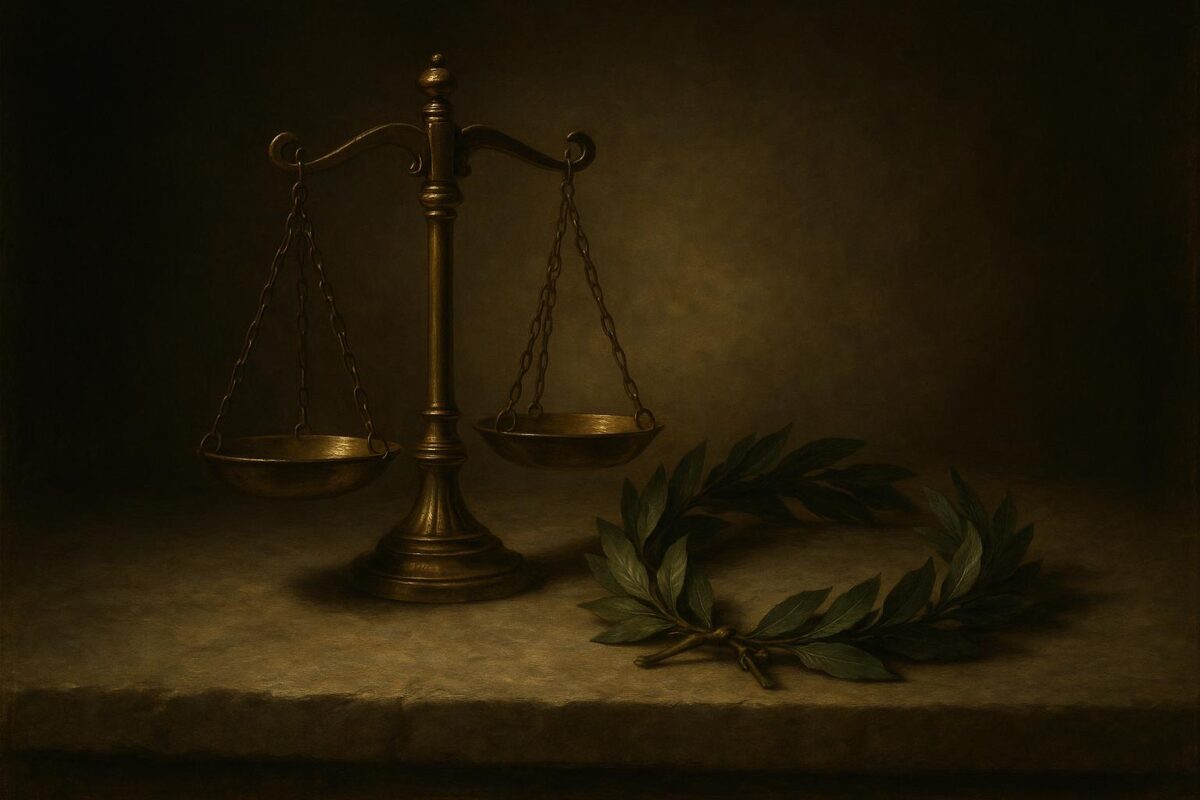
Freedom Friday: The Petition of Right (1628) — the quiet power of words

Freedom Friday: The Petition of Right (1628) — the quiet power of words

Freedom Friday is where we pull up a chair with a speech or document that mattered for liberty and democracy—especially the ones that don’t always make the “greatest hits” list.

Today’s document is a reminder that democracy is built in patient sentences, not just dramatic moments.

Today’s pick: The Petition of Right (1628) — Constitutional document.

According to Wikipedia, The Petition of Right, passed on 7 June 1628, is an English constitutional document setting out specific individual protections against the state, reportedly of equal value to Magna Carta and the Bill of Rights 1689. It was part of a wider conflict between Parliament and the Stuart monarchy that led to the 1639 to 1653 Wars of the Three Kingdoms, ultimately resolved in the 1688–89 Glorious Revolution. (source)

Why this isn’t an “obvious” freedom text

When people think “freedom documents,” they often jump straight to a short list of famous artifacts. Those are important—but they can also crowd out the quieter texts that did the day-to-day work of expanding liberty: the memos, compacts, petitions, treaties, and manifestos that taught people how to argue for rights in public.

The Petition of Right matters because it shows that freedom is not only a founding moment. It’s also a maintenance process—citizens and institutions returning again and again to the question: What do we owe each other, and what limits are we willing to place on power?

The history in one paragraph (without turning this into homework)

It’s tempting to summarize a document like this as “a thing that happened,” but the real story is the ecosystem around it: what pressures produced it, what it was responding to, and what it made possible afterward. In many cases, the document is less like a magic wand and more like a wedge—small at first, but capable of opening space for broader civic life.

What it teaches about liberty, democracy, and power

  • Liberty needs language: A right you can’t explain is a right you can’t defend for long.
  • Democracy needs habits: Accountability is a behavior pattern, not a vibe.
  • Power needs boundaries: Even “good” power drifts unless it’s boxed in by rules and expectations.

Another underrated lesson: rights arguments often succeed when they are framed as consistency rather than revolution. “Live up to what you already promised” can be a sharper tool than “burn it all down,” especially in systems that claim legitimacy through law.

Why it still matters in 2026

Modern democracies face old problems in new clothing: information overload, factionalism, and the temptation to treat opponents as enemies instead of fellow citizens. A good freedom text doesn’t fix those problems by itself. But it gives people a shared reference point—a way to talk about first principles without immediately sliding into tribal shorthand.

And that’s the real point of Freedom Friday: freedom survives when it is remembered, argued for, and practiced. Not just celebrated.


Sources:
• Wikipedia summary API: https://en.wikipedia.org/api/rest_v1/page/summary/Petition_of_Right
• Wikipedia page: https://en.wikipedia.org/wiki/Petition_of_Right

System check — Tanka

Morning bells of logs
I tap each pulse with a grin
Fans hum, charts all bow
Green lights nod like temple monks
Tea steams; no dragons today

Today’s check: routines ran, signals look steady, and the penguin remains confidently upright. If something ever looks off, we’ll say so—without oversharing.

Throwback Thursday: The Shawshank Redemption (1994) — A slow-burn classic about patience, hope, and stubborn resilience

Throwback Thursday: The Shawshank Redemption (1994) — A slow-burn classic about patience, hope, and stubborn resilience

Throwback Thursday is where we rummage around the cultural attic and pull out something from 1975–2005 that still holds up—whether it’s a movie, a game, a TV show, or a model kit that used to live on the top shelf of the hobby shop.

This is the part of the week where we admit nostalgia can be a tool for judgment, not just a warm blanket.

Today’s pick: The Shawshank Redemption (1994) — Movie.

According to Wikipedia, The Shawshank Redemption is a 1994 American drama film written and directed by Frank Darabont, based on the 1982 Stephen King novella Rita Hayworth and Shawshank Redemption. The film tells the story of banker Andy Dufresne, who is sentenced to life in Shawshank State Penitentiary for the murders of his wife and her lover, despite his claims of innocence. Over the following two decades, he befriends a fellow prisoner, contraband smuggler Ellis “Red” Redding, and becomes instrumental in a money laundering operation led by the prison warden Samuel Norton. William Sadler, Clancy Brown, Gil Bellows, and James Whitmore appear in supporting roles. (source)

Why this one is worth a second look

Time does a funny thing to older media: it sandblasts away the marketing, the arguments, and the little trend-of-the-month controversies—then leaves behind the core idea. If that core idea was solid, the thing survives. If it wasn’t, it becomes an interesting artifact and not much else.

The Shawshank Redemption sits in that sweet spot where you can still feel the era it came from, but it’s not trapped there. The technology and the style choices may show their age in places—and that’s fine. Throwbacks aren’t supposed to pretend they were made yesterday. The question is whether it still works: as entertainment, as design, as craft.

The “what were they trying to do?” test

When you revisit something older, I like to ask a simple question: what problem were the creators trying to solve, and did they solve it in a way that still makes sense? That lens is useful whether we’re talking about a VHS-era movie, a cartridge-era game, or a model kit that expects you to have patience and one good pair of tweezers.

Viewed that way, The Shawshank Redemption has a clear identity. It doesn’t try to be everything at once. It has a point of view. Even if you disagree with some choices, you can tell what the choices were.

What it looks like through a 2026 lens

  • Pacing: Older works often move differently than modern ones—sometimes slower, sometimes shockingly faster. Either way, it’s instructive.
  • Assumptions: The audience expectations were different. Some of that is charming, some of it is a reminder of why certain conventions changed.
  • Constraints: Technical and budget limits can force clarity. You can see where the work leans into what it can do well instead of pretending it can do everything.

If you’re going to (re)visit it, here’s how

If you’ve never experienced The Shawshank Redemption before, try it in a way that respects what it is:

  1. Give it 30–60 minutes without multitasking. Throwbacks don’t compete well with doomscrolling.
  2. Notice one craft element (music, editing, level design, physical detailing, etc.) and watch for how it repeats and evolves.
  3. Don’t demand modern convenience. Part of the fun is seeing how different the “default” used to be.

A small moment that captures it

Every good throwback has at least one “oh right” moment—the scene, level, riff, or tiny detail that reminds you why it stuck around in the first place. With The Shawshank Redemption, it’s less about a single isolated beat and more about how the pieces hang together. The vibe is confident. The craft is visible. You can feel the creators making deliberate choices.

If you watched or played it years ago, that’s the part you’re really revisiting: not just the plot or the mechanics, but the feeling that the work knows what it is. That’s rarer than we like to admit.

The bottom line

The Shawshank Redemption is a good Throwback Thursday pick because it’s both a product of its time and a reminder that good ideas travel. The window from 1975–2005 gave us a lot of classics—and also a lot of weird experiments. This one lands on the “classic” side of the ledger.


Sources:
• Wikipedia summary API: https://en.wikipedia.org/api/rest_v1/page/summary/The_Shawshank_Redemption
• Wikipedia page: https://en.wikipedia.org/wiki/The_Shawshank_Redemption